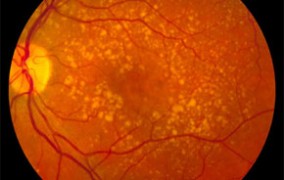
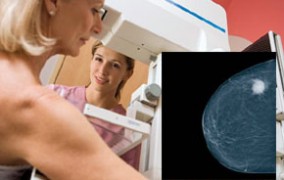
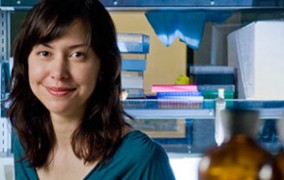
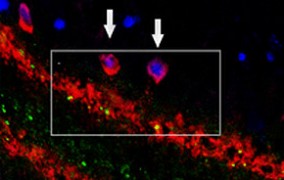
A group of researchers led by Anamaria Aranha Camargo of the Ludwig Institute of Cancer Research and the Molecular Oncology Center of the Syrian-Lebanese Hospital look for genetic markers that may help physicians predict a response to treatment.
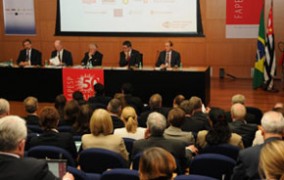
Sociologist and former Brazilian President kicks off the seminar in Spain and highlights the "the university’s sense of cooperation." FAPESP and Salamanca University announce a call for proposals.
A study by a PUC-SP researcher presents the philosophical foundation of the therapeutic education method. The author uses this method in both individual and group counseling.
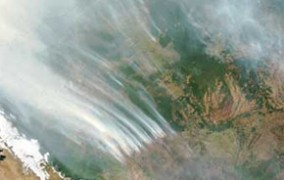
Events on one side of the planet can affect those on the other, say scientists. One example is El Niño, which causes drought in the Northeast of Brazil and intense rains in the South, and cause of which may be related to warming of the Indian Ocean.
Initiatives such as Blue Waters, which cost US$ 170 million, and the Virtual School of Computational Science and Engineering were presented at the São Paulo School of Advanced Sciences.
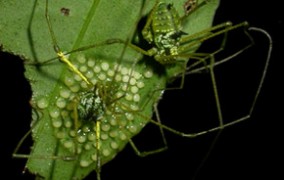
A study performed at the USP Biosciences Institute shows that single males of the species Iporangaia pustulosa live longer and have more chances to copulate with young females.
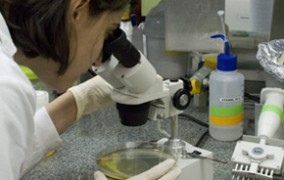
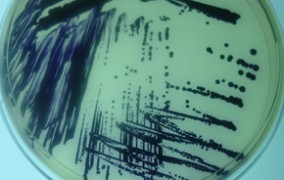
Discovery made by University of São Paulo researchers opens pathways to the development of antibiotics to fight some types of bacteria, including Streptococcus and Pseudomonas.
Initiative puts the country, home of the planet’s greatest biodiversity, into a global network for sharing tools and experiences related to the management of biological information resources.
Researchers are investigating the influence of cells in the microenvironment of breast cancer on tumor progression. Their study could contribute to the application of personalized chemotherapy.
Extremely rare encounters between large and small asteroids provoke changes in their orbits, says a study carried out by Brazilian researchers presented in Italy at the Accademia dei Lincei.
A study conducted at Unicamp and published in Blood magazine shows that the drug used in the chronic treatment of the disease can also provide relief for acute occlusive vessels, which are currently untreatable.
Little collaboration with researchers from other countries is one of the factors contributing to the low citation rate of Brazilian scientific articles, say specialists.
The European Organization for Nuclear Research visits FAPESP during mission to evaluate country’s request to join the institution as an associate member.
Brazil is in select group of nations conducting high-level research. FAPESP scientific director recommends measures for driving Brazilian research forward in an article from the same issue.
Research at the University of São Paulo tests bone marrow stem cell transplants and are advancing the use of cellular therapy by taking different approaches for the treatment of insulin-dependent diabetes.
According to specialists, there is still no sustainability license certifying that a given fuel obtained from biomass that proves to be a potential candidate for use in commercial aviation be produced according to a set of criteria.
Structural factors related to physical properties, the bioavailability of nutrients and the satisfaction rate of food will be the focus of the event entitled: Advances in the Molecular Structuring of Food Materials.
Carlos Henrique de Brito Cruz, attended meetings with professors, directors and students at Harvard University to explore potential opportunities for research cooperation between the two institutions.
Researchers use chemical oxidation and bioremediation techniques and are excited by the possibility of discovering what will come out of using the tests on diverse types of soils.
Collaborative research between the Brazilian company Plasmacro and the Canadian company Casco Inc. studies innovative processes for recycling waste from biodiesel production in the electrical equipment industry and others.
Studies developed in collaboration between researchers from Brazil and Canada, with support from FAPESP, seek to understand how patients who suffer from depression respond to stimulation of the region responsible for releasing hormones in the brain.
Scientists with research supported by the institutions talk during FAPESP Week about the importance of partnerships for the development of Physics and other fields.
Directors from the Brazilian Foundation discussed models of international cooperation in scientific research with representatives from West Virginia University, NSF, NIH, the US Department of Energy, and the President’s Council of Advisors on Science and Technology.
Seventeen Brazilian state research foundations (FAPs) participate in Grand Challenges Explorations program. Selected studies to receive up to US$ 200,000 and will compete for up to an additional US$ 1 million
Study highlights the intense participation of elite rural Brazilian women in the diverse aspects of day-to-day life at the end of the 19th and 20th centuries
The decline in violent conflict resolution has extended to the city’s outskirts and is related to the PCC’s adoption of equality among its members, according to a study conducted by UFSCar
In an article published in PLoS One, researchers from USP’s Chemistry Institute demonstrate that bradykinin interrupts the process of cell apoptosis in the brain tissue of rats.
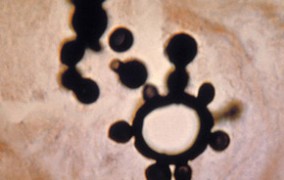
An antibody developed in a USP study stimulates the immune system to combat paracoccidioidomycosis, an illness common in rural areas that mainly affects the lungs
During an event at FAPESP’s headquarters, officials renewed an agreement with Research Councils UK through 2015 and established a partnership with the University of East Anglia
A study indicates that the spread of cell death can be reduced through reversion of the coupling among nerve cells that is normally responsible for communication through electrical synapses
The reciprocal exchange of books and other print media among Brazil, France, Portugal and England at the time contradicts the paradigm of Brazil as a backwards and culturally dependent country.
In an experiment conducted by EACH-USP, regular exercise prevented mice that were fed chocolate, peanuts, cookies and sugar from developing insulin resistance.