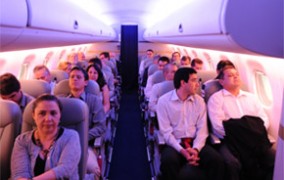
The study is a joint project between the three institutions and envisages the creation of a research and development center for commercial and executive aviation.
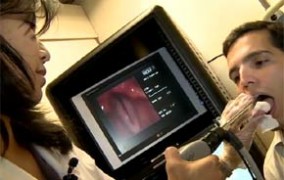
A videolaryngoscope utilized by USP researchers can capture 4,000 images per second and allows for visualization of vocal cord vibrations in slow motion.
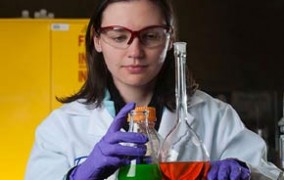
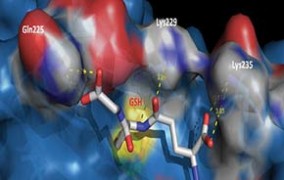
The presence of oxygen and the development of aerobic metabolism on Earth allowed living beings to take advantage of the energy in foods in a much more efficient manner. This evolutionary achievement, however, came at a price: it left cells vulnerable to the effects of oxidizing substances.
Science reporting is becoming more important in the academic world, and the ties between these two classes of professionals are growing closer, say specialists in a meeting held by FAPESP.
Financial Times Science Editor Clive Cookson found that the quality of scientific journalism improved when researchers became aware that working with journalists is important if the public is to gain a better understanding of the science.
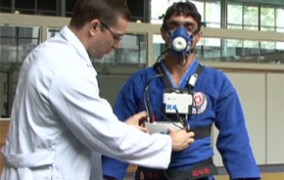
Training methods used in nom-combat types of sports could help change the training and improve the physical aptitude of athletes in combat sports. This USP study was highlighted in Science.
Substituting traditional plastic bags for biodegradable polymers is once again fueling discussion about the need to diminish the impact of discarding this type of material in the environment. This switch, however, is hampered by the high costs of a few types of polymers that are degraded in just a few years by the action of natural microorganisms and agents (biodegradable); in contrast, the decomposition of conventional polymers takes centuries.
Experiments carried out at USP confirm that the medication used in the treatment of bipolar disorder alters pathogenic processes and has a preventive effect against manifestation of the degenerative disease.
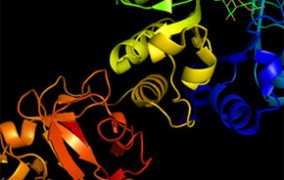
This according to Tom Blundell, Professor Emeritus at Cambridge University, one of the pioneers in the application of the fragment-based approach to discovering new drugs.
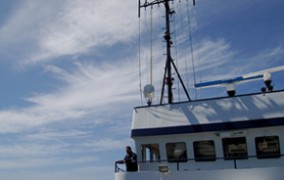
Alpha Crucis, the Brazilian oceanographic ship, is on its way to Brazil. After undergoing renovation for the last 10 months in Seattle, Washington (U.S.A.), the ship set sail on March 30 and is slated to reach the Port of Santos on May 10.
Open access work presents the results of the Thematic Project which conducted an inventory of biodiversity and benthic marine ecosystems on the northern coast of São Paulo
One of the objectives of the Belmont Forum, composed of some of the world’s main research support agencies, is to change the direction of international collaboration in environmental research. A call for proposals was launched
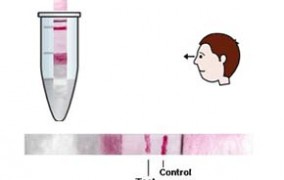
A kit developed at the Butantan Institute detects three categories of Escherichia coli bacteria, which is responsible for 30%-40% of cases of an illness that kills 1.5 million children every year
The planetary system that allowed civilization to develop in recent centuries is threatened, and the result could be a global humanitarian emergency due to the intensification of social, economic and environmental crises.
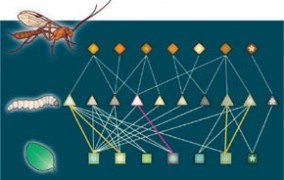
New studies on ecological networks highlight the importance of individual species for the conservation of communities. The trend was revealed in an article analyzing recent studies in the area and penned by a Brazilian scientist and his Argentine colleague
Edgar Dutra Zanotto has coordinated research on the process of controlled crystallization of glass and the development of vitroceramic materials for more than 35 years
Planned growth for research conducted in collaboration with institutions in other countries and the consistent increase in faculty publishing in international scientific magazines are among the main explanations for Universidade de São Paulo’s (USP) improved reputation, according to the university’s Deans of Research and Graduate Studies.
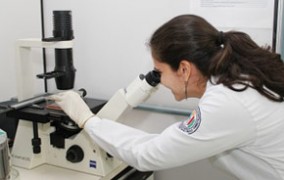
Hepcidin is secreted during inflammatory processes to reduce the iron level in the blood and hinder the multiplication of microorganisms, according to a Unesp study.
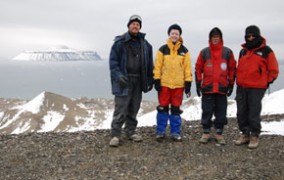
A University of São Paulo group discovers a glacial structure that proves the existence of climatic variations on the Antarctic continent roughly 15 million years ago.
Choosing a periodical before penning the text and considering the novelty and relevance of a study is fundamental, said specialists in the workshop "How to Write for and Get Published in Scientific Journals".
Roughly 80 students and researchers from Brazil and abroad will meet in Ilhabela, São Paulo, from August 19 to 31 to interact with some of the world’s top specialists in multiple areas of Evolutionary Biology.
Nanometric modifications applied to the surface of dental implants enable researchers to accelerate the integration process between the implant and bone tissue in animal models.
Through a PAPPE-PIPE III project, a company allies itself with ITAL to aggregate value to the tilapia filleting process through the use of byproducts to generate other products.
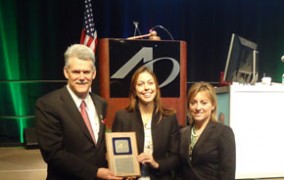
Representatives of FAPESP, Boeing and Embraer held a preparatory meeting for the creation of a research and development center for commercial aviation biofuels.
Pre-clinical tests carried out at the Universidade de São Paulo (USP) revealed that a compound extracted from pariparoba (Pothomorphe umbellata), a bush native to the Atlantic Rain Forest, is capable of inhibiting the development of melanoma and preventing tumor cells from invading the deepest layer of the skin and spreading to other tissues.
The electronic library funded by Bireme and FAPESP continues in first place in the visibility ranking for scientific repositories on the main internet search engines.
A study financed by FAPESP reveals how a drug used in epilepsy treatment affects chromatin, a structure that regulates global gene expression and is essential for cellular processes. The study was published in PLoS One.
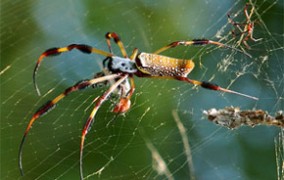
A Thematic Project linked to BIOTA-FAPESP sheds light on the molecular structure of hundreds of toxins produced by spiders, wasps and other arthropods.
The United Nations Conference on Sustainable Development (RIO+20), to be held in Brazil this June, will not have the same legislative character as ECO-92, whose legacy permanently transformed the world’s perspective on the environment. However, RIO+20 could have a world impact of similar magnitude to ECO-92 if it manages to overcome the challenge of integrating the three pillars of sustainable development in a balanced manner. These pillars correspond to environmental, economic and social considerations.
Substituting GDP as a measure of the wealth of nations is one of the recommendations made by researchers who received one of the world’s most important environmental awards.
An international study indicates that 30% of the Greater Metropolitan Region’s inhabitants have mental disorders, the highest recorded prevalence of 24 studied countries.
Fast Company magazine names Bug Agentes Biológicos, funded by FAPESP, as one of the world’s 50 most innovative companies on a list headed by Apple, Facebook and Google.
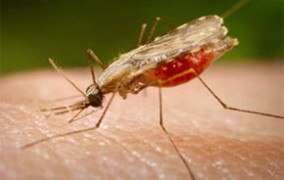
A study conducted at USP reveals that two-thirds of people infected with malaria at an agricultural settlement in the Amazon did not have symptoms but could spread the disease.
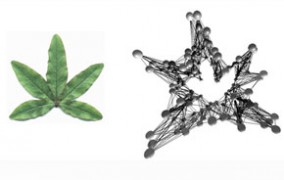
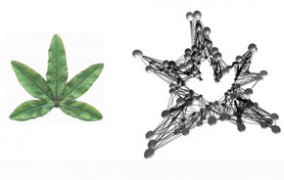
Scientists from the São Carlos Institute of Physics-USP win first place in an international ImageCLÉF competition using a new computer system that recognizes plant species from photos of leaves.
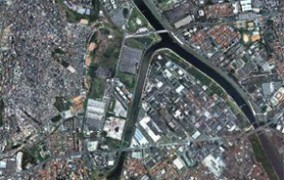
Research at a FAPESP-funded center highlights the intense changes that have radically transformed the social and spatial characteristics of Brazil's largest city.