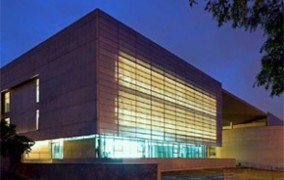
The building on the Universidade de São Paulo campus houses a collection of more than 32,000 titles by Brazilian authors or about Brazil, assembled by Guita and José Mindlin.
Group from Universidade de São Paulo's Physics Institute initiates projects to forecast phenomena that should be observed in LHC experiments starting in 2015.
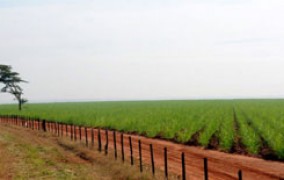
Eucalyptus and pine cultivation for the pulp and paper industry already occupies 25% of the biome, which is also impacted by the expansion of agriculture and inadequate cattle management.
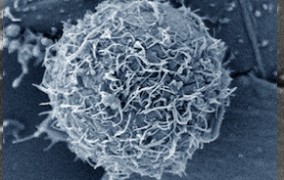
Researchers use a new strategy to study the brains of people with a type of drug-resistant epilepsy and are also using the method to understand the development of the thymus.
James Wallbank, founder of Access Space, talks about the British initiative of social transformation through technology that ranges from the reutilization of computers to the production of digital innovation.
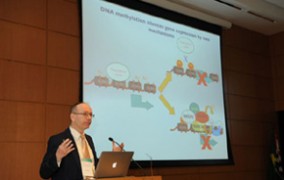
Moshe Szyf, of McGill University, participates in an international symposium organized by FAPESP and Natura. Discussions from the event will inform the calls for proposals to create research centers.
Operating on a supercomputer, the Coastal Forecasting and Monitoring System (SIMCos) forecasts the movement and height of waves at 61 points on the coast; the system performs real-time simulations.
Journal of Natural Products highlights database that includes information on the potential of these secondary metabolites for use in medicinal chemistry, ecological chemistry, and metabolomics.
Scientists will seek to reconstruct the distribution of species over the last thousand years. The study is part of project funded by the São Paulo Research Foundation, NSF and NASA.
Problems such as low wages for workers are closely linked to education in China, says economist Lingxu Zhang, coordinator of a rural education program.
Infrastructure problems, low value-added products, exclusion of poor rural works, issues involving food safety, and threats to the environment are obstacles highlighted by scientists.
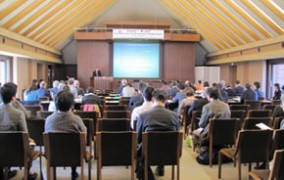
Presentations on research projects underway in the two countries, exchanges of scientists and support opportunities offered by the organizers are highlights of the event held by FAPESP and JSPS in Tokyo.
Foundation directors meet with directors of the JSPS, JST, Riken, Miraikan, Rikkyo University and the University of Tokyo to expand scientific exchange between researchers from the two countries.
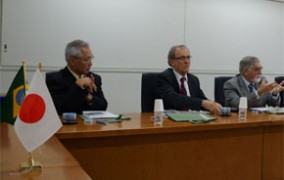
The presidents of FAPESP and the Japanese Society for the Promotion of Science (JSPS) stress the importance of increasing science and technology collaboration between the two countries.
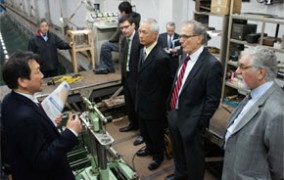
The Shuji Aihara Group, at the University of Tokyo, works with Brazilian scientists to develop structures that are safer for the shipment of oil and gas, and in the future, hydrogen and CO2.
There’s been renewed activity in recent years in the Japanese government’s relationship to dekasseguis, Japanese descendants who settled in Japan in large numbers beginning in 1990, claims Masashi University researcher.
Tsutomu Takeuchi, Director of the Institute of Tropical Medicine at Nagasaki University warns public health authorities of the importance of improved treatment of those infected and the adoption of preventive measures.
Increased knowledge about genes that may increase sugarcane biomass and resistance to hydric stress includes complementary use of other crops established in Brazil.
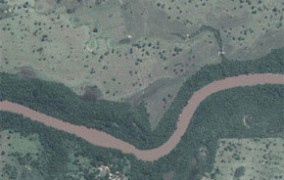
The expansion of sugarcane and soybean cultivation and the replacement of forests by pastureland affect the chemical composition and biodiversity of rivers and lakes, notes USP professor.
Gradual changes by young people in recent years to the Japanese traditional diet pattern means that the country is beginning to exhibit increased childhood-adolescent obesity rates, according to Unicamp researcher.
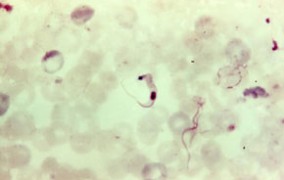
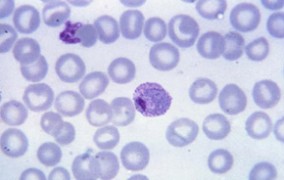
While studies of Plasmodium falciparum have been conducted in recent years, researchers warn that there is still little known about Plasmodium vivax, which is responsible for 85% of malaria cases in Brazil
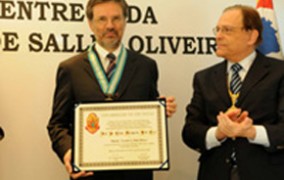
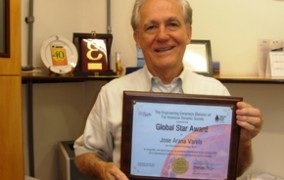
Carlos Henrique de Brito Cruz was awarded the Armando de Salles Oliveira Medal by USP President João Grandino Rodas. It is the highest honor awarded by the Paulista institution
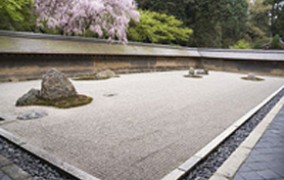
A recurring and mysterious concept in Japanese culture, the “space between things” is the topic of a book by Michiko Okano, professor at the Universidade Federal de São Paulo
Researchers from the Universidade de São Paulo begin project to study the types and amounts of metals present in the gases surrounding groups of galaxies
At the kickoff of the 2013 BIOTA-FAPESP Conference Series, Thomas Lewinsohn from the Universidade de Campinas spoke on the estimated time and cost necessary to describe all the planet’s species
Sherry Turkle, a specialist in relations between technology and society at MIT, warns about the risk of hoping that robots and artificial intelligence products will resolve relationship problems or cure loneliness.
Explosions of giant stars accelerate energy particles powerfully enough to spread them across the entire galaxy, striking the Earth constantly, say scientists
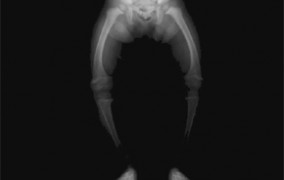
Study helps to uncover the mechanism that leads to X-linked hypophosphatemia, a genetic disease that affects bone mineralization and causes osteomalacia.
Brazilian researchers hope improvements to the Mario Schenberg detector and creative participation by North America’s aLIGO will launch Brazil into the age of gravitational astronomy
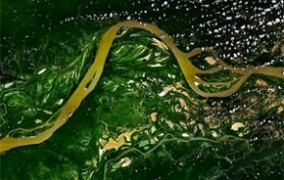
FAPESP symposium brings together specialists in several fields who will spend the next five years researching what happened in the Amazon in the last 20 million years. One of the objectives is to provide a complete overview of the origin of the region’s biodiversity
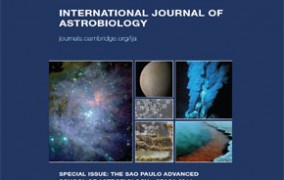
The International Journal of Astrobiology has dedicated an edition to articles based on the conferences held at the São Paulo Advanced School of Sciences on Astrobiology, sponsored by FAPESP.
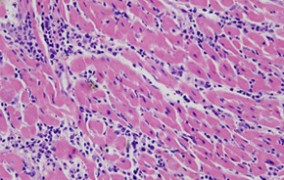
Patients receiving hematopoietic stem cell transplants should first undergo rigorous cardiac screening, say scientists from USP and Northwestern University.
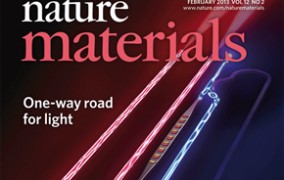
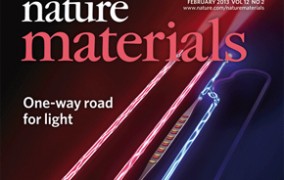
Micromechanical oscillators created by a Brazilian researcher in partnership with U.S. scientists pave the way for the use of light in computer microchips to carry information.
New work offers a collection of articles and reports published by Julio Abramczyk in the Folha de S.Paulo newspaper and portrays scientific coverage in the 1960s, 1970s and 1980s.
Carlos Joly is one of five representatives from Latin America and the Caribbean at the Intergovernmental Platform on Biodiversity and Ecosystem Services.