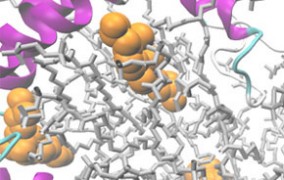
The acronym HDL – which stands for "high-density lipoprotein," more popularly known as "good cholesterol" – has become familiar to even those outside health care, now that several studies have demonstrated the importance that this lipoprotein has in the prevention of atherosclerosis and cardiovascular disease.
Doing research is not enough, being a good scientist means knowing how to write scientific articles, says Carl Webster, editor of World Aquaculture Magazine
USP historian makes the above assertion in a study on the first stage of Japanese immigration to Brazil, which covers the process of cultural integration.
A study conducted in 11 Brazilian capitals revealed that more than 70% of the 4,025 interviewees were spanked when children. For 20% of them, physical punishment occurred regularly – at least once a week or more.
Study points to a 75% increase in the concentration of pollution and a 14% increase in deaths due to cardiorespiratory problems if Brazil’s largest city had no metro for a year
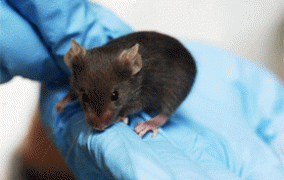
Over 16% of the researchers and employees that work in vivariums and laboratories develop allergies to the proteins that are shed in the urine, saliva or fur of the laboratory animals. Although their constant exposure to these allergens places these workers at risk of developing illnesses such as asthma, only 19.4% of workers routinely use protective masks.
The program, undertaken in cooperation with the Natural Environment Research Council, will fund studies on biodiversity and ecosystem processes in human-modified tropical forests.
Marcelo Finger’s group at IME-USP is developing algorithms to improve the efficiency of search engines and automatic translators and thereby facilitate disease diagnosis.
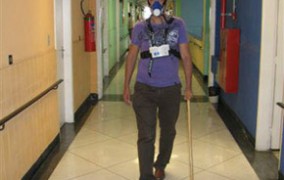
The walking aid reduces pain by approximately 30%, lowers the consumption of anti-inflammatory drugs and increases functional capacity by 20%, according to a new study
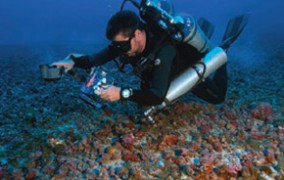
A study led by Brazilians maps out the Abrolhos Shelf and reveals that the region has the largest known stretch of calcareous algae reefs, which are highly vulnerable to marine acidification
The final result of the UN Conference on Sustainable Development (RIO+20), which ended on June 22 in Rio de Janeiro, is a document lacking focus that does not attend to the urgency of the problems the world is facing. Such is the analysis of Celso Lafer, FAPESP president.
A North American environmentalist, a BIOTA-FAPESP coordinator and the Brazilian Society for the Progress of Science will receive recognition for their environmental actions.
Tim Benton from the University of Leeds argues that sustainable agriculture is a more complex concept than it appears and that, if misunderstood, it can worsen environmental impacts.
In a new paradigm of science for global sustainability, scientists will tend to be more multidisciplinary and participative in society, according to Lidia Brito, director of UNESCO’s Scientific Policy Division.
A global research platform in sustainability was launched during the United Nations Conference on Sustainable Development (RIO+20) by an alliance made up of the leading international science institutions, research foundations and organizations linked to the United Nations.
Members of the scientific community, politicians and business people attend a ceremony held at Sala São Paulo. Watch the FAPESP’s Golden Jubilee commemoration video.
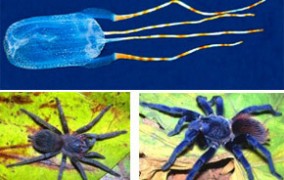
Arizona State University publishes a list of the most beautiful and strange animals discovered in 2011, including the Caribbean medusa and blue tarantula, which were described in part by Brazilian scientists.
Nineteen years ago, a group of researchers took on the challenge of mapping and classifying the taxonomy of over 7,000 species of flowering plants—or phanerogams—found in the state of São Paulo.
Their work led to the publication of six books. The seventh volume of the Flora Fanerogâmica do Estado de São Paulo is available.
Tactile cartography, focused on the creation of maps, globes and mock-ups to teach geography to the blind or people with local visual acuity, is still little used in Brazil, according to a study
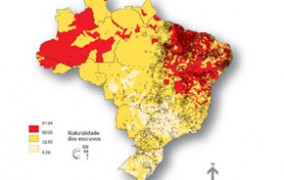
The Atlas of Slave Labor, produced by geographers at Unesp and USP, describes the distribution and movement of Brazilian slave labor and presents tools to locate the most susceptible sectors and the most vulnerable populations
A system being installed at the Human Genome Studies Center will store genomic information and molecular test results from patients served by the center
"This inauguration is the most important moment for Brazilian oceanography in the past 45 years," affirms the director of USP’s oceanography institute. USP will manage the ship acquired by FAPESP
A study conducted by an international group of scientists, including Brazilian researchers, has identified the gene that causes IMAGe syndrome, an acronym for intrauterine growth restriction, metaphyseal dysplasia, congenital adrenal hypoplasia, and genital anomalies. The study was published in the journal Nature Genetics.
A balance of the National Institute of Science and Technology in Astrophysics’s three years of activity shows a continuous increase in publications in high impact magazines. In 2011, researchers surpassed the 200 milestone.
Known for the efficiency of its institutional and operational model, FAPESP commemorates its Golden Jubilee, both modernized and faithful to the ideas upon which the institution was founded.
The majority of women who use anxiolytics incorrectly buy them with a prescription but, despite being under a doctor’s care, are not given appropriate information on the risks of prolonged use of this type of drug.
Evidence was presented by researchers at the Centro de Estudos da Metrópole using a new methodology developed to evaluate the performance of social policy on education and health.
Attacks by the sugarcane borer—sugarcane’s main pest—cause the plant to produce proteins that act not against the insect but against a fungus, as reported in a study led by Brazilian researchers.
New scientific advances have made cellulosic ethanol production a reality, but more focused research is needed to make it economically viable on an industrial scale.
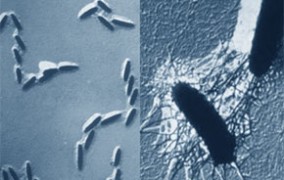
Researchers from Brazil and the United States describe the construction of a bacterial library containing sugarcane genomic DNA. This library could be used as a tool to further several lines of study.
An event organized by the International Council for Science (ICSU) will discuss ways of forming a new relationship between science and society. The agenda also includes the launch of a research program for global sustainability.
A molecule developed by researchers at Stanford University in the United States and the Universidade de São Paulo proved able to stabilize and even reverse the degenerative process observed in congestive heart failure.
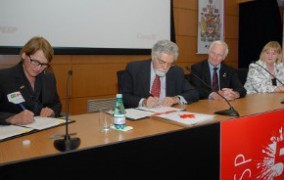
FAPESP and NSERC signed a memorandum of understanding that envisages collaboration in science, technology and innovation among São Paulo State institutions and different regions of Canada.
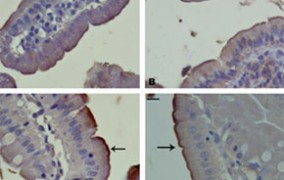
Unesp scientists reveal alterations of enzymes and nutrient transporters in the intestines of rats whose mothers underwent protein restriction during pregnancy