





By José Tadeu Arantes | Agência FAPESP – For centuries, the study of ancient history relied primarily on interpreting classical texts and examining inscriptions and archaeological remains at their sites of origin or in museums. In recent years, however, a little-known transformation has profoundly changed this landscape. The digitization of extensive archaeological collections, coupled with the development of quantitative methods that can integrate millions of scattered records, is ushering in a new era of historical research. Like other scientific disciplines that have benefited from processing colossal amounts of information, archaeology and history have entered the era of data science.
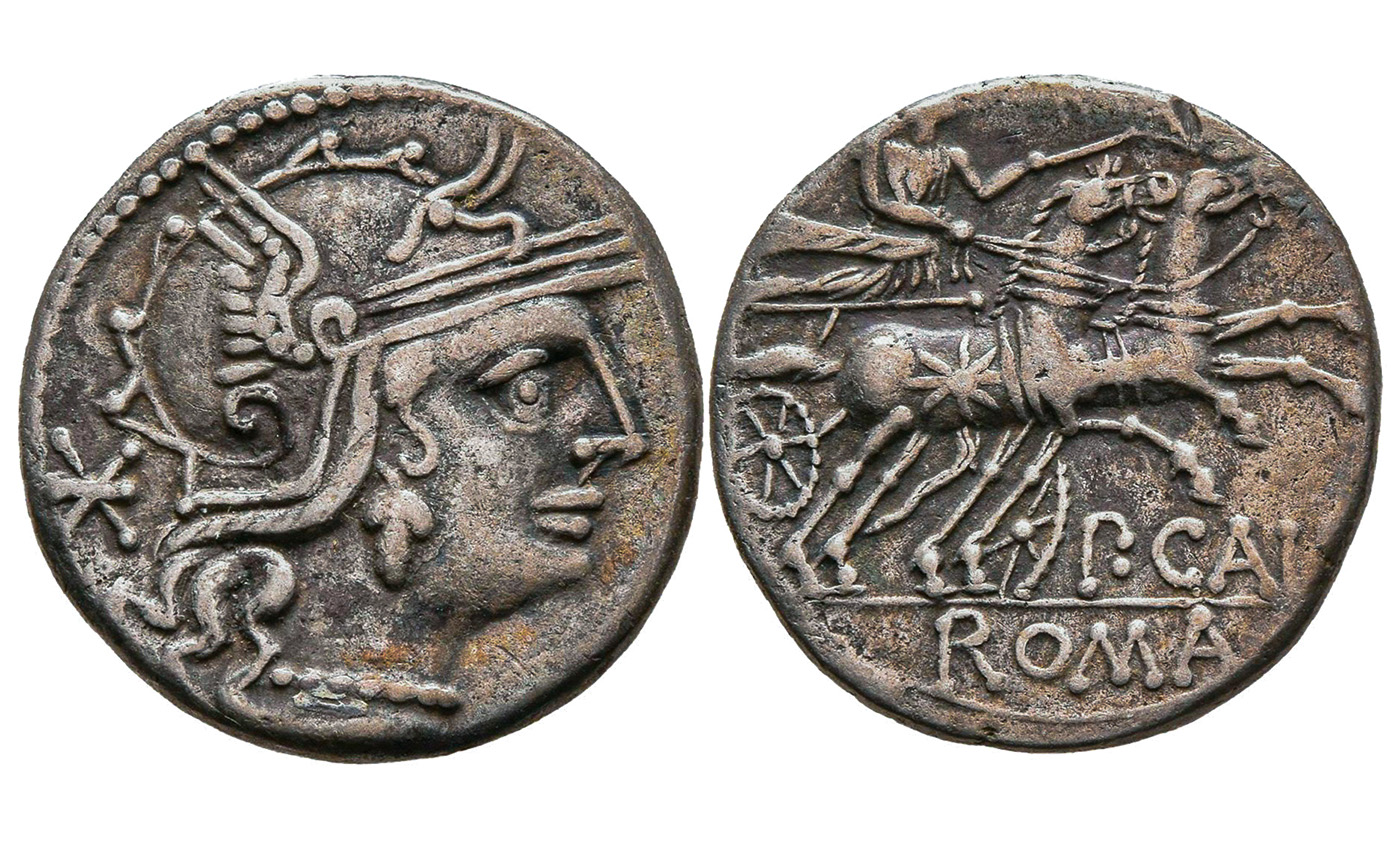
Two researchers from the Regional and Urban Economics Lab at the University of São Paulo (NEREUS-USP) in Brazil have just presented an example of this approach. Using techniques from regional economics, spatial analysis, geographic information systems, and large international archaeological databases, they reconstructed the monetary circulation of the Roman Republic, focusing on the period from 155 BCE to 2 CE, based on the remains of approximately four million coins found in excavations conducted over two centuries. Their study shows that the consolidation of Roman rule depended less on military conquest and more on the economic integration of the territories they conquered.
The research was conducted by Eduardo Amaral Haddad, a professor at the School of Economics, Business, and Accounting (FEA-USP), and Inácio Fernandes Araújo, currently a professor at the Luiz de Queiroz College of Agriculture (ESALQ-USP). The two authors published an article in the journal Humanities and Social Sciences Communications, which is part of the Nature group.
The research seeks to understand how coins reflect the functioning of a growing economy, going beyond simply tracking their movement. “Each coin preserved by archaeology provides three key pieces of information: where it was minted, when it was produced, and where it was found some 2,000 years later. Taken in isolation, that information reveals little. However, when millions of records are analyzed together, they can reveal the paths taken by money, the intensity of economic exchanges, the integration between different regions, and even the institutional evolution of one of the largest economies of antiquity,” says Haddad.
The research was supported by FAPESP through two projects (14/25030-2 and 19/00057-9).
A study that began as a hobby
The project originated in 2014 when Haddad, already a professor at FEA-USP, took a sabbatical at Princeton University in the United States. Although he was conducting research in economics, he began attending a weekly seminar organized by the Department of Classical Studies out of personal interest.
“At one of those meetings, I attended a presentation of a study that used shipwreck remains and pottery shards to reconstruct trade networks in the ancient Mediterranean. That idea stuck with me. Shortly thereafter, while exploring the university library, I found a catalog of Roman coins that contained the information I needed: the date of minting, the location where each coin was produced, and the site where it was found during archaeological excavations. I photocopied the catalog, thinking it would be possible to analyze those networks using tools from regional and urban economics,” he recalls.
That initial interest eventually turned into a long-term project. To deepen his knowledge of the classical world, Haddad enrolled in a distance-learning graduate program on the ancient Mediterranean offered by the University of Leicester in the United Kingdom. One of the papers he wrote during the program became the basis for a published article.
Computational archaeology
For a long time, information on Roman coins was scattered among museums, libraries, private collections, and researchers’ archives. This fragmentation hindered attempts to reconstruct large-scale circulation patterns. However, the situation began to change when institutions such as the American Numismatic Society started coordinating international projects to digitize and standardize these collections. These projects established common protocols for recording archaeological information. Today, large public databases bring together millions of records from excavations conducted in different countries.
“The main source for our study was Coin Hoards of the Roman Republic Online [CHRR], a database dedicated to coin hoards from the Roman Republic. The study also drew on various digital archaeology platforms. Among them was ORBIS, developed by Stanford University [United States], which simulates travel along the network of roads, rivers, and sea routes of the Roman world and estimates the time and cost of journeys between hundreds of locations. The study also included the Pleiades gazetteer and the Roman Road Network databases, which provided georeferenced information on cities, roads, and ports in the ancient Mediterranean,” Haddad explains.
These databases were integrated into a single spatial analysis system. After a careful curation process, the researchers began working with a set of approximately four million coins organized into 24,646 hoards corresponding to 5,167 pairs of minting and discovery sites. Rather than analyzing the coins individually, the researchers chose to use these archaeological records, thereby reducing distortions caused by differences in their preservation, loss, or reuse over the centuries.
However, the goal went far beyond simply creating maps. “We needed to consider that circulation from the perspective of human interaction in space according to an economic logic,” Haddad explains. It was at that moment that his expertise in regional economics found an unexpected application. The same mathematical tools developed to study contemporary flows of people, goods, and income were used to investigate monetary movements that occurred more than 2,000 years ago. Instead of analyzing modern cities, the focus shifted to the Roman Mediterranean. Instead of tracking contemporary supply chains, the researchers sought to reconstruct the economic networks that sustained Rome’s expansion during the last two centuries of the Republic.
Follow the money
The Roman Republic is conventionally dated from 509 BCE to 27 CE, when Octavian Augustus established the Principate. The last two centuries of the Republic therefore correspond to the period between 200 and 27 CE, which encompasses the consolidation of Roman hegemony following the Second Punic War (218–201 CE), the conquest of the Hellenistic Mediterranean, and the expansion into Hispania, Gaul, the Balkans, and the East. This period also includes the civil wars that led to the end of the Republic.
The researchers’ first question was simple yet decisive: Was the spatial distribution of the coins random, or did it follow a pattern? To answer this question, the team employed spatial analysis techniques widely used in regional economics and economic geography. The tests showed that the findings were far from random. On the contrary, the coins formed statistically significant clusters concentrated along the main trade routes of the Roman world.
Once this initial result was identified, an even more ambitious question arose: Would it be possible to reconstruct the paths taken by the money? “After verifying a correlation between the location and concentration of the coins, we began to cross-reference that information with Roman roads. And we found something very interesting: a clear spread of coins originating from Rome,” says Haddad.
The maps produced by the study show that monetary circulation closely followed the infrastructure built by the Roman Republic. Roads, ports, and major urban centers were not just thoroughfares; they were the channels through which the economic relations that sustained territorial expansion spread.
However, tracing the path of the coins was only the first step. The next question was why some regions had intense monetary circulation while others remained relatively peripheral.
“Answering that question required more than maps. It was necessary to reconstruct – albeit approximately – the functioning of the Roman economy itself. To do so, we organized information from historical and archaeological literature into a model inspired by so-called social accounting matrices, a tool used to analyze contemporary economies. The model describes the relationships among the main economic actors of the time: the government, households, landowners, merchants, slaves, and the army. It seeks to represent the flows of goods and payments that linked those institutions. It also distinguishes between different types of production and consumption, ranging from food and raw materials to manufactured goods and luxury items, the trade in which could extend over much greater distances,” Haddad reports.
Another aspect incorporated into the model was the gradual monetization of the Roman economy. During part of the Republic, many transactions continued to be conducted in kind. Over time, however, payments related to supplying the army, maintaining slaves, and various public activities progressively began to be made in coin. This transformation left its mark on the archaeological collections themselves. Based on this economic model, coin hoards found in excavations ceased to be mere collections of ancient coins. Instead, they are treated as material evidence of the economic relationships that structured the Roman Republic.
First the army, then the economy
At this point, one of the most interesting conclusions of the study emerged. A widely held interpretation attributes the Roman army the predominant role in disseminating currency throughout the conquered territories. This assertion seems intuitive. As the legions advanced, they brought with them soldiers who received wages and suppliers who traded goods, generating intense monetary circulation. However, the results only partially confirm this hypothesis.
According to Haddad, military structures played a decisive role in the initial phase of expansion. However, their influence waned as the new territories were permanently incorporated into the Roman world. “What we realized was that military expansion introduced monetary circulation, but it only became established once those territories were effectively integrated, creating economic, religious, administrative, and civic structures capable of generating a permanent demand for currency,” he points out. In other words, the army served as a catalyst for opening up these regions. It was the economy that ensured the permanence of the currency.
This finding helps explain why historical interpretations focused exclusively on military action fail to capture a fundamental aspect of Roman expansion. Conquering a territory was only the beginning. For it to be effectively integrated into the Republic, markets, cities, administrative institutions, religious centers, and permanent networks of exchange had to be built. The maps of currency circulation are beginning to reveal this process of integration.
Another important conclusion concerns the evolution of Roman economic geography itself. “In the early periods analyzed, coins remained relatively close to the places where they had been minted. However, as the Republic expanded its borders, they began to be found at increasingly greater distances. In statistical models, this appears as a progressive reduction in the effect of distance on coin circulation. In other words, regions previously separated by geographical barriers became progressively integrated through a common network of transportation, markets, and institutions,” Haddad explains.
According to the researcher, this is perhaps one of the most significant findings of the study. “As territorial expansion occurs, we begin to find coins at increasingly greater distances. The role of distance gradually diminishes, suggesting a growing integration of the territory,” he summarizes. This conclusion goes far beyond numismatics [the discipline dedicated to the study of coins as historical documents]. It suggests that the circulation of coins can serve as an indirect indicator of the degree of economic integration among the empire’s different regions.
Diversified markets
Spatial analysis revealed the intensity of monetary circulation and different functional regions within the Roman Republic.
“At the center of the system was the city of Rome itself, where expenditures related to public administration predominated. Surrounding it was a highly integrated economic core corresponding to the Italian Peninsula, where monetary circulation primarily reflected market activities. Further out lay an intermediate belt, a sort of buffer zone between the consolidated core and the recently incorporated regions. Within it, administrative, economic, and military expenditures coexisted. In the areas of most recent expansion, however, expenditures related to conquest and territorial occupation predominated. As those regions were pacified and permanently incorporated into the Roman world, the share of military expenditures decreased, giving way to the growth of civil, administrative, and commercial activities,” Haddad explains.
The article “Economic footprints: Mapping coin circulation and economic networks in ancient Rome” can be read at nature.com/articles/s41599-026-07815-7.
Republish
The Agency FAPESP licenses news via Creative Commons (CC-BY-NC-ND) so that they can be republished free of charge and in a simple way by other digital or printed vehicles. Agência FAPESP must be credited as the source of the content being republished and the name of the reporter (if any) must be attributed. Using the HMTL button below allows compliance with these rules, detailed in Digital Republishing Policy FAPESP.
