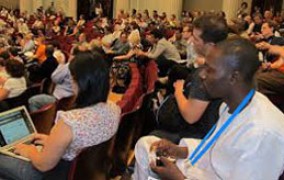
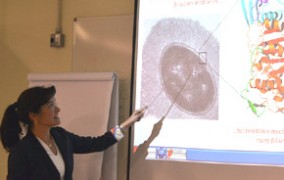
The International Journal of Astrobiology has dedicated an edition to articles based on the conferences held at the São Paulo Advanced School of Sciences on Astrobiology, sponsored by FAPESP.
Patients receiving hematopoietic stem cell transplants should first undergo rigorous cardiac screening, say scientists from USP and Northwestern University.

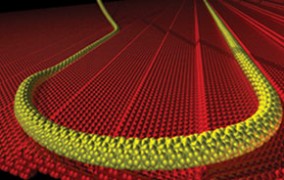
Micromechanical oscillators created by a Brazilian researcher in partnership with U.S. scientists pave the way for the use of light in computer microchips to carry information.

New work offers a collection of articles and reports published by Julio Abramczyk in the Folha de S.Paulo newspaper and portrays scientific coverage in the 1960s, 1970s and 1980s.
Carlos Joly is one of five representatives from Latin America and the Caribbean at the Intergovernmental Platform on Biodiversity and Ecosystem Services.
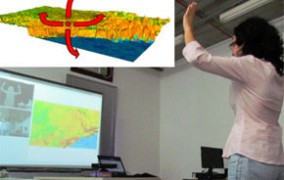
Program developed by Brazilian researcher for the iPhone and iPad processes and converts numerical data on solar explosions and particle emissions into graphs.
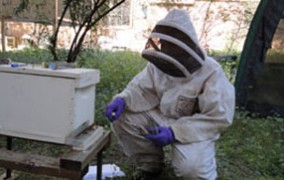
A study on the intestinal function of insects enhances researchers’ understanding of these animals and could lead to innovative methods for combatting disease and controlling agricultural pests.
Former University of São Paulo president receives a US$ 500,000 Lifetime Achievement award as the winner of the Zayed Future Energy Prize in the United Arab Emirates.
FAPESP-funded studies coordinated by Marise Lazaretti Castro (Unifesp) reveal that the incidence of vitamin deficiency in the population of São Paulo is high, especially among older individuals.
Sirius Project has an estimated cost of R$ 650 million and is slated for conclusion in 2016. The laboratory is expected to attract prominent international researchers.
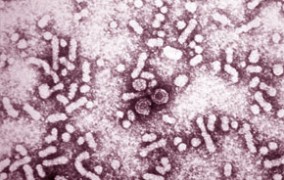
Aside from patenting the Araraquara hantavirus antigenic protein and distributing it throughout Brazil and South America, researchers from the University of São Paulo School of Medicine are investigating other emerging viruses including Oropouche and human Bocavirus.
Investment inflow from foreign companies and the internationalization of Brazilian corporations still have not generated the desired effects for the country’s economic development, says Roberto Borghi (Cambridge).
Creation of a common environment is fundamental for nations in the region to survive changes in the global economy, says Facamp and Unicamp professor Luiz Gonzaga Belluzzo.
Study shows that the level of heavy metals in organisms living in marine sediment was slightly higher in submarine outfall than that found in seawater.
Study analyzes the plans for building Brazil’s roadway network, drafted between 1869 and 1889, the modernizing forces that inspired them and the conservative resistance that caused them to fail.
Substances produced by the membrane of the interior part of the placenta could stimulate liver regeneration. The next step is to isolate molecules and discover how they act.
Thematic Project conducted by the USP Public Health School organizes cataloguing of Anopheles genus mosquitoes and increases the number of known species by 76%. The material will be used in research for years to come.
Translational medicine speeds knowledge transfer and integrates basic and clinical research, says Eduardo Moacyr Krieger, coordinator of the Translation Cardiology Program at InCor.
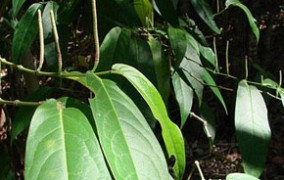
The objective now is to create a genetically modified plant that produces a type of lignin that is easier to separate from cellulose, easing the production process of second generation ethanol, explains Paulo Mazzafera (Unicamp), coordinator of the FAPESP Thematic Project.
Researchers from USP, UFSCar and other institutions develop film for mirrors and metal structures that will support the 100 telescopes in the Cherenkov Telescope Array.
Study shows that capsules covered in whey protein may protect lactobacilli against acid in the digestive tract, improving their potentially improving their efficacy.
Made from cheap, ubiquitous raw materials, the supplement may help diminish anemia, which affects 21% of all children under 5 and 43% of pregnant women in Brazil.
Scientists from different nations define priority topics for one of the largest studies on the topic, which is expected to be part of an international call for proposals released by FAPESP.
Researchers at the Butantan Institute map a set of venom peptides from three species of genus Bothrops, including the jararaca, and find molecules with potential pharmacological activity.
On the first anniversary of the death of FMUSP Professor Emeritus and FAPESP’s former CEO, scientists remember that Brazil’s outstanding position in cancer treatment and research is largely due to Professor Brentani.
A FAPESP initiative aims to establish collaborative projects between institutions in São Paulo and high-level researchers like Ruth and Victor Nussenzweig from New York University, who will coordinate a project at Unifesp.
Book offers a collection of articles by specialists working in the same fields as Lafer, the FAPESP president and retired law professor at Universidade de São Paulo’s Law School.
The partnership anticipates more than R$ 10 million in investments over the next five years. The first call for proposals is expected to be announced in December and will include topics related to the bioeconomy.
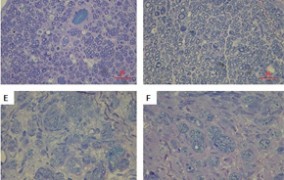
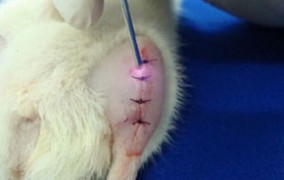
Through the application of undifferentiated hepatic stem cells extracted from the liver bud, USP researchers have reduced the liver regeneration time by half in rats subjected to surgery removing 70% of the organ.