




Sedentary lifestyles are associated with approximately 5 million deaths annually (photo: Cecília Bastos/USP Imagens)
Black, mixed-race, Asian, and Indigenous women with lower levels of education face greater difficulties. The study followed the same group for a decade.
Black, mixed-race, Asian, and Indigenous women with lower levels of education face greater difficulties. The study followed the same group for a decade.
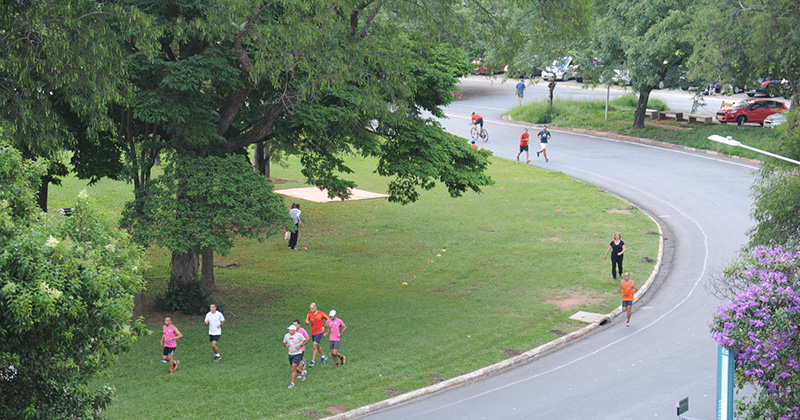
Sedentary lifestyles are associated with approximately 5 million deaths annually (photo: Cecília Bastos/USP Imagens)
By Luciana Constantino | Agência FAPESP – A ten-year study of residents of the city of São Paulo, Brazil, revealed that leisure-time physical activity is highly unequal and that the gap between social strata is widening. While highly educated white men are exercising more, women from racial minorities with low levels of education have the lowest rates of physical activity during leisure time. In contrast, exercise associated with urban transportation, such as walking to work, is distributed more evenly across different population segments. The data were published in May in the International Journal of Behavioral Nutrition and Physical Activity.
While other studies in the Global North have examined social factors influencing sports participation, this study stands out as a pioneering effort. Led by scientists at the University of São Paulo (USP), it tracked 978 participants from 2014 to 2024, with data collected at three time points: 2014/15, 2020/21, and 2023/24.
Based on an analysis of how different social characteristics combine to shape people’s opportunities and experiences (known as intersectional social identities) over time, the scientists advocate prioritizing the most vulnerable groups in public policies aimed at promoting physical and recreational activities.
“We concluded that engaging in physical activity for leisure doesn’t depend solely on motivation or individual choice. It’s shaped by environmental, structural, and social factors. We found that inequalities persisted and the gap between groups widened over ten years of follow-up. Unfortunately, this type of activity remains a privilege of the most socially advantaged groups, which we identified as white men with higher levels of education. Conversely, the most vulnerable are Black, Brown, Asian, or Indigenous women with fewer years of schooling,” summarizes Andreia Alexandra Machado Miranda, a nutritionist and the corresponding author of the article. She is currently a member of the Center for Epidemiological Research in Nutrition and Health (NUPENS) at the USP School of Public Health (FSP).
At the time of the study, Miranda was a collaborating researcher with the Physical Activity Epidemiology Group (GEPAF-USP), which is coordinated by Alex Antonio Florindo. Florindo is a professor at the USP School of Arts, Sciences, and Humanities (EACH) and is also an author of the article.
“We work with the ecological model of physical activity, whose main objective is to explain it in terms of its determinants. Engaging in it doesn’t depend solely on people’s willingness but also involves the experiences they may have throughout their lives, the social support they receive from partners or family members, as well as external factors such as access to the environment and public policies. There’s a significant gap between those who are able to engage in physical activity during their leisure time and those who aren’t, even if they want to,” Florindo tells Agência FAPESP.
According to the findings, the prevalence of physical activity during leisure time was 51% among white men with higher levels of education and 29% among the most vulnerable group in the first survey. In the third assessment phase, these figures rose to 65% and 39%, respectively, widening the inequality between the groups.
Miranda highlights the difficulties women face in participating in sports, which extend beyond a lack of time. “In addition to dealing with an unequal distribution of domestic work, they often earn lower wages and face a lack of safety when visiting public spaces. Depending on the neighborhood where they live, especially in outlying areas, there’s a lack of urban infrastructure, poorly lit areas, and few open spaces,” says the nutritionist.
In addition to in-person and remote interviews, the researchers used the long version of the International Physical Activity Questionnaire (IPAQ) and a Multiple Jeopardy Index, which incorporates data on sex, race/skin color, and educational attainment. This index yields a score ranging from 0 (least vulnerable) to 4 (most vulnerable).
A public health issue
In addition to promoting physical and mental well-being, exercise has many health benefits. It reduces the risk of stroke and cardiovascular disease, contributes to weight control and management of metabolic diseases such as diabetes, and positively impacts immunity.
The World Health Organization recommends that adults engage in 150 to 300 minutes of moderate-intensity or 75 to 150 minutes of vigorous-intensity physical activity per week. These activities include walking (outdoors or on a treadmill), running, weight training, water aerobics, swimming, cycling, volleyball, dancing, and team sports, among others.
However, recent studies have revealed that nearly one-third of adults (31%), or about 1.8 billion people worldwide, did not meet the WHO’s minimum recommendations in 2022 (the latest available data). Furthermore, sedentary lifestyles are associated with approximately 5 million deaths annually.
According to data from the latest Surveillance System for Risk and Protective Factors for Chronic Diseases by Telephone Survey (VIGITEL), Brazil’s Ministry of Health found that 42.3% of adults engaged in at least 150 minutes of moderate physical activity per week in 2024. The goal is to increase this figure to 50.7% by 2030. When broken down by sex, the percentages are 47.7% for men and 37.9% for women.
Commuting
The group also analyzed walking as a means of transportation. In this case, there was no significant correlation between the social vulnerability index and physical activity while commuting.
Overall, participation increased, rising from 61.8% to 71.6% between the first and third assessment periods. The activity was most prevalent among young Black or mixed-race men with a high school education.
For Miranda, these results suggest that walking to work is more driven by daily necessity and urban mobility conditions than personal choice. “It’s possible that factors such as access to public transportation, neighborhood characteristics, and socioeconomic conditions influence this type of commuting. However, our study found no statistically significant association between the social vulnerability index and this type of physical activity,” she states.
According to the researchers, walking for commuting is a practice that could easily be incorporated into daily life. As such, it would contribute to public health in cities, as well as promote the use of public and shared transportation and reduce reliance on individual vehicles, such as cars.
The initial sample for the study was based on the São Paulo Municipal Health Survey (ISA-Capital), which provides data on health and service use to inform public policy. The subsequent longitudinal study, which followed the same population for ten years, was named the ISA Physical Activity and Environment Study.
The sample was stratified across five health zones in the capital, a metropolis characterized by various types of socio-spatial inequalities. One such inequality is that approximately 963,700 households, where 22.5% of the city’s residents live, are located in areas of high or very high vulnerability, as indicated by the São Paulo Index of Social Vulnerability, developed by the SEADE (Statewide System for Data Analysis) Foundation.
While not the direct focus of this study, previous research has shown that socially vulnerable areas face environmental and urban challenges, such as greater exposure to heat islands. This occurs in outlying regions of the eastern, northern, and southern zones, which experience higher temperatures than other areas of the city (read more at pp.nexojornal.com.br/ponto-de-vista/2025/11/07/exposicao-ao-calor-a-face-invisivel-da-moradia-inadequada).
In this context, the authors emphasize the importance of integrated public policies that promote health equity and increase opportunities for physical activity, in line with the United Nations (UN) Sustainable Development Goals.
Florindo cites the implementation of new bike lanes in São Paulo in recent years as an example of such a policy, which has encouraged residents to cycle more. Another study coordinated by the professor found that the presence of bike lanes within 500 meters of a residence was a key factor in encouraging cycling (read more at agencia.fapesp.br/58622).
The group has used the sample data to cross-analyze other variables related to health and physical activity. According to Florindo, one of the current lines of research aims to link these factors to diet.
The study received support from FAPESP through the Thematic Project “Built Environment, Physical Activity, and Nutritional Status in Adults: A Longitudinal Study”, as well as a research grant from the BRIDGE Global Health Partnership, which is funded by the University of Birmingham and the University of Illinois.
The article “Social inequalities in leisure-time and transport-related physical activity through the lens of intersectionality: A 10-year longitudinal study in Brazil” can be read at link.springer.com/article/10.1186/s12966-026-01900-5.
The Agency FAPESP licenses news via Creative Commons (CC-BY-NC-ND) so that they can be republished free of charge and in a simple way by other digital or printed vehicles. Agência FAPESP must be credited as the source of the content being republished and the name of the reporter (if any) must be attributed. Using the HMTL button below allows compliance with these rules, detailed in Digital Republishing Policy FAPESP.
