





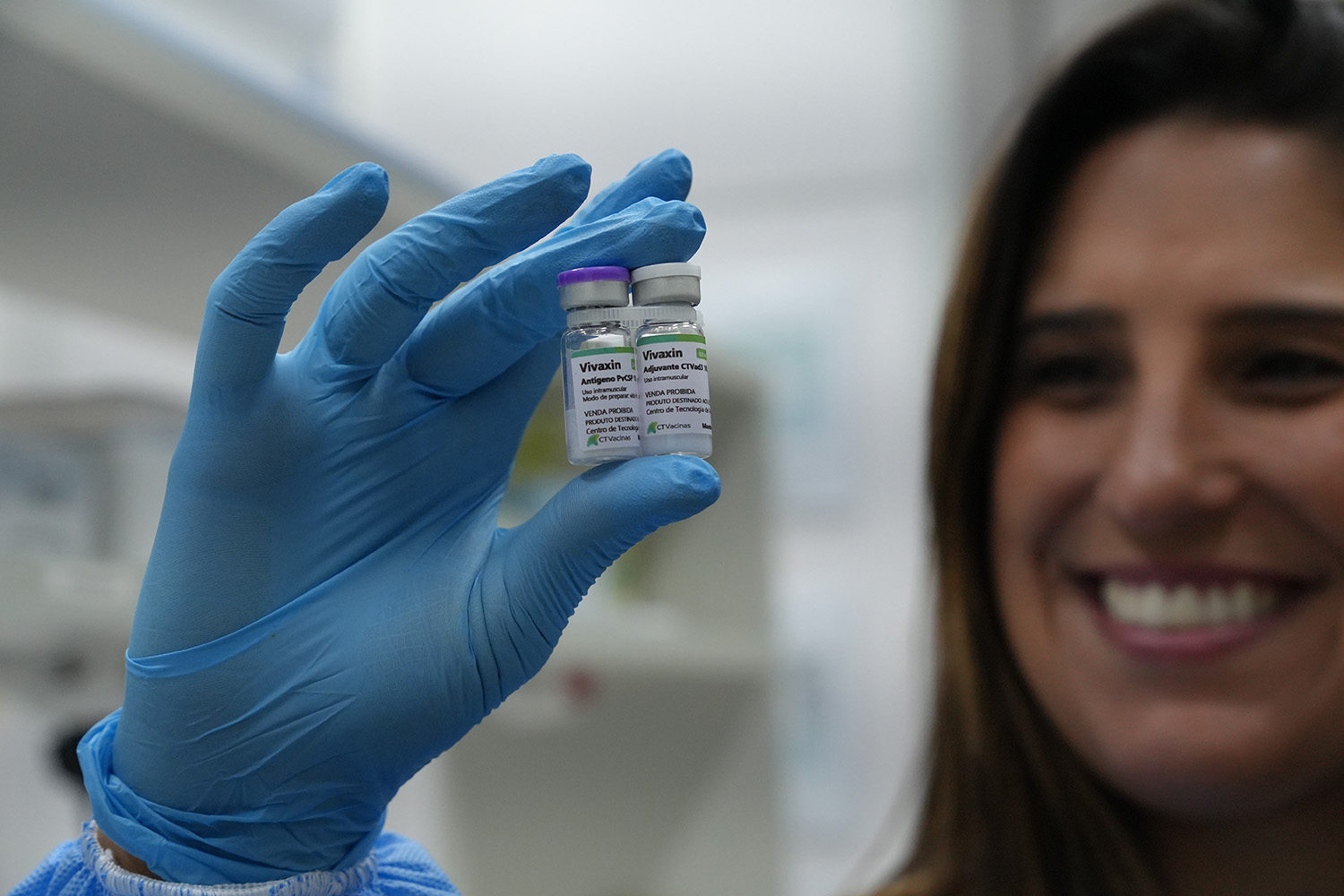
By Luciana Constantino | Agência FAPESP – A Brazilian vaccine against vivax malaria, the most common form of the disease in Brazil, has received approval for human trials. No vaccine against this form of malaria is currently available anywhere in the world. Called Vivaxin, the formulation is entering Phase 1 clinical trials, which will evaluate its safety and potential adverse reactions, as well as its ability to stimulate antibody production, i.e., the immune response.
The trial will involve 48 healthy volunteers, aged 18 to 59, who have never had malaria. Recruitment will begin in January 2027. Groups receiving the vaccine and a placebo (a formulation without the active ingredient) will be evaluated in a three-dose regimen with a 28-day interval between doses. The volunteers will be monitored for one year.
Approval was granted by the Brazilian Health Regulatory Agency (ANVISA) in Resolution No. 3,956, published in the Diário Oficial da União (Official Gazette of the Union) on October 7, 2026.
The vaccine, developed at the University of São Paulo (USP) in partnership with the Vaccine Technology Center (CTVacinas) at the Federal University of Minas Gerais (UFMG) and the Brazilian pharmaceutical company Cristália, had already undergone testing for good laboratory and manufacturing practices. Its immunizing capacity has also been proven in animals.
The researchers, who received funding from FAPESP, the Brazilian Innovation Agency (FINEP) and the Ministries of Health and Science, Technology, and Innovation, have already filed for a patent in Brazil and abroad (read more at agencia.fapesp.br/53634).
If Phase 1 demonstrates the vaccine’s safety, it will advance to Phases 2 and 3 of clinical trials. These trials will be conducted with a larger number of volunteers. The plan is for approximately 300 people to participate in Brazil, primarily in the Amazon region. Volunteers from other countries will be included later. Monitoring of the vaccine’s efficacy will continue throughout these phases. An application for registration will only be submitted to ANVISA for large-scale production and commercialization at the end of this entire process, for which there is no set deadline.
“This is an unprecedented vaccine worldwide. It was developed entirely in Brazil. At ANVISA, it took us almost a year and a half to obtain approval for Phase 1. Once all the stages are completed, it’ll be a breakthrough for the world,” Irene Soares, a professor at the School of Pharmaceutical Sciences (FCF) at USP and one of the study’s coordinators, told Agência FAPESP. The other coordinator is Professor Ricardo Gazzinelli, director of CTVacinas.
Gazzinelli believes that developing this type of vaccine will not only reduce the impact of the disease on healthcare systems, but also improve the daily lives of vulnerable populations. “This vaccine could play an extremely important role in eliminating malaria from our country and contributing to the control of the disease in Latin America. Since sick people can’t work, the socioeconomic impact is significant,” said the director in a press release.
Epidemiological overview
Malaria is an infectious disease transmitted to humans through the bite of female Anopheles mosquitoes. It is caused by parasites of the genus Plasmodium. Two species of the parasite pose the greatest threat worldwide: P. vivax, predominant in Brazil and the Americas, and P. falciparum, which accounts for the majority of cases in Africa and is the only species for which a vaccine exists.
Despite advances in treatment, a 2025 report by the World Health Organization (WHO) indicates that 282 million cases were recorded in 80 countries with local (endemic) transmission. Of these, 9.9 million were caused by P. vivax. In the Americas, this species accounted for 63% of reported cases.
According to the Brazilian Ministry of Health, there were 118,037 cases of locally acquired malaria in Brazil in 2025, representing a 15% decrease from the previous year. More than 95% of these cases were concentrated in the Amazon region, where challenges related to access to diagnosis, treatment, and prevention measures also exist. Brazil aims to eliminate local transmission of malaria by 2035.
The most common symptoms of malaria include high fever, fatigue, nausea, excessive sweating, headaches, and body aches. Severe forms of the disease can cause anemia and damage organs such as the liver and spleen. Treatment is available through the SUS (“Sistema Único de Saúde”, Brazil’s national public health system).
Vaccine technology
Unlike P. falciparum, P. vivax has a protein called PvCSP (circumsporozoite protein) with three variants: VK210, VK247, and P. vivax-like. PvCSP is most abundant on the surface of the parasite’s elongated form, called a “sporozoite.” After being deposited on the skin by a transmitting mosquito, the sporozoites reach the liver and can infect the human body.
After years of study, therefore, the researchers used PvCSP as the target protein. They succeeded in developing an artificial molecule by combining the three variants, called the “recombinant chimeric protein PvCSP-All epitopes.” This molecule is used in the Vivaxin vaccine, which aims to protect against all three forms of the parasite.
The active substance is freeze-dried, or turned into a powder, to ensure stability. Before administration, the powder is mixed with the adjuvant CTVad3, a compound capable of enhancing the immune response.
Once in the body, the vaccine introduces the parasite’s protein to the immune system, stimulating the production of antibodies that can recognize the parasite in the event of a future infection. The goal is to prevent P. vivax from invading liver cells, where it multiplies before reaching red blood cells and causing malaria symptoms.
In preclinical studies conducted in mice and primates, the protein combined with the CTVad3 adjuvant proved to be safe, highly immunogenic, and capable of inducing 100% protection.
Soares says she has a project approved by FAPESP that aims to monitor the immunological data generated by volunteers in the clinical trial of the vaccine. The proposal is to use computational and bioinformatics approaches to analyze the generated immunity, as well as to develop antibodies for the prevention and treatment of vivax malaria.
In addition to Vivaxin, Soares has been working with Professor Santuza Teixeira, the coordinator of the Center of Excellence in RNA Therapy and Vaccines affiliated with CTVacinas, on another mRNA-based vaccine against vivax malaria. This technology uses part of the infectious agent’s genetic sequence to “teach” the body to defend itself.
The vaccine introduces a fragment of mRNA corresponding to a protein from the “target invader.” The immune system detects the “foreign” protein and triggers the production of antibodies. The mRNA carries the necessary instructions and is then broken down by the body. These studies are still in the animal testing phase.
Background
In the early 2010s, a group of researchers from the Center for Cellular and Molecular Therapy at the Federal University of São Paulo (UNIFESP) and FCF-USP launched the initiative to develop a vaccine against P. vivax. The initiative was supported by FAPESP and conducted in collaboration with an international team that included researchers from New York University in the United States and the Pasteur Institute in France, among others.
After selecting the antigen and conducting proof-of-concept tests, the partnership with CTVacinas was strengthened. CTVacinas is responsible for the adjuvant and quality control of the final product, among other responsibilities. The Cristália laboratory is producing the batches that will be used in the trials.
Republish
The Agency FAPESP licenses news via Creative Commons (CC-BY-NC-ND) so that they can be republished free of charge and in a simple way by other digital or printed vehicles. Agência FAPESP must be credited as the source of the content being republished and the name of the reporter (if any) must be attributed. Using the HMTL button below allows compliance with these rules, detailed in Digital Republishing Policy FAPESP.
