





By Roseli Andrion | Agência FAPESP – In the fight against cancer, time is often the most valuable and scarce resource. Detecting the disease in its early stages improves the outlook for treatment by mitigating the need for invasive procedures and offering greater hope to those facing a diagnosis.
In an attempt to ease this journey, Daniela Fernandes and Cristiano Jayme, co-founders of the Brazilian startup Diasci, have dedicated their research to combining liquid biopsy with nanotechnology for diagnosis. They have developed an early-warning system that can detect extremely subtle changes in the body with just a drop of blood, thereby shortening the path from uncertainty to necessary care.
This solution, based on electrochemical biosensors, was developed with support from FAPESP’s Innovative Research in Small Businesses Program (PIPE), in partnership with the Startup Program of the Brazilian Micro and Small Business Support Service (SEBRAE). It emerges as a promising and affordable alternative for the early detection of tumors. However, it is still in the preclinical and analytical validation stages and must undergo rigorous clinical testing to demonstrate its efficacy.
The technology is based on the concept of liquid biopsy. This method analyzes biological fluids to detect specific molecules produced by tumor cells or by the body in response to the tumor. These substances, known as tumor biomarkers, circulate in the blood at low concentrations in the early stages of the disease.
Studies on tumor genomics and liquid biopsy, such as research from Johns Hopkins University in the United States and analyses published in scientific journals like Nature and the Journal of Clinical Oncology, indicate that biomarkers may circulate in the bloodstream five to ten years before the lesion becomes visible on conventional imaging tests. “According to data on breast cancer, a patient with an earlier stage of the disease costs four to five times less when detected early rather than at an advanced stage,” Jayme tells Agência FAPESP.
Early warning
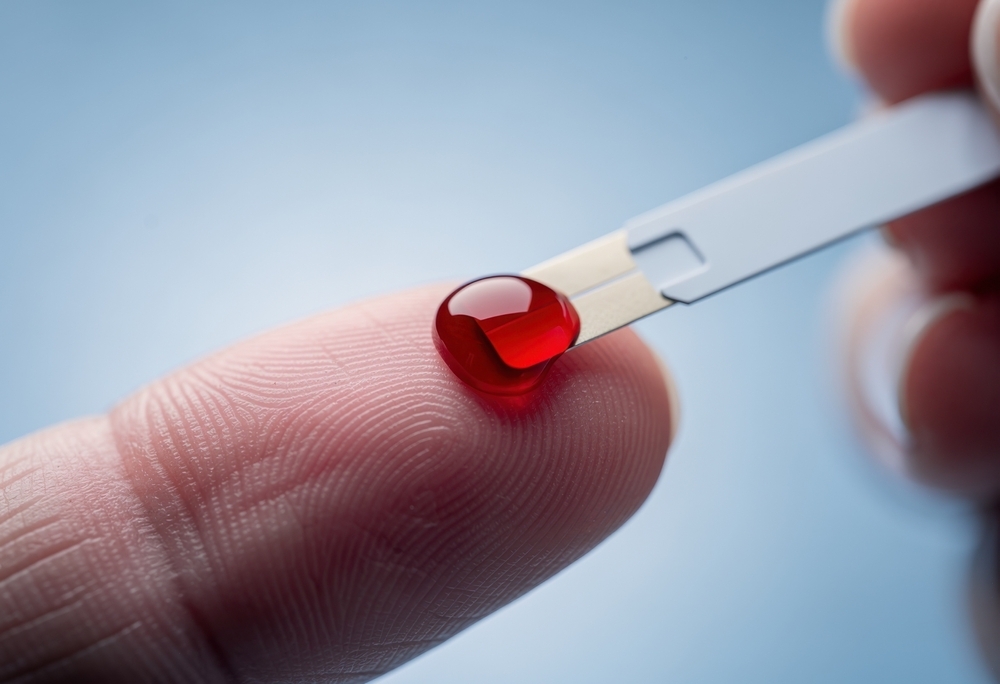
Similar to portable glucose meters used by people with diabetes, the system works by detecting molecular targets associated with cancer. A drop of blood is placed on a printed electrode surface containing biological recognition elements that can selectively bind to biomarkers of certain pancreatic, brain, and lung tumors.
When the biomarker comes into contact with the sensitive surface, a redox reaction occurs, which is a chemical transformation involving the transfer of electrons between substances. This reaction emits a measurable electrical signal. “We started with pancreatic cancer because it’s very silent and aggressive and is usually discovered at an advanced stage,” says Fernandes.
The researchers emphasize that this tool does not replace traditional biopsies. “The idea is to provide an early warning when the tumor is still in its early stages. A biopsy remains the gold standard in cancer diagnosis, but we want to simplify the process with a blood test to refer patients more quickly,” Jayme explains. “Patients can undergo testing every one or two years as a preventive measure to be alerted at the onset of the disease.”
Currently, tumor screening and monitoring rely on highly complex imaging tests, such as positron emission tomography (PET-CT) and magnetic resonance imaging (MRI). In Brazil, a PET-CT scan costs an average of BRL 3,500 in the private sector. The list price covered by Brazil’s national public health system (known by its acronym SUS) is BRL 2,107.22, which limits its availability in the public sector.
In addition to the cost, data from the National Registry of Health Facilities (CNES) reveal severe geographic inequality. There are approximately 120 PET-CT scanners nationwide, most of which are concentrated in major capital cities in the South and Southeast regions. Consequently, over 110 million Brazilians lack local access to this technology.
The portable biosensor could provide an alternative to centralized medical care. The developers estimate that the final cost of the test, including the disposable device, reagents, and technical report, will be between USD 40 and USD 50. The team plans to localize production of the electrodes, which could reduce dependence on imported biological supplies and make the technology more affordable. Customs clearance of these supplies can take up to 60 business days.
Additionally, the device can be used in primary healthcare units (UBSs) and in regions far from major cities. In a country as large as Brazil, this simplified screening prevents unnecessary travel and speeds up patients’ entry into the cancer care pathway. “Our goal is to democratize and decentralize access. We want to offer a more affordable alternative to exams like MRIs or PET-CTs,” says Jayme.
Patient monitoring
In addition to the initial diagnosis, Diasci’s scientists plan to focus on monitoring patients undergoing treatment. “Initially, we were only discussing diagnosis, but now we’re also evaluating the monitoring of patients receiving targeted drug therapy. Recurring tests can indicate whether the medication is effective,” Fernandes points out.
Incubated at the Supera Innovation and Technology Park in Ribeirão Preto, São Paulo state, Diasci participated in programs that encourage scientific entrepreneurship, such as SEBRAE’s Catalisa ICT. The startup also received support from the Brazilian Innovation Agency (FINEP) and PIPE-FAPESP itself. “As a healthcare startup, where everything is expensive and time-consuming, we’re grateful for public funding. Since we came from a public university, developing technology for the SUS is a way to give back that investment to society.”
Diasci is currently participating in a pilot program organized by the Brazilian Health Regulatory Agency (ANVISA) for innovative medical devices. The founders expect to finish testing by mid-2027 and enter the market within two years of receiving regulatory approval.
To achieve this goal, the technology must go through ANVISA’s entire regulatory process. This begins with bench-top analytical validation, which demonstrates the sensitivity, specificity, stability, and detection limit of biomarkers in the laboratory. Next is clinical validation using samples from biobanks, followed by prospective trials with patients, all of which are subject to prior approval by research ethics committees. Once the device is registered and enters the market, it will be continuously monitored through technovigilance activities.
This regulatory and scientific effort occurs in a context in which liquid biopsies are already an established reality in Brazil and abroad. In the United States, the Food and Drug Administration (FDA) has authorized genetic sequencing tests to detect mutations in solid tumors and screen for colorectal cancer through blood tests. In Brazil, ANVISA regulates liquid biopsy tests for routine oncology care, using them to identify specific genetic mutations in advanced cases of lung (EGFR gene) and breast (ESR1/PIK3CA) cancer. The major advantage of the Brazilian technology over existing commercial alternatives is cost. While current tests rely on complex and expensive genetic sequencing, electrochemical biosensors aim to provide an inexpensive, rapid, and feasible screening method for large-scale implementation in the SUS.
Collaboration with the ICESP
To accelerate adoption of the technology by the SUS, the team participates in open innovation initiatives such as the SUS Hackathon and has formalized a scientific partnership with the São Paulo State Cancer Institute (ICESP). Coordinated by Roger Chammas, a professor at the University of São Paulo Medical School (FM-USP) and one of the project’s principal investigators, the partnership ensures access to patient samples, which are essential for validating the test parameters. “The ICESP opened its doors to us when we had nothing but an idea and a dream, and it plays a fundamental role in this joint effort.”
This retrospective approach allows for the calibration of biosensor sensitivity and comparison of results with confirmed diagnoses in medical records without exposing people to medical interventions. However, clinical validation must be completed and accepted by regulatory agencies. This will require a second phase consisting of a prospective clinical study involving real patients monitored in a hospital setting.
Initial discussions with health insurance providers and public health officials support the gradual introduction of the technology into the national healthcare system. Initial entry into the private market should ensure the necessary scale to lower the cost of the service and enable subsequent incorporation into the SUS. Future expansion plans include extending the platform to screen for biomarkers of other high-incidence cancers, such as breast cancer, and establishing electrochemical testing as a standard preventive practice in public health.
According to estimates from the National Cancer Institute (INCA), Brazil records approximately 704,000 new cancer cases each year. About 2% of diagnoses and 4% of deaths in the country are due to pancreatic cancer, which has a low survival rate due to late diagnosis. The World Health Organization (WHO) emphasizes that early detection increases cure rates and reduces the financial burden on healthcare systems.
Republish
The Agency FAPESP licenses news via Creative Commons (CC-BY-NC-ND) so that they can be republished free of charge and in a simple way by other digital or printed vehicles. Agência FAPESP must be credited as the source of the content being republished and the name of the reporter (if any) must be attributed. Using the HMTL button below allows compliance with these rules, detailed in Digital Republishing Policy FAPESP.
