





By Maria Fernanda Ziegler | Agência FAPESP – In the face of a rapidly changing global landscape, the FAPESP Research Program on Global Climate Change (RPGCC) is redefining its approach. The climate emergency is more evident than ever: estimates suggest the planet could surpass the critical warming threshold of 1.5 °C above pre-industrial levels by 2029 – a dangerous threshold that could intensify and increase the frequency of extreme weather events. Despite this scientific warning, however, the issue has been losing momentum on the international political agenda. To address this disconnect, the program, which was created in 2008 with a focus on climate physics, is expanding its scope to include urgent societal issues such as public health, social vulnerability, and support for public policy formulation.
The steering committee has proposed that the next cycle, which will guide planning for 2030–2040, move away from organizing by isolated disciplines and focus on problems, questions, and solutions related to the climate crisis.
“We aren’t abandoning modeling or the investigation of the physical aspects of climate change, which are fundamental to understanding climate processes and in which the program has always been strong. The idea is to evolve in order to address society’s real needs,” said Luiz Aragão, a researcher at the National Institute for Space Research (INPE) and a member of the RPGCC coordination team.
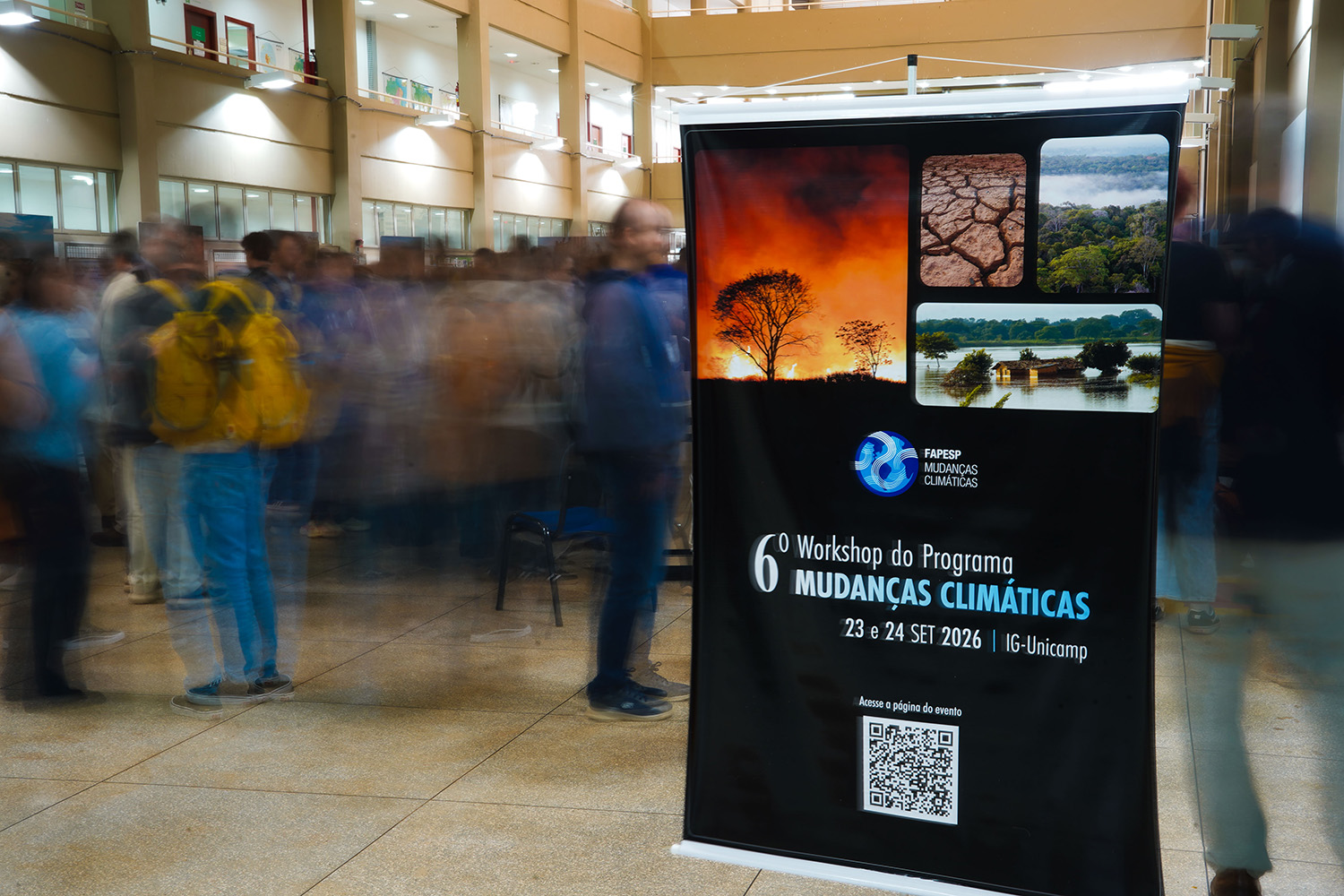
The new vision was presented at two events held at the Institute of Geosciences at the State University of Campinas (UNICAMP), which brought together researchers, students, and program coordinators. The first meeting, on September 22, was “Voices of the Future”, dedicated to young scientists. The 6th RPGCC Workshop took place on September 23 and 24, with the goal of discussing scientific advances, emerging challenges, and priorities for addressing the climate crisis while promoting interdisciplinary dialogue and identifying strategic research issues.
Over the past 18 years, the program has influenced public policy and produced significant scientific contributions. For example, it has made projections of sea-level rise along the São Paulo coast, which are essential for coastal planning. Studies supported by the program have also characterized the Amazon’s “flying rivers,” explaining how the continental hydrological cycle works and how moisture is transported to other regions of Brazil (read more at agencia.fapesp.br/25560 and revistapesquisa.fapesp.br/en/a-river-that-flows-through-the-air/).
Additionally, the program has recently supported Brazil’s participation in forums such as COP-30 and cutting-edge international projects like AmazonFace, which investigates the Amazon rainforest’s reaction to high CO₂ concentrations.
However, as extreme weather events intensify, there is a growing consensus that the climate crisis is not only an environmental issue, but also a public health and human rights emergency. Today, the human influence on climate change and the impact of heat waves, droughts, and floods on healthcare costs are well-documented by science.
“To connect climate to public health, modeling must go beyond purely physical representation and advance to a basis that integrates physical and biological processes. That can be achieved by coupling climate models with health data, for example,” said Maria de Fátima Andrade, a professor at the Institute of Astronomy, Geophysics, and Atmospheric Sciences at the University of São Paulo (IAG-USP) and a member of the FAPESP program’s coordinating committee.
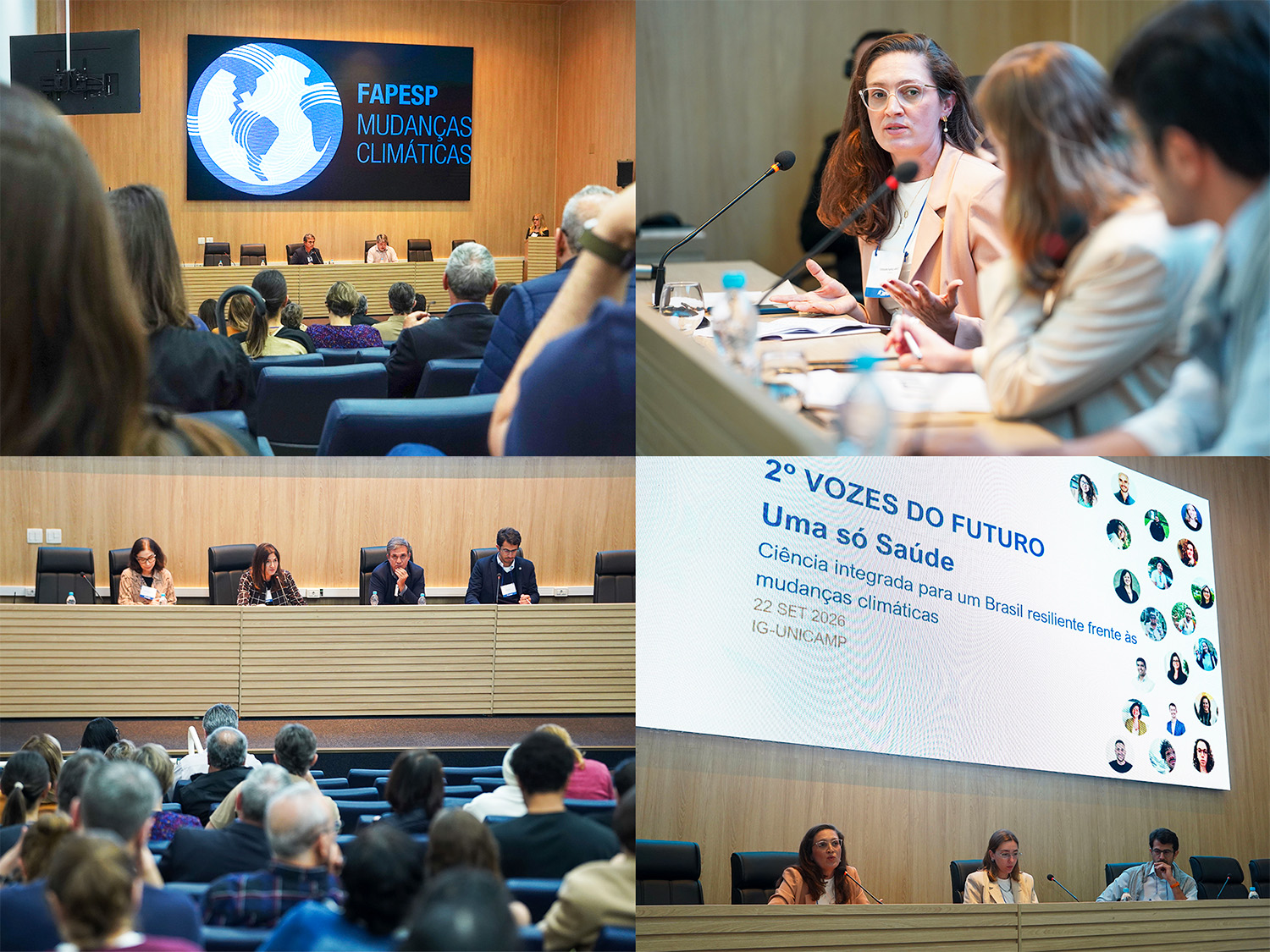
The events brought together researchers, students, and program coordinators (photos: Daniel Antônio/Agência FAPESP)
Indisciplinary
According to the RPGCC coordination committee, there is currently an imbalance among the topics addressed by the program. Of the proposals submitted between 2020 and 2025, 45% are from the exact sciences, 4% are from the health sciences, and about 10% are from the humanities and social sciences.
To transform this situation, the new guideline is to organize calls for proposals focused on cross-cutting problems and solutions rather than isolated disciplines. “We’re going to practice interdisciplinarity – or ‘indisciplinarity’ – as Thomas Lewinsohn [professor emeritus at UNICAMP] says – in our research and calls,” said David Lapola, a researcher at UNICAMP’s Center for Meteorological and Climate Research Applied to Agriculture (CEPAGRI) and a coordinating committee member.
Andrade, meanwhile, drew attention to the underrepresentation of the humanities in FAPESP funding and advocated for a change in how these fields are integrated into climate change research.
According to the IAG-USP professor, the humanities cannot be limited to disseminating results at the final stage. “Social, political, and behavioral perspectives must be embedded from the conception of calls for proposals so projects are designed with questions that address social dynamics and impacts on vulnerable populations from the outset,” she stated.
She also emphasized the need for improved communication between scientists and decision-makers, as well as the essential role of researchers in the social and political sciences in building bridges that enable the transformation of knowledge into action.
Workshop participants identified the following as the current priority themes of the RPGCC: energy policy and socioeconomics, climate and environmental modeling, biodiversity and ecosystems, land-use changes and agriculture, urbanization and climate change, health and climate change, and social and economic dimensions.
The coordinators also highlighted that the new phase of the program includes incorporating the “One Health” approach, which recognizes the interconnectedness of human, animal, and environmental health (planetary health). Professor Simone Miraglia, who has extensive experience in research on air pollution and its effects on public health, has joined the RPGCC coordination team at the Institute of Environmental, Chemical, and Pharmaceutical Sciences at the Federal University of São Paulo (UNIFESP).
“That theme of planetary health emerges when we understand that human beings are part of the planet and not separate from it,” said Miraglia.
The strategy also involves issuing joint calls for proposals with other FAPESP programs, including the FAPESP Research Program on Biodiversity Characterization, Conservation, Restoration, and Sustainable Use (BIOTA). BIOTA has extensive experience and a proven track record in shaping public policy and serves as a foundation for actions in the field of biodiversity.
“We’re very close to surpassing planetary boundaries. We now have a super El Niño forming with various implications, including an increase in extreme events that pose a risk to populations. Therefore, there’s no more room for decision-makers to not consider the critical aspects of climate for management,” said Aragão.

Event participants were able to view the exhibition “Visualizing Water Resources under Climate Change,” curated by Cristiano Chiessi, with support from FAPESP (photo: Daniel Antônio/Agência FAPESP)
“Obstructionism”
In his remarks, Lapola argued that climate denialism, which openly rejects scientific evidence, has given way to a strategy known as “obstructionism.” Although obstructionists acknowledge the problem of climate change, they focus on blocking solutions. An example of this new strategy is the role played by countries such as Saudi Arabia, India, and Russia in the Intergovernmental Panel on Climate Change (IPCC) negotiations, as well as the recent positions of the United States on the climate agenda.
“Obstructionism is based on the belief that technology will save us. Throughout our history, technology has saved us on several occasions – vaccines, for example, were crucial during the pandemic. However, there’s no single technology that can be deployed at a sufficient scale to curb greenhouse gas emissions. Therefore, that hope is mistakenly used to justify delaying urgent action on mitigation, adaptation, and climate justice,” he said.
 See more images related to this and other FAPESP-related stories on the following Flickr profiles: GCOM FAPESP and FAPESP Memory Center.
Republish
The Agency FAPESP licenses news via Creative Commons (CC-BY-NC-ND) so that they can be republished free of charge and in a simple way by other digital or printed vehicles. Agência FAPESP must be credited as the source of the content being republished and the name of the reporter (if any) must be attributed. Using the HMTL button below allows compliance with these rules, detailed in Digital Republishing Policy FAPESP.
