




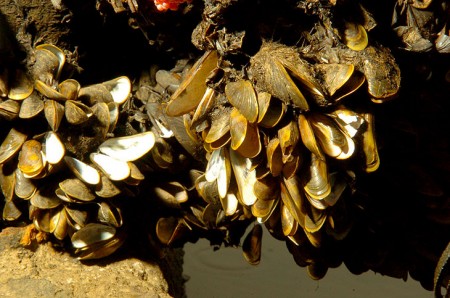
The golden mussel likely arrived in Brazil attached to the hull or in the ballast water of cargo ships. Damage includes reduced efficiency at hydroelectric power plants (photo: Luciano de Souza/Wikimedia Commons)
Data from nearly the entire country indicates that the number of species rose from 26 to 82 between 2011 and 2025, in addition to 13 species of unknown origin. The authors highlight the need to strengthen biosecurity and early detection measures, as well as long-term monitoring programs, to improve our understanding of the impacts.
Data from nearly the entire country indicates that the number of species rose from 26 to 82 between 2011 and 2025, in addition to 13 species of unknown origin. The authors highlight the need to strengthen biosecurity and early detection measures, as well as long-term monitoring programs, to improve our understanding of the impacts.
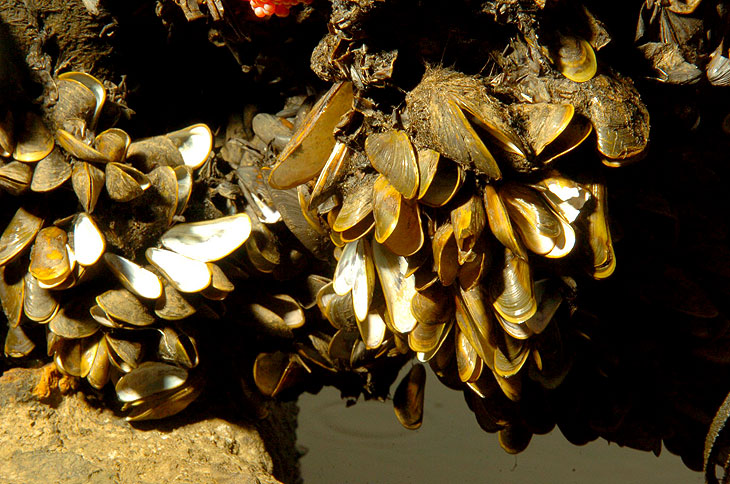
The golden mussel likely arrived in Brazil attached to the hull or in the ballast water of cargo ships. Damage includes reduced efficiency at hydroelectric power plants (photo: Luciano de Souza/Wikimedia Commons)
By André Julião | Agência FAPESP – A study published in the journal Biological Invasions indicates that Brazil currently has at least 82 non-native mollusk species, in addition to 13 whose origin cannot be determined. This represents a 215% increase compared to 2011, when 26 species were reported.
Twenty of these species are considered invasive because they cause ecological, socioeconomic, or health damage. Thirteen species have insufficient data to determine their impact. This is the most comprehensive inventory of non-native mollusks in Brazil.
“We’ve observed an accelerated rate of introduction of non-native mollusks in Brazil, as well as persistent gaps in our taxonomic and ecological knowledge of those species,” says Marcel Sabino Miranda, one of the authors of the study. Miranda conducted the study during his postdoctoral research at the Oceanographic Institute of the University of São Paulo (IO-USP) with funding from FAPESP.
The authors emphasize the urgent need to strengthen biosecurity measures, improve early detection efforts, and establish long-term monitoring programs in all environments. They also argue that, when impacts occur, they should be properly assessed in terms of their nature and magnitude.
“Some species, such as the golden mussel and the African snail, are problematic, but we don’t know if most species are or will be harmful,” says Miranda, who is currently pursuing a postdoctoral fellowship at the University of Alabama in the United States with funding from FAPESP.
The golden mussel (Limnoperna fortunei) likely arrived in Brazil in the early 1990s, following a long trail of invasions originating in China. Now widespread throughout South America, it causes blockages and reduced efficiency in hydroelectric plants, among other problems.
Despite being the target of a control plan, the mollusk continues to thrive. It is estimated that approximately USD 10 million have already been spent to combat it in Brazil.
The African snail (Lissachatina fulica), on the other hand, was introduced to the country as an alternative to escargot. However, its cultivation was abandoned, and today, it is widespread throughout Brazil. It can be an agricultural pest and an intermediate host for the meningitis-causing parasite Angiostrongylus cantonensis.
The researchers state that, although biological invasions are identified as one of the main causes of global biodiversity loss, invasions involving this group of invertebrates are poorly documented in Brazil. The predominant focus here is on fish, arthropods, and mammals.
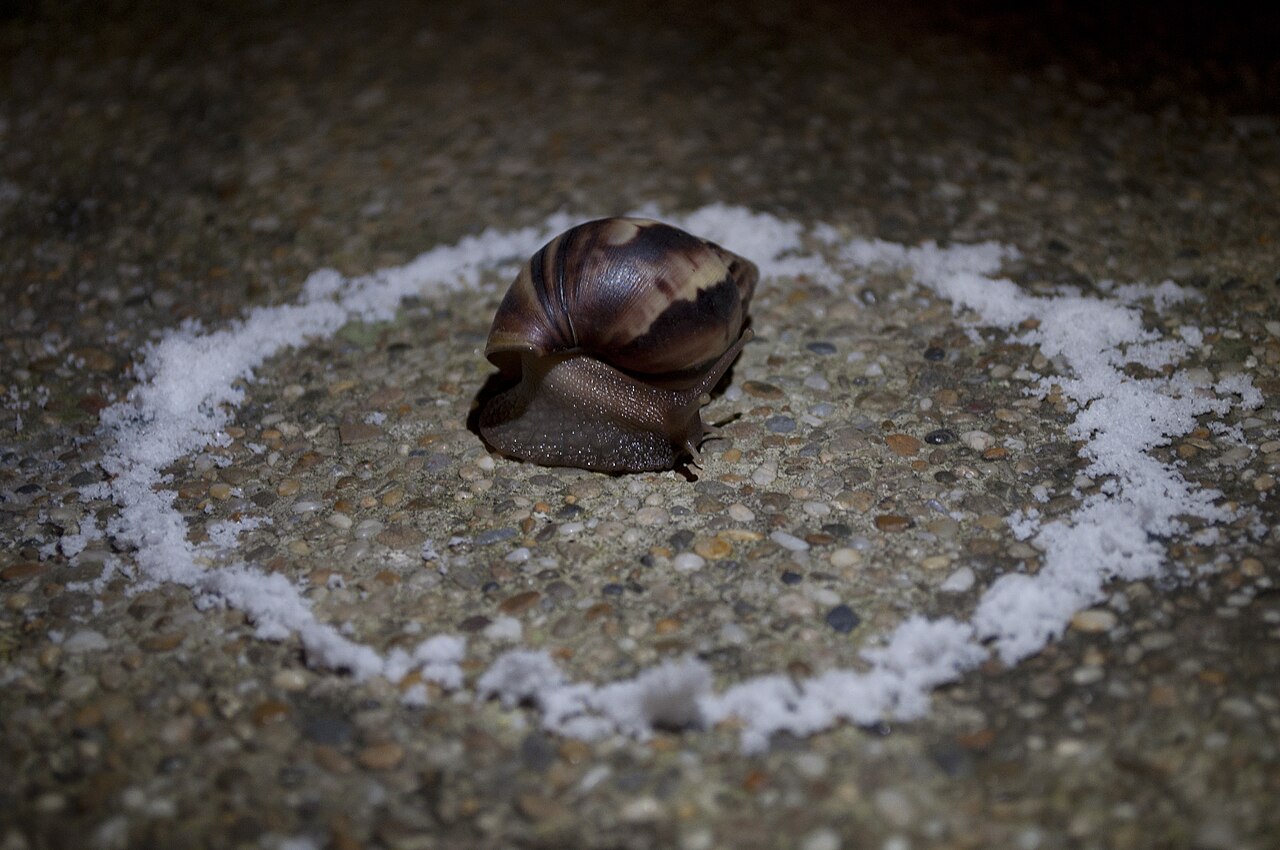
The African snail can carry parasites and be an agricultural pest (photo: LocoWiki/Wikimedia Commons)
Sea, rivers, and land
The survey includes 13 cryptogenic species, whose origin cannot be determined. The caution in classification stems from the fact that many species descriptions are outdated and lack biogeographic or molecular studies to determine their origin with certainty. The nomenclature helps avoid confusion, such as that which occurred regarding the mussel species Perna perna.
Found along the entire Brazilian coast and farmed for human consumption, Perna perna was once believed to have been introduced to Brazil by humans, since the species also occurs in Africa, its region of origin. According to that account, the species arrived in Brazil during the Age of Discovery in the 16th century.
However, subsequent archaeological and molecular studies indicated that a population of the species, which diverged from the African lineage 2,000 years ago, already existed in Brazil before the Portuguese arrived in 1500. Therefore, the species was not introduced to South America by humans.
Non-native species are distributed across three types of environments. There are 32 marine and estuarine species, as well as four cryptogenic species. In freshwater habitats, which include rivers, lakes, and ponds, there are 17 non-native species and no cryptogenic species. Among terrestrial species, 33 non-native and nine cryptogenic species have been documented.
In addition to cryptogenic species (category 6), five other categories were identified. The nomenclature followed the guidelines of the Ministry of the Environment and Climate Change and the Environmental Impact Classification for Exotic Taxa (EICAT) of the International Union for Conservation of Nature (IUCN).
Non-native species that are contained are those with restricted propagation, such as in captivity, or those under control within a specific geographic area. The “detected” category includes species that have been recorded in the wild with isolated occurrences and no evidence of population growth resulting in establishment or spread.
“Established” species complete their life cycle in the wild and show signs of population growth without apparent impact. “Invasive,” a term typically applied to non-native species, refers to established species that cause at least one impact on the environment, economy, or health, such as golden mussels and African snails.
The “data deficient” category includes species with evidence of a native population but insufficient information to determine their identity or level of impact.
“For most of them, we’ve only detected their presence. We don’t have much information. Ideally, large-scale studies and policies would be implemented to assess potential impacts and develop plans to contain or eradicate harmful species. A study like this, however, is an important first step in that direction,” Miranda concludes.
The article “Non-native mollusk species in Brazil: a first national inventory and distributional overview” can be read at link.springer.com/article/10.1007/s10530-026-03794-7.
The Agency FAPESP licenses news via Creative Commons (CC-BY-NC-ND) so that they can be republished free of charge and in a simple way by other digital or printed vehicles. Agência FAPESP must be credited as the source of the content being republished and the name of the reporter (if any) must be attributed. Using the HMTL button below allows compliance with these rules, detailed in Digital Republishing Policy FAPESP.
