




Keesing: “We need to broaden our search beyond a few places as potential initiators of pandemics and a few animals as the most likely reservoirs” (photo: Erika de Faria/Temporal Filmes)
Conservation of natural areas should be a major factor in preventing new pandemics, said Felicia Keesing of Bard College during the first day of the FAPESP Interdisciplinary School.
Conservation of natural areas should be a major factor in preventing new pandemics, said Felicia Keesing of Bard College during the first day of the FAPESP Interdisciplinary School.
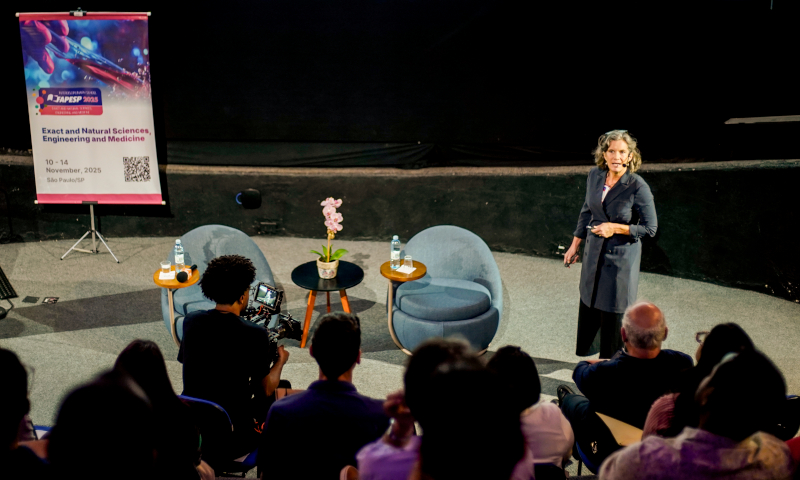
Keesing: “We need to broaden our search beyond a few places as potential initiators of pandemics and a few animals as the most likely reservoirs” (photo: Erika de Faria/Temporal Filmes)
By André Julião | Agência FAPESP – Studies attempting to predict pandemics have largely failed, forcing scientists to rethink how to anticipate the emergence of new pathogens that could spread worldwide. One approach that has received little consideration and should be explored further is the role of biodiversity conservation and restoration in preventing or mitigating such events.
Felicia Keesing, a professor at Bard College in the United States, addressed this topic in her speech during the first day of conferences at the FAPESP Interdisciplinary School: Exact and Natural Sciences, Engineering, and Medicine, which took place from November 10 to 14 in São Paulo.
Since 75% of emerging infectious diseases in humans are zoonotic – caused by pathogens that can be shared between people and other vertebrate animals – public health actions have focused on them. However, according to Keesing, these strategies have not prevented events such as the COVID-19 pandemic.
Keesing believes that we must go beyond the current approaches recommended by the World Health Organization (WHO), such as building resilience, ensuring equitable access to countermeasures, and improving the prevention, detection, and response to outbreaks. These steps are all very important but insufficient.
“We need to broaden our search beyond a few places as potential initiators of pandemics, beyond just viruses as pathogens that can cause them, and beyond a few animals as the most likely reservoirs,” the researcher summarized. She proposes measures that she believes may be promising.
The simplest approach would be to test past predictions and identify what they failed to account for and why. This would allow us to improve models and make new predictions with greater accuracy.
Another necessary action is broadening the scope of searches beyond coronaviruses, which have understandably been the focus of attention, especially since the COVID-19 pandemic. However, this does not eliminate the possibility of a new outbreak caused by other viruses or even bacteria. The researcher even predicts that the next pathogen to spread worldwide and cause major problems will be a bacterium that is resistant to current treatments.
Keesing dedicates four of her seven proposals to animals that are reservoirs of pathogens. She points out that most disease-causing microorganisms, which infect both human and non-human vertebrates, do not have just one favorite animal but rather several. Therefore, it is necessary to better assess the relevance of certain groups of animals as reservoirs, as some are often overestimated (such as bats), while others are underestimated (such as rodents).
Finally, it is important to remember that zoonotic pathogens are transmitted not only from animals to humans but also from humans to animals. According to the researcher, some animal pathogens are studied more than others precisely because they have infected humans. This creates a bias in the data stored in GenBank, the most widely used genome database for studying viruses and bacteria, restricting research to a few animals and pathogens.
Keesing also demonstrated that animals less threatened by extinction are more likely to transmit diseases to humans. Some reasons for this include the biological characteristics of these animals, such as occupying a large area, having a short life cycle, reaching sexual maturity early, and bearing many offspring at once. These characteristics are the opposite of those of endangered species. Consider, for example, the critically endangered rhinoceros and the widespread house mouse.
The other reasons for this correlation are not yet known. However, in her studies in Kenya, Keesing observed that areas that lost large mammals, such as giraffes and lions, experienced an increase in rodents and poisonous snakes.
For this reason, the researcher credits biodiversity conservation and restoration as important factors in mitigating or even preventing the emergence of new zoonotic disease pandemics.
“To this must be added the development of broad-spectrum antivirals and new antibacterials, the rapid development of vaccines and public confidence in them, as well as the creation and improvement of public policies and a strong global health structure,” she concluded.
Mathematics for development
Marcelo Viana, director of the Institute of Pure and Applied Mathematics (IMPA), discussed the impact of Science, Technology, Engineering, and Mathematics (STEM) education on a country’s income. Viana listed studies conducted abroad on the impact of mathematics-related fields on the gross domestic product (GDP) of the United Kingdom, France, Australia, and Spain.
One study found that in France, 13% of jobs and 18% of GDP in 2022 were related to mathematics, compared to 12% and 16%, respectively, in 2012. Until Itaú Social – a non-profit foundation focused on public education and linked to Brazil’s largest private bank – decided to conduct research using the French methodology with support from IMPA, there was no such research in Brazil.
Their 2024 conclusion revealed that professionals in mathematics-related fields in Brazil earn 4.6% of the country’s GDP and receive salaries 119% higher than the average. “Going from the current 4.6% to the 18% achieved by France would add BRL 1.5 trillion to Brazil’s GDP,” said Viana.
One opportunity to address this issue arose with the inauguration of IMPA Tech in Rio de Janeiro in 2024. It offers the institute’s first undergraduate degree program focused on training skilled labor in areas dependent on mathematics.
“They’re selected based on their results in math competitions; there’s no entrance exam. In the first year, students complete a basic cycle and then choose to continue in mathematics, computer science, data science, or physics,” he explained.
Science in São Paulo
At the opening of the event, FAPESP President Marco Antonio Zago highlighted the state of São Paulo’s leadership in national scientific production. This achievement is the result of stable investments in São Paulo’s state universities and in FAPESP itself.
“It’s important to note that it isn’t just about investing a lot of money; it’s also about having stability. This allows us to finance projects lasting up to ten years,” he said.
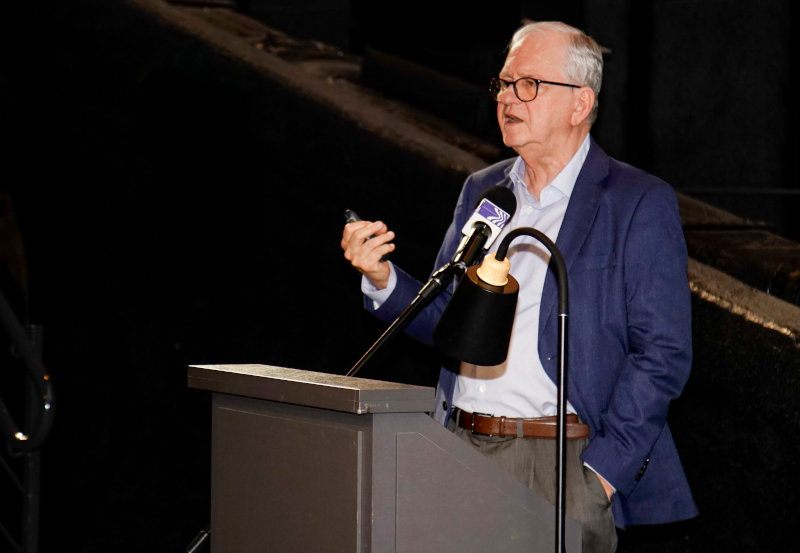
Marco Antonio Zago, president of FAPESP, celebrated the success of the Interdisciplinary Schools (photo: Erika de Faria/Temporal Filmes)
Regarding the Interdisciplinary School, Zago recalled its success, noting that it had reached its fifth edition in 2025. “I strongly believe in this approach and think it’s very important for science in Brazil,” he said.
Oswaldo Baffa Filho, organizer of the event, emphasized that the initiative is about building bridges between different areas of knowledge, cultures, and people.
“We have participants representing the north, south, east, and west of the country, as well as international researchers doing postdoctoral work in Brazil. We form a diverse and vibrant community, united by curiosity and the pursuit of knowledge,” said Baffa Filho, who is a professor at the Ribeirão Preto Faculty of Philosophy, Sciences, and Letters at the University of São Paulo (FFCLRP-USP).
Also in attendance at the opening were Carlos Graeff, CEO of FAPESP’s Executive Board; Marcio de Castro, scientific director of FAPESP; and Norma Reggiani, technical director of the Principia Institute.
The 2025 edition of the FAPESP Interdisciplinary School: Exact and Natural Sciences, Engineering, and Medicine, brought together 60 postdoctoral researchers from the state of São Paulo and other parts of Brazil.
The Agency FAPESP licenses news via Creative Commons (CC-BY-NC-ND) so that they can be republished free of charge and in a simple way by other digital or printed vehicles. Agência FAPESP must be credited as the source of the content being republished and the name of the reporter (if any) must be attributed. Using the HMTL button below allows compliance with these rules, detailed in Digital Republishing Policy FAPESP.
