





By Roseli Andrion | Agência FAPESP – Corporate uniforms, advertising banners, and industrial technical fabrics almost always end up in landfills at the end of their “life cycles,” even when they are still in good condition. To address this issue, Ciclou, a startup based in São Paulo, Brazil, has developed a system that transforms environmental liabilities into economic opportunities. The system connects major waste generators, such as industries and corporations in sectors like events and infrastructure, with artisans from the outskirts of the city. These artisans are a decentralized network of local seamstresses, designers, and artists who often work informally and seek productive inclusion. This solution addresses one of the greatest challenges of the circular economy: not just collecting waste, but also finding someone to transform it.
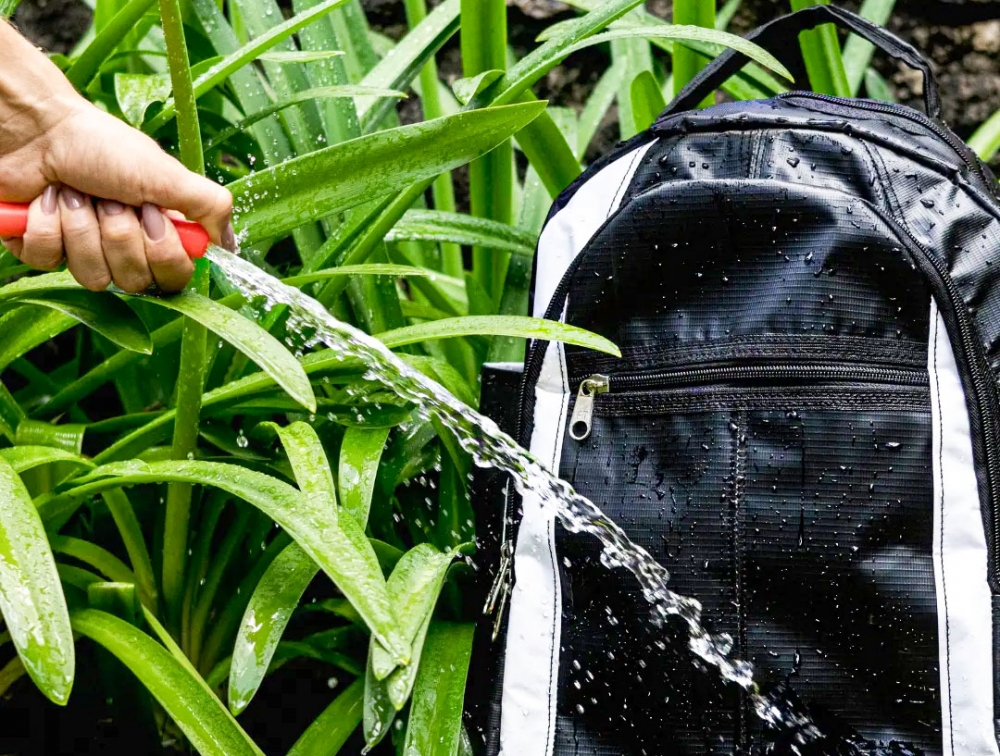
In practice, this mechanism takes shape in initiatives such as Ciclou’s partnership with Acciona, a multinational infrastructure company responsible for construction on Line 6 (Orange) of the São Paulo subway. Rather than discarding the old technical uniforms from its construction sites, Acciona donated the textile waste to Ciclou. The material was delivered to a team of six artisans and seamstresses from the Ciclou network who collaborated with a São Paulo–based nongovernmental organization (NGO) that provides social support. Together, they cleaned, cut, and repurposed the heavy-duty fabrics, transforming them into 50 meaningful, personalized backpacks. The backpacks were raffled off to employees during Environment Week, closing the waste cycle with measurable social and environmental impact.
Founded in 2021, Ciclou aims to promote the circular economy. Initially, the company selected artisans based on memory alone. “At the start of this project, we would recall the characteristics of each artisan and decide who would receive the project,” Amanda Martins, a mechanical production engineer and founder of Ciclou, told Agência FAPESP. “Soon, however, we realized that model didn’t allow us to scale up.”
To address this issue, the company’s researchers developed an algorithm that analyzes each artisan’s specific circumstances with support from FAPESP’s Innovative Research in Small Businesses Program (PIPE). The system considers variables such as available physical space, machinery used, and proficiency with different types of fabric. This approach is essential because an artisan working at a living room table with lightweight cotton fabrics, for example, would not be able to handle heavy canvas or industrial nylon – materials that require special needles and greater physical effort.
To validate the technology, the team developed a minimum viable product (MVP), which is a simplified version of the solution designed to test the feasibility of the business in a controlled environment. Using the MVP, the team mapped out the artisans’ daily routines and identified their specific skills. Additionally, the test assessed whether the technology could streamline the process, prevent the waste of time and resources, and consequently expand income-generating opportunities.
The MVP testing results were significant: the time required to match raw materials with the most suitable artisan decreased by 89%. This activity, which could previously take up to nine hours of contact and searching, was reduced to approximately one hour.
There was also a 16% decrease in errors related to sending artisans raw materials they were not accustomed to working with, representing a reduction in rework caused by the shipment of incompatible materials. The technology positively impacted the artisans’ self-esteem and work performance by providing transparency regarding the origin of materials and project history. The platform recorded a 26% increase in satisfaction among the participating artisans.
These figures reveal gains that extend beyond productivity since poor-quality materials affect the entire supply chain. “Mistakes result in a waste of time, money, and materials,” Martins summarizes. Since prototypes must be redone, shipments rescheduled, supplies replaced, and waste often disposed of, the founder emphasizes: “Making that connection more precise represents a simultaneous economic and environmental benefit.”
Creative recycling
Ciclou focuses on what is known as “creative recycling” or “upcycling.” Unlike conventional industrial recycling, which grinds materials down to create raw materials, upcycling transforms waste into new products, such as unique fashion accessories. The design and the story behind the material add value to the final piece in this process.
In the textile sector, for instance, many items produced for promotional campaigns, as well as uniforms and branded clothing collections, become obsolete before losing their functionality. Ciclou is interested in precisely this type of waste. The company prioritizes materials for which there is not yet an established recycling chain, materials that end up being discarded due to a lack of economically viable alternatives.
Currently, the main obstacle is regularly collecting materials. Recycling sorting cooperatives generally do not separate synthetic fabric scraps and complex flexible plastics, such as those found in marine canvass or advertising banners, due to a lack of consistent buyers. Ciclou aims to incorporate these materials into its production network, streamlining collection and achieving scale by incorporating this waste into new projects, thereby expanding the environmental and social impact of the initiative.
Looking ahead, the expectation is that companies will register their waste directly in the system and that artisans will receive projects that align with their skills and production capacity. Additionally, the technology may suggest improvements in work organization and contribute to the professionalization of entrepreneurs in the sector.
By aligning geolocation with each professional’s actual skills, the technology can establish itself as a tool for economic inclusion. If this connection becomes routine, the most significant transformation may not only occur in the backpacks, bags, and cases produced from industrial waste. It will begin much earlier, when materials are no longer treated as trash but rather as resources.
Reducing informality
Before it is made available to the general public, the project is undergoing structural adjustments to ensure information security and compliance with Brazil’s General Data Protection Law (LGPD), the regulatory framework for the collection and use of personal data. The plan is to replace informal negotiations via messaging apps with a unified, secure, and efficient digital environment.
The challenge faced by the startup reflects an urgent global trend. According to the United Nations Environment Programme’s Global Waste Management Outlook 2024 report, more than 2 billion metric tons of municipal solid waste are produced annually worldwide. At the same time, the consumption of natural resources is growing faster than the regenerative capacity of ecosystems. In this context, expanding the reuse of materials is a key strategy for reducing pressure on raw materials and decreasing the volume of waste sent to landfills.
In Brazil, data from the Brazilian Handicrafts Registration Information System (SICAB) shows that just over 200,000 professionals are formally registered with the National Artisan Card – workers who can help transform these materials. However, this figure reflects only part of the reality. Estimates from agencies such as the Brazilian Micro and Small Business Support Service (SEBRAE) indicate that approximately 8.5 million people make a living from handicrafts. These individuals generally work as informal, self-employed artisans with variable incomes.
Ciclou’s technology aims to integrate this “invisible workforce” from the outskirts into a made-to-order production model, thereby eliminating the risk of artisans producing goods without having a market for them. “Often, artisans produce without knowing if there will be demand,” Martins notes. “Made-to-order production completely changes that dynamic. It guarantees a market for the product, reduces waste, and helps with income planning.”
In recent years, the debate on the circular economy has evolved from proper waste disposal to extending the useful life of materials. This approach preserves their economic value and reduces the need for new natural resources. By connecting industrial waste with professionals who specialize in reusing it, the waste is transformed into raw materials, income, and new products. “In addition to finding a new use for the material, you have to find the right person to make that transformation happen,” Martins concludes.