





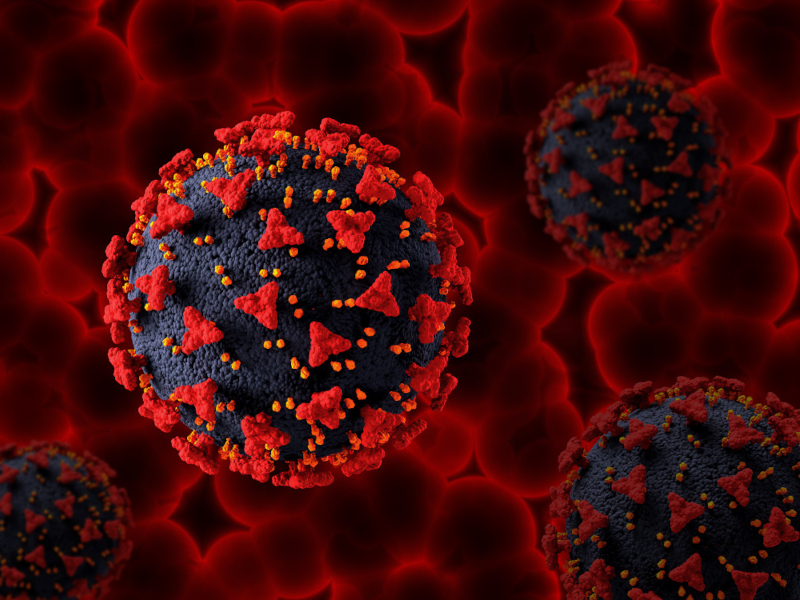
Agência FAPESP* – Researchers at the Center for Translational Science and Biopharmaceutical Development (CTS) in Brazil are developing monoclonal antibodies capable of neutralizing different variants of SARS-CoV-2, the virus that causes COVID-19. These antibodies are produced in a laboratory and act like the body’s natural antibodies. They can be used to treat various diseases, such as cancer and autoimmune conditions. In the case of COVID-19, the researchers aim to identify antibodies that can prevent infection by the virus.
The CTS is a Science Center for Development (SCD) supported by FAPESP and based at São Paulo State University (UNESP) in Botucatu.
The research, titled “Evaluation of anti-SARS-CoV-2 monoclonal antibodies with broad neutralizing capacity obtained by phage display,” is being conducted by CTS researcher Hernan Hermes Monteiro da Costa with support from FAPESP under the guidance of Carlos Roberto Prudencio, a researcher at the Adolfo Lutz Institute’s Immunology Center, the central epidemiological surveillance laboratory for the state of São Paulo.
Treatment with monoclonal antibodies may be helpful in cases where the vaccine does not provide sufficient protection, especially for people with compromised immune systems due to disease or aging. In such cases, the body cannot produce enough antibodies to fight the disease, so monoclonal antibodies serve as an alternative.
Additionally, the research aims to develop antibodies that interact with a conserved region among SARS-CoV-2 variants, ensuring the efficacy of the treatment even in the face of viral mutations.
Even years after the pandemic, Costa believes it is essential for researchers to continue studying the disease because their work can help address future health emergencies.
“The pandemic has helped the scientific community better prepare for future outbreaks. We know that viruses are emerging and reemerging, so studying a particular type of virus helps us understand the viral mechanism, enabling faster responses. I believe Brazil is on the right track. There are many studies on SARS-CoV-2 and other viruses,” says the researcher.
From the lab to future treatment
To test the antibodies, Costa uses a molecular biology technique called phage display. In this technique, viruses that infect bacteria (bacteriophages) are modified to display proteins, such as antibodies, on their surface. This display allows for the selection of phages with the greatest ability to bind to specific targets, such as parts of the SARS-CoV-2 virus.
Currently, Costa is testing the neutralizing capacity of eight antibodies. Next, he will conduct efficacy tests on cells in vitro and subsequently in mice.
If it is discovered that the antibodies can block SARS-CoV-2 infection, the research could advance to producing pilot batches at V-BioPharma, a biopharmaceutical training facility affiliated with the CTS. This would pave the way for clinical trials and future validation as a drug. According to Costa, this scenario is becoming more promising, given the growth of the monoclonal antibody market in various therapeutic areas.
* With information from the Press Office of the Center for Translational Science and Biopharmaceutical Development
Republish
The Agency FAPESP licenses news via Creative Commons (CC-BY-NC-ND) so that they can be republished free of charge and in a simple way by other digital or printed vehicles. Agência FAPESP must be credited as the source of the content being republished and the name of the reporter (if any) must be attributed. Using the HMTL button below allows compliance with these rules, detailed in Digital Republishing Policy FAPESP.
