




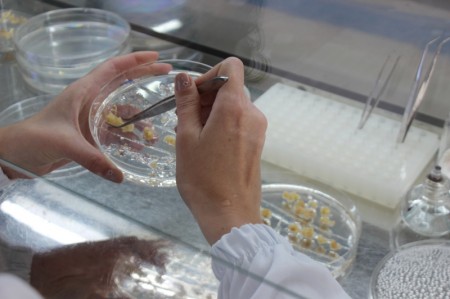
According to researchers, generating an “elite line” of corn using site-specific transgene insertion methodologies can be done in up to 10% of the time, cost, and effort (photo: Daniel Pompeu/GCCRC)
Identification paves the way to accelerate and reduce the cost of more precise cultivar development.
Identification paves the way to accelerate and reduce the cost of more precise cultivar development.
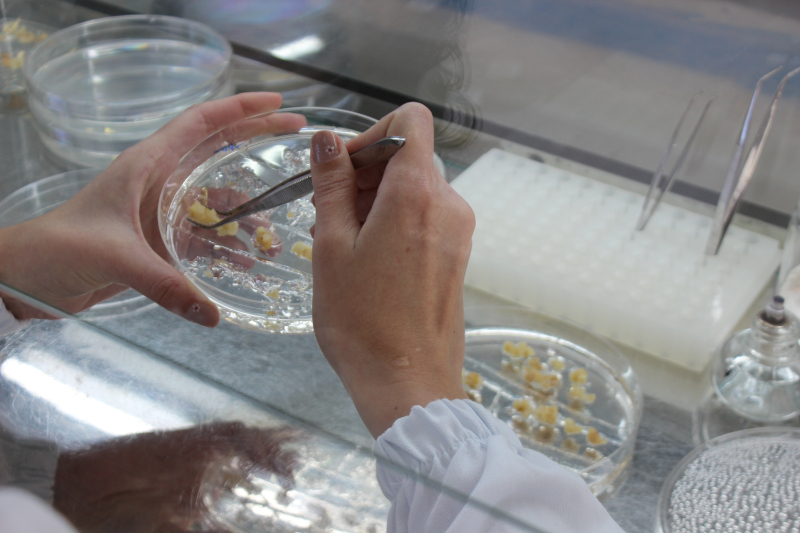
According to researchers, generating an “elite line” of corn using site-specific transgene insertion methodologies can be done in up to 10% of the time, cost, and effort (photo: Daniel Pompeu/GCCRC)
Agência FAPESP* – A study led by researchers at the Genomics for Climate Change Research Center (GCCRC) presents an overview of the most promising technologies for precisely inserting genes into the genomes of plants, particularly corn. Conducted in partnership with the Center for Molecular Biology and Genetic Engineering (CBMEG) and Embrapa Digital Agriculture, a decentralized unit of the Brazilian Agricultural Research Corporation (EMBRAPA), the review details how new genetic engineering approaches can make the process faster, more precise, and more effective. The study was published in the journal Frontiers in Plant Science.
The GCCRC is an Applied Research Center (ARC) funded by FAPESP and based at the State University of Campinas (UNICAMP) in partnership with EMBRAPA. The center seeks to develop genetic and biotechnological solutions to increase the tolerance of agricultural crops to environmental stresses.
One of the GCCRC’s research fronts is developing drought-tolerant transgenic or edited corn plants. However, the insertion of genes of interest still depends largely on uncertain processes. The randomly introduced gene may occur in unsafe or unstable regions of the genome. This makes the traditional process of producing genetically modified plants slow, costly, and imprecise.
Additionally, biosafety regulations stipulate that in a commercially viable line, the transgene must be present as a single, intact copy in a safe and stable region of the genome.
“The strategy of random transgene integration generates more than 90% of transgenic events with insertion in undesirable positions and unstable activity,” explains Marcos Basso, a biotechnologist at the GCCRC and author of the study. Depending on the location, the gene may be overexpressed or underexpressed, which compromises its function. In certain cases, the plant’s own molecular mechanism can silence the transgene.
‘Genomic safe havens’
To overcome these limitations, the study reviews methodologies for site-specific transgene insertion and discusses the key concept of “genomic safe havens,” which are stable regions of the genome where inserted transgenes tend to express their full potential and behave predictably. “By placing the transgene in these safe intergenic regions, it will be expressed and passed on to future generations,” says Juliana Yassitepe, a researcher at Embrapa Digital Agriculture and one of the authors of the study.
This makes it possible to generate fewer plants to select an elite line, reduce the time and cost of generation, and increase predictability.
According to a separate study conducted by the GCCRC, developing a commercial line of transgenic corn can take 11 to 13 years with estimated investments ranging from USD 50 million to USD 136 million. “In contrast, the generation of an elite line using site-specific transgene insertion methodologies can be developed in up to 10% of the time, cost, and effort,” Basso explains.
The review highlights pioneering initiatives by Corteva Agriscience, an American multinational agricultural biotechnology company that has already identified four of these “safe havens” in corn. Inspired by these results, the GCCRC team adapted software originally developed for yeast to the corn genome. The group identified new “safe haven” candidates through bioinformatics analyses and has begun the experimental phase.
According to Yassitepe, one of the first applications at the GCCRC will be the insertion of genes associated with drought tolerance, one of the main threats to agricultural production under climate change.
“By better understanding where and how to insert transgenes with precision, we take an important step toward developing elite lines that are better adapted and more efficient,” the authors conclude.
The study “Recent advances in site-specific transgene insertion into the maize genome using recombinases and genome editing endonucleases” can be read at frontiersin.org/journals/plant-science/articles/10.3389/fpls.2025.1712585/full.
* With information from Paula Drummond of the GCCRC
The Agency FAPESP licenses news via Creative Commons (CC-BY-NC-ND) so that they can be republished free of charge and in a simple way by other digital or printed vehicles. Agência FAPESP must be credited as the source of the content being republished and the name of the reporter (if any) must be attributed. Using the HMTL button below allows compliance with these rules, detailed in Digital Republishing Policy FAPESP.
