





Currently, only three drugs are approved to treat iron overload, known as chelators; however, they tend to have significant side effects, which makes it difficult to adhere to treatment (image: Drobotdean/Freepik)
In a preliminary study conducted on human cells, two commonly used osteoporosis drugs bound to excess iron, preventing cell damage.
In a preliminary study conducted on human cells, two commonly used osteoporosis drugs bound to excess iron, preventing cell damage.
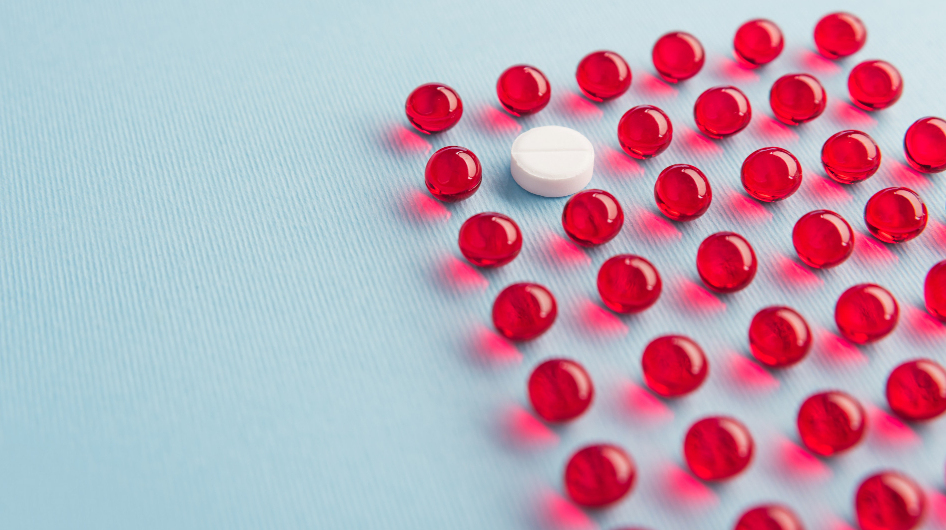
Currently, only three drugs are approved to treat iron overload, known as chelators; however, they tend to have significant side effects, which makes it difficult to adhere to treatment (image: Drobotdean/Freepik)
By Maria Fernanda Ziegler | Agência FAPESP – Researchers at the University of São Paulo (USP) in Brazil have discovered that two osteoporosis drugs (etidronate and tiludronate) may combat diseases caused by iron accumulation in the body. In tests conducted on human cells, the drugs bound to excess iron, reduced oxidative stress, and prevented cell damage. The study was published in the journal BioMetals.
“Currently, only three drugs are approved to treat iron overload, known as chelators. They bind to the metal and thus facilitate its elimination by the body. However, they tend to have significant side effects, such as nausea and vomiting, which makes it difficult to adhere to treatment,” explains Breno Pannia Espósito, professor at the USP Institute of Chemistry and author of the study.
The research is based on the master’s thesis of Julia Tiemy Leal Konno, a FAPESP scholarship recipient under Espósito’s supervision.
In their work, the researchers investigated the use of bisphosphonates, which are commonly used to treat osteoporosis, as potential iron chelators. In treating osteoporosis, bisphosphonates act by inhibiting bone resorption. This affects the progression of the disease, since in osteoporosis, bone resorption exceeds bone formation. This causes progressive loss of mass and mineral density, which weakens the skeleton and increases the risk of fractures.
Confirmation of a hypothesis
Unlike traditional drug repurposing studies, which typically involve testing various compounds for new applications, the researchers began with a hypothesis. They believed that the chemical structure of bisphosphonates, which are rich in phosphates, could bind to iron. Since iron and calcium compete in the body and excess iron can worsen osteoporosis, the tests were conducted in the presence of normal physiological levels of calcium.
“Iron is essential for oxygen transport and energy production in cells. Its deficiency causes iron deficiency anemia, the most common type of anemia. But in excess, it becomes toxic, generating free radicals that damage cells,” Espósito explains.
Excess iron leads to severe cell damage by generating far more free radicals than the body can neutralize with antioxidants.
Iron overload diseases occur when the body accumulates this metal at toxic levels. This can be caused by genetic conditions such as hemochromatosis (excessive iron absorption) or by treatments for other diseases. For patients with thalassemia (deficient hemoglobin production), for example, the same blood transfusions that save their lives also cause chronic, toxic iron overload.
Espósito points out that bisphosphonates have phosphate groups in their structure that have a chemical affinity for iron ions. “The idea behind our work was to exploit this affinity to ‘capture’ excess iron in the body. Although these drugs have already been used to combat bone damage caused by iron overload, this is the first study to propose using them as chelators in the absence of bone disease,” says the researcher.
In addition to etidronate and tiludronate, the researchers tested other bisphosphonates that proved very effective at inhibiting iron-induced oxidation in physiological media. However, these drugs were more toxic to cells, so caution would be required in repositioning them. The presence of calcium at normal levels reduced the effectiveness of these compounds without eliminating it. Overall, the bisphosphonates performed similarly to a standard chelator, exhibiting a strong ability to bind to iron and mitigate oxidative stress.
Strontium ranelate, another antiresorptive, was also tested. However, it did not demonstrate chelation capacity.
“The work brings hope to patients with iron overload, but it’s still too early to talk about clinical applications. As the tests were only performed on cell cultures, the results represent more of a proof of concept than a discovery. Many studies are still needed before these drugs can be safely repositioned,” the researcher concludes.
The article “Bone antiresorptives as potential chelators for iron overload diseases” can be read at link.springer.com/article/10.1007/s10534-025-00777-4.
The Agency FAPESP licenses news via Creative Commons (CC-BY-NC-ND) so that they can be republished free of charge and in a simple way by other digital or printed vehicles. Agência FAPESP must be credited as the source of the content being republished and the name of the reporter (if any) must be attributed. Using the HMTL button below allows compliance with these rules, detailed in Digital Republishing Policy FAPESP.
