





By André Julião | Agência FAPESP – Researchers supported by FAPESP recorded lemon sharks (Negaprion brevirostris) preying on an invasive species, the jaguar cichlid (Parachromis managuensis), for the first time. This observation was made in Sueste Bay in March 2024. Sueste Bay is a well-known shark feeding ground in the Brazilian archipelago of Fernando de Noronha.
The study was published in the journal Environmental Biology of Fishes.
The event was considered unlikely because Sueste Bay is a sea inlet with saltwater, while the jaguar cichlid is a freshwater species. However, the bay receives freshwater inflows from a nearby mangrove swamp after heavy rains.
Introduced to Fernando de Noronha probably for producing animal protein, the jaguar cichlid can tolerate a certain degree of salinity but becomes stressed above a certain level. The researchers observed erratic swimming patterns in the fish, making them easier targets for sharks.
In addition to having difficulty swimming, studies by other groups have shown that salinities above 25 practical salinity units (psu) cause an increase in heart rate in jaguar cichlids. In Sueste Bay, salinity can reach 32 psu.
“This is a breeding, nursery, and feeding area for lemon sharks. The night before our observation, there were heavy rains, causing the Xaréu reservoir, where the fish live, to overflow into the mangrove swamp, which in turn also overflowed and created a connection with the bay,” says Bianca Rangel, the first author of the study. Rangel is conducting postdoctoral research at the University of São Paulo’s Institute of Biosciences (IB-USP) with a scholarship from FAPESP.
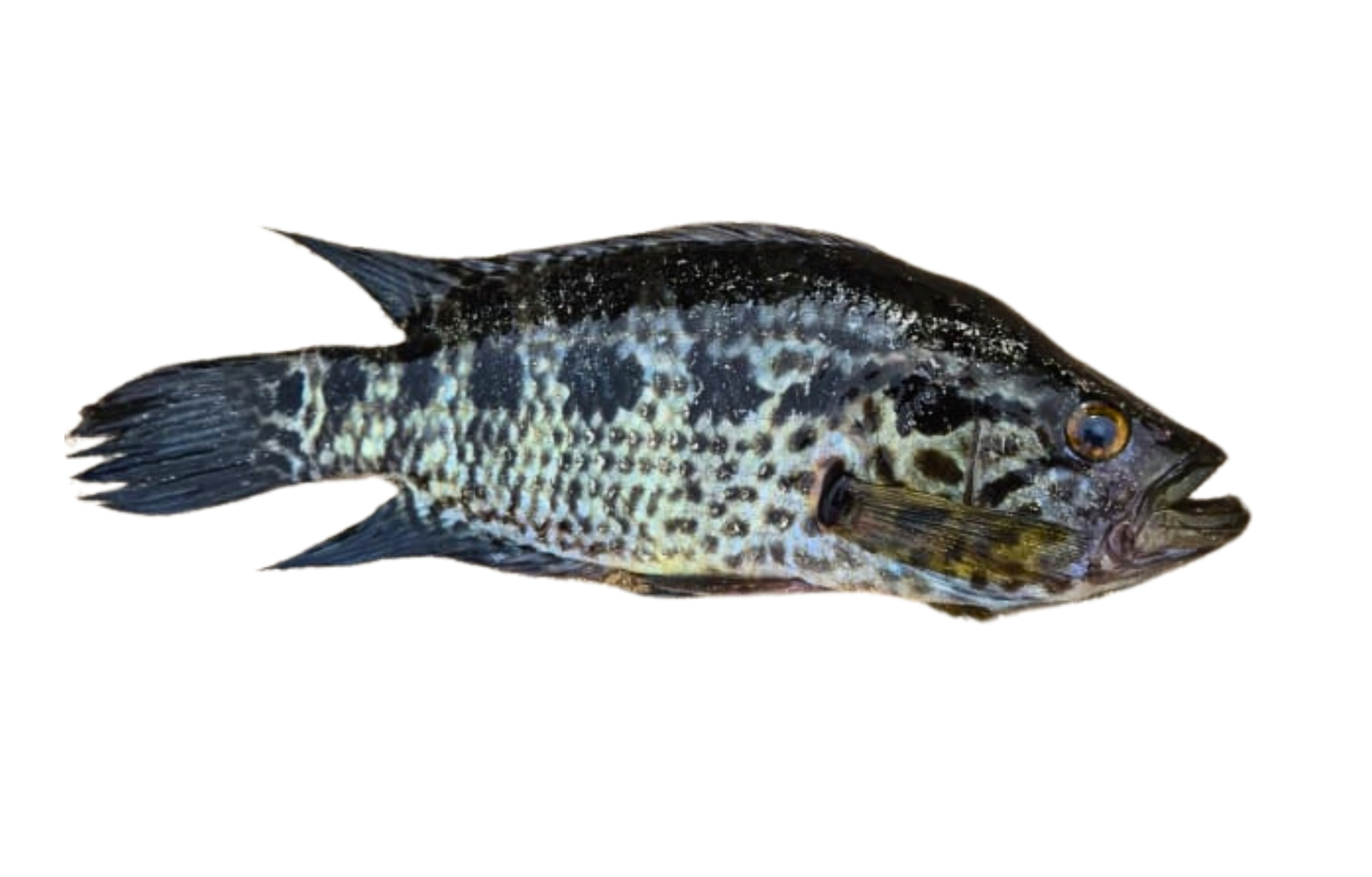
Originally from Central America, jaguar chichlids were introduced to Brazil, including Fernando de Noronha, probably for their meat (photo: Bianca Rangel/IB-USP)
Sueste Bay, with its shallow, warm, and murky waters, is also a feeding ground for tiger sharks (Galeocerdo cuvier). Swimming and diving were banned in 2022 after accidents involving tourists.
The researchers made the observations using drones during shark monitoring. The animals are captured, measured, weighed, tagged with microchips, and have blood samples collected before being returned to the environment.
Lemon shark pups remain in the bay for up to a year after birth, at depths ranging from one to six meters, before migrating to the open sea. This protects them from adult sharks, which may cannibalize them. Both pups and probable adults were observed eating jaguar cichlids.
The researchers believe that sharks alone are unlikely to eliminate the invasive species but can help reduce its population by preying on individuals that arrive in Sueste Bay.
Although there are no studies on the impact of the jaguar cichlid on the archipelago’s biodiversity, it is believed that it may harm local species through competition or predation, as occurs in other aquatic systems when invaders are present (read more at agencia.fapesp.br/51646).
The research is part of the project “Impact of Anthropogenic Changes on Fauna: Contributions from Conservation Physiology”, which is supported by FAPESP and coordinated by Fernando Ribeiro Gomes, a professor at IB-USP.
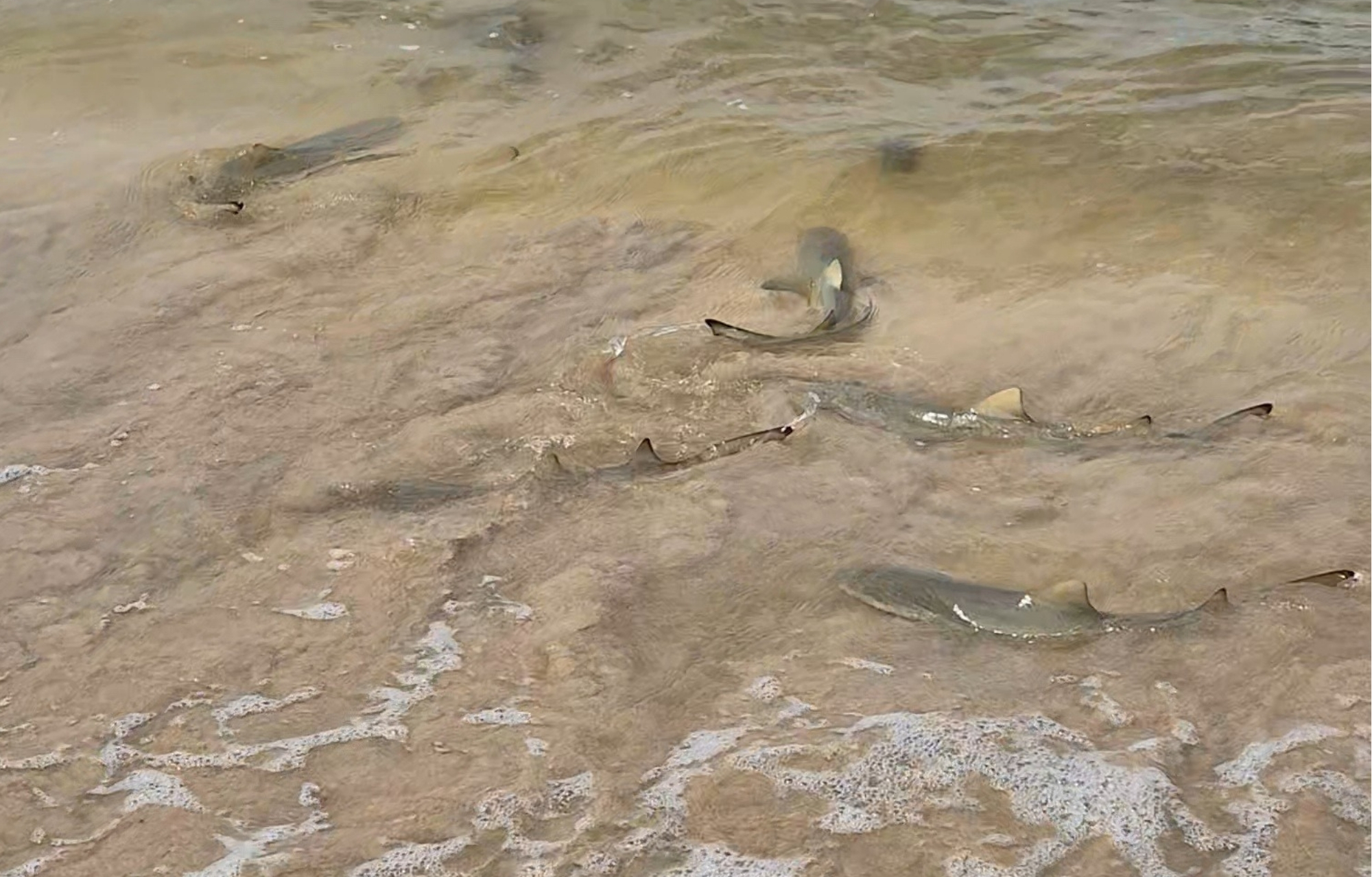
Gathering in schools, lemon sharks are known to hunt schools of sardines and their own young, but there were no records of predation on invasive species (photo: Bianca Rangel/IB-USP)
Opportunism
The authors believe that the sharks’ behavior is opportunistic because freshwater species are not part of their diet. However, it is unclear whether jaguar cichlids consistently enter Sueste Bay after heavy rains or if this was a one-time occurrence.
“This year there was another overflow, but no one observed this interaction. We don’t know if there were fewer jaguar cichlids or if they simply disappeared. Since there’s no monitoring in the mangrove swamp and the reservoir, we have no way of knowing if the animal is still present,” Rangel reports.
“If freshwater fish entering the bay becomes commonplace, it’s possible that sharks will learn that after the rains, food will be available,” she adds.
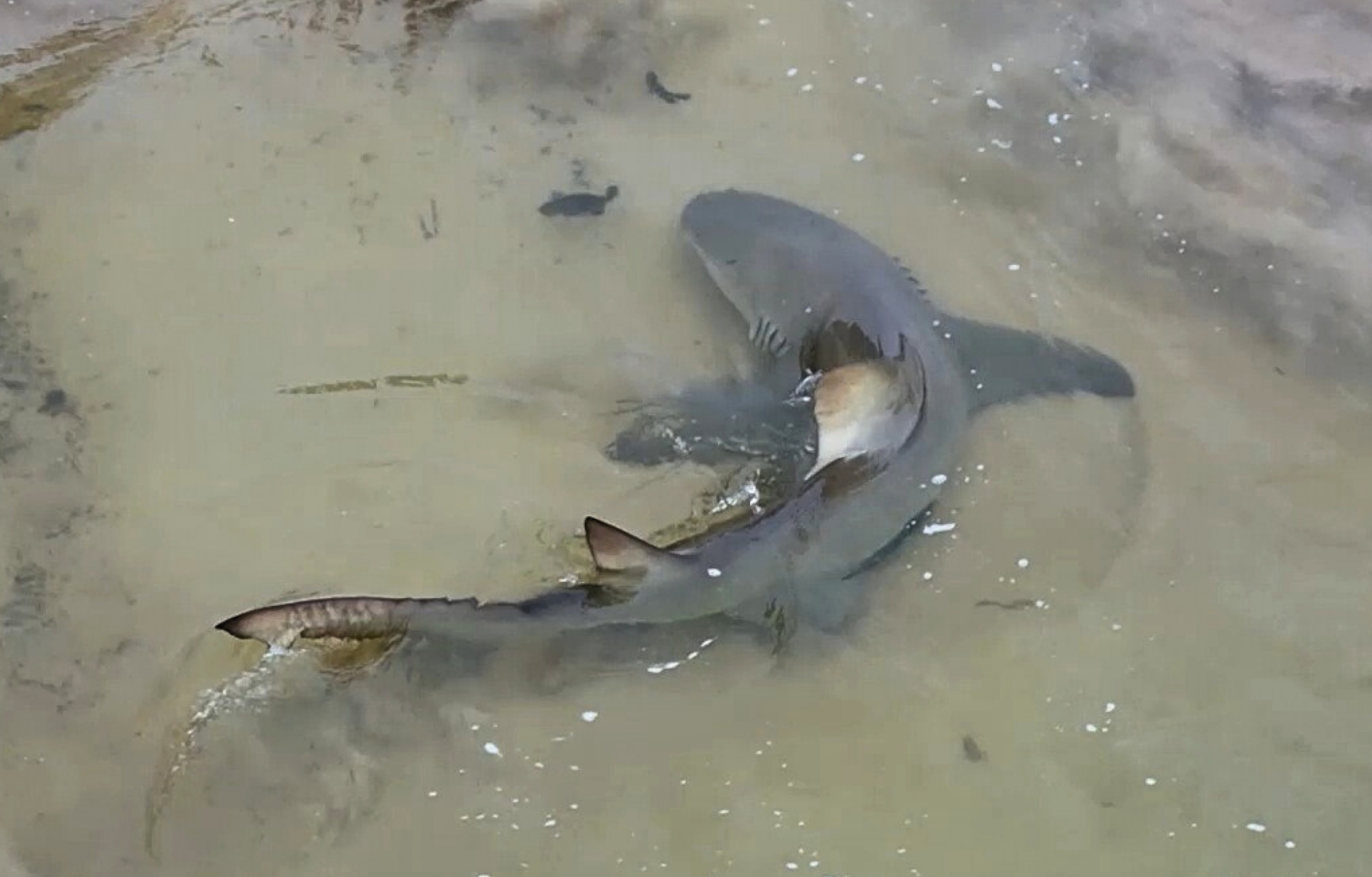
Disoriented by the salinity of the water, jaguar cichlids try to escape from a lemon shark in Fernando de Noronha (photo: Mariano Correa)
There are records of sharks feeding on invasive species, such as lionfish (Pterois spp.). However, there are no records of jaguar cichlid predation, nor has the hunting process been observed, as Rangel and her collaborators did. Continuous monitoring will verify whether this interaction continues and the role that sharks may play in controlling the invaders.
The article “Unexpected prey: lemon sharks (Negaprion brevirostris) observed preying on an alien invasive freshwater fish in a remote no-take marine reserve in the Equatorial Atlantic” can be read at link.springer.com/article/10.1007/s10641-025-01745-0.
Republish
The Agency FAPESP licenses news via Creative Commons (CC-BY-NC-ND) so that they can be republished free of charge and in a simple way by other digital or printed vehicles. Agência FAPESP must be credited as the source of the content being republished and the name of the reporter (if any) must be attributed. Using the HMTL button below allows compliance with these rules, detailed in Digital Republishing Policy FAPESP.
