





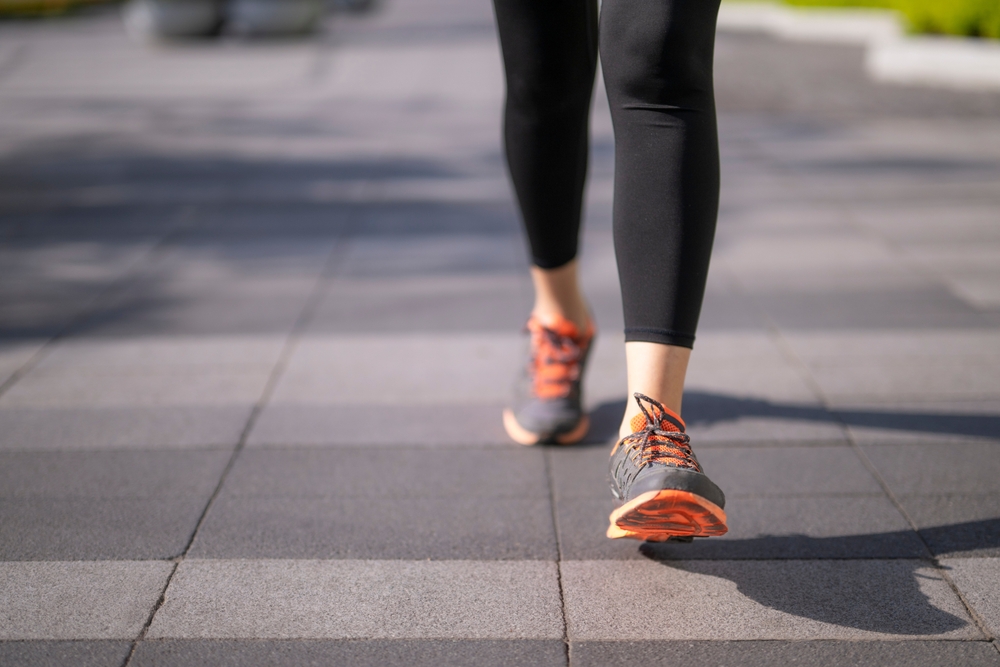
By Frances Jones | Agência FAPESP – For people with moderate to severe asthma, increasing the number of daily steps may be as effective as structured aerobic training sessions for managing the disease. This finding comes from a study led by researchers at the University of São Paulo (USP) and published in the journal Pulmonology. The study demonstrated that both approaches improve quality of life, alleviate symptoms of anxiety and depression, and control asthma in the medium term. This offers doctors and patients more flexible, accessible, non-pharmacological treatment alternatives.
Physical therapist David Halen Araújo Pinheiro conducted the doctoral research at the University of São Paulo Medical School (FM-USP) in Brazil, in collaboration with the Airway Diseases Unit of the Pulmonology Division at the Heart Institute of Hospital das Clínicas (HC), a hospital complex administered by FM-USP. The research group received funding from FAPESP (projects 21/03745-3, 24/00263-6, 21/04198-6, and 18/17788-3) and the National Council for Scientific and Technological Development (CNPq).
“In a previous study, we found that if a patient walks 7,500 steps a day, they already have better clinical control of their asthma,” says Pinheiro, who is currently a postdoctoral fellow at the Laboratory for Research in Physical Therapy and Exercise (LIFFE) at HC-FM-USP with a fellowship from FAPESP.
Of the 480 patients invited to participate in the new study, 52 enrolled in the program after the screening process. The interventions lasted two months, and a follow-up assessment was conducted four months later. To qualify for the study, volunteers with uncontrolled moderate-to-severe asthma had to be physically inactive (engaging in less than 150 minutes of moderate-to-vigorous physical activity per week), have received medical treatment for at least six months, be clinically stable (with no exacerbations in the past 30 days), and be nonsmokers.
Before starting the program, participants attended an in-person educational session covering topics such as asthma pathophysiology, proper medication use, and the benefits of physical activity. The volunteers were randomly assigned to two groups. One group began attending the HC twice a week for 45-minute aerobic training sessions on a treadmill under professional supervision. The second group visited the HC once a week for up to 90 minutes to receive guidance, counseling, and encouragement to increase their physical activity through walking and setting weekly goals. Members of this group were provided with a smartwatch to track their steps during the study period. Both interventions lasted eight weeks.
Parameters related to physical activity, clinical asthma control, quality of life, and symptoms of depression and anxiety were measured at three time points: before the start of the study (baseline), immediately after the eight-week intervention (post-intervention), and four months later (follow-up). During each seven-day, seven-night assessment period, the volunteers wore an accelerometer on their waist during the day to measure steps and another on their wrist at night to assess sleep quality. The professionals who conducted the assessments were not directly involved in the study and did not know which group each participant belonged to.
Low quality of life
The study participants with asthma were between 18 and 65 years old. Most of them were overweight or grade 1 obese women who exhibited symptoms of anxiety and depression and had a low quality of life, according to the authors of the article. Volunteers in both groups experienced fewer respiratory symptoms and maintained these benefits four months after the study ended.
“Both interventions are beneficial for patients and provide better clinical control of the disease. And, based on our results, neither strategy outperformed the other,” Pinheiro notes. “However, aerobic training requires more equipment and must be supervised. With simple walking, on the other hand, by increasing the daily number of steps, patients tend to manage their condition and gain other benefits, such as an improved quality of life and reduced symptoms of anxiety and depression.”
After the two-month intervention period, the researchers waited four months before contacting the patients for a follow-up. “We did that so as not to influence them and to let them go about their daily lives,” the researcher explains. “After four months, many patients in the aerobic training group reported that they’d joined a gym to use the treadmill, while patients in the behavioral intervention group continued walking as part of their daily routine.”
Not all of them, however. They cited weather changes (from cold to hot or vice versa) as the main reason for discontinuing their activities.
“We observed that, in the aerobic training group, the number of steps increased compared to baseline and declined at follow-up. The same occurred in the behavioral intervention group, although in both cases, the numbers remained above those recorded before the intervention.”
The aerobic training group showed an average increase of 1,537 steps per day after the intervention compared to the baseline. At follow-up, however, the increase was smaller: 983 steps. The behavioral intervention group increased their daily step count by 1,126 immediately after the two-month program. Four months later, it was 996.
“That was an interesting observation we made. After four months, the number of steps recorded by the behavioral intervention group was slightly higher than that of the aerobic training group.”
However, Pinheiro emphasizes that in his protocol, patients must continue taking their medication as recommended by the Global Initiative for Asthma (GINA). “Both aerobic training and behavioral intervention complement medication. We must never stop taking the treatment prescribed by our doctor,” the researcher states.
The article “Aerobic training versus behavioral intervention to increase physical activity on clinical control of people with moderate-to-severe asthma: A randomized clinical trial” can be read at tandfonline.com/doi/full/10.1080/25310429.2026.2684131.
Republish
The Agency FAPESP licenses news via Creative Commons (CC-BY-NC-ND) so that they can be republished free of charge and in a simple way by other digital or printed vehicles. Agência FAPESP must be credited as the source of the content being republished and the name of the reporter (if any) must be attributed. Using the HMTL button below allows compliance with these rules, detailed in Digital Republishing Policy FAPESP.
