




Developed by the startup brain4care, the technology consists of a non-invasive sensor that detects micro-movements of the skull bone linked to heartbeats and transforms them into a signal that allows monitoring of intracranial compliance and dynamics (image: brain4care)
A study conducted at a hospital in São Paulo, Brazil, suggests that analyzing intracranial compliance using technology developed with support from FAPESP may reduce mortality, neurological sequelae, length of hospital stay, and readmissions.
A study conducted at a hospital in São Paulo, Brazil, suggests that analyzing intracranial compliance using technology developed with support from FAPESP may reduce mortality, neurological sequelae, length of hospital stay, and readmissions.
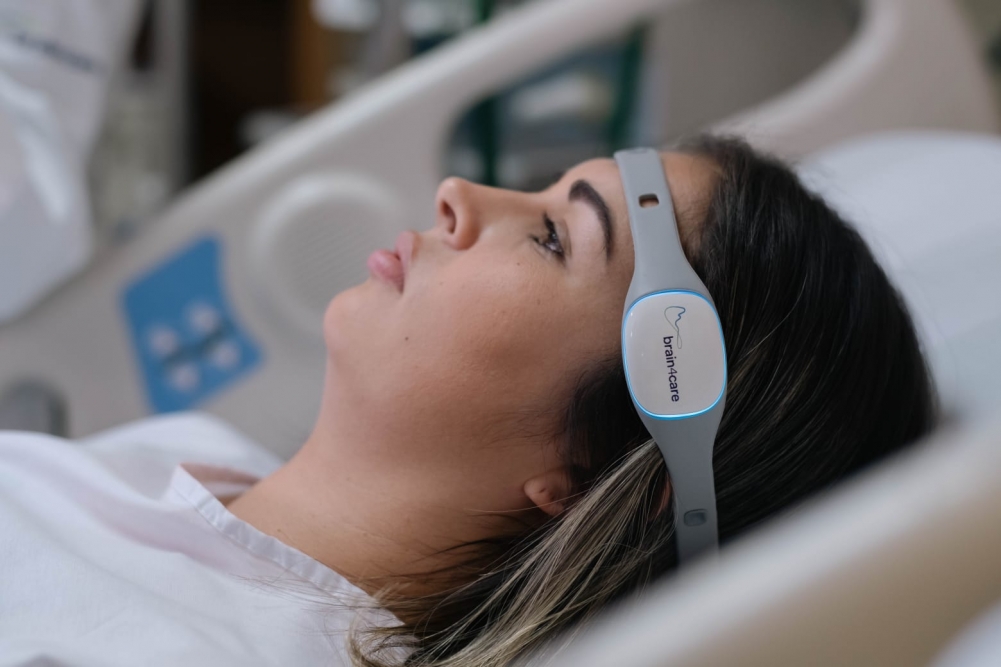
Developed by the startup brain4care, the technology consists of a non-invasive sensor that detects micro-movements of the skull bone linked to heartbeats and transforms them into a signal that allows monitoring of intracranial compliance and dynamics (image: brain4care)
By Roseli Andrion | Agência FAPESP – In neurological intensive care, it is quickly learned that the brain cannot wait. As the most sensitive organ in the human body, it can sustain irreversible damage after just a few minutes of severe hypoxia. By comparison, a muscle can withstand hours without oxygen. To prevent neuronal damage, action must be taken quickly and precisely.
In this scenario, medical decisions are often based on the indicators displayed on the monitors in the intensive care unit (ICU). Clinical experience can bring disconcerting surprises: even when the parameters indicate stability, the brain may still be suffering.
This troubled intensive care physician Carlos Nassif. Despite following the correct treatment protocol, with intracranial pressure (ICP) within the safe range and adequate blood pressure and cerebral perfusion pressure (CPP), some patients showed signs of neurological deterioration. “I had patients with all parameters considered adequate who still had ischemic brains – a condition in which the brain receives less oxygen than it needs,” Nassif tells Agência FAPESP.
This led the specialist to conduct a clinical study at Hospital 9 de Julho in São Paulo, Brazil. The study evaluated Brazilian technology with support from FAPESP’s Innovative Research in Small Businesses Program (PIPE). The technology analyzes brain dynamics and intracranial compliance, or the skull’s ability to accommodate an increase in volume without a significant rise in ICP. Over a five-year period, the physician, who is engaged in research and clinical care at Hospital 9 de Julho and Hospital das Clínicas (HC) – the hospital complex administered by the University of São Paulo Medical School (FM-USP) – collected data.
The goal was to compare two neurocritical care models: one group of patients used only the treatment protocol based on updated international guidelines, while the other combined it with an assessment of cerebral compliance and intracranial dynamics. The technology that measures compliance was developed by the startup brain4care based on the research of Sergio Mascarenhas (1928–2021), a pioneer of applied physics in Brazil.
The device uses a non-invasive sensor attached to a headband to detect micro-movements of the skull bone linked to heartbeats. These movements are converted into a signal that allows for the monitoring of compliance and intracranial dynamics. Until recently, it was believed that the skull was too rigid to permit such a measurement.
Brain monitoring
Patients with neurological injuries are monitored using various indicators. One of the main indicators is ICP. Another widely used parameter is CPP, which is the force that drives blood flow to the brain. It is calculated from the difference between mean arterial pressure and ICP.
These numbers guide clinical decisions in ICUs worldwide. Although international guidelines recommend specific ICP and cerebral perfusion levels to prevent oxygen deprivation and damage to brain tissue, these parameters may not accurately reflect what is happening in clinical practice.
With the brain4care tool, the team can recognize the need for intervention before ICP rises and act immediately. This is a completely different approach from the standard reactive stance of only acting after the patient’s condition worsens. “Often, by the time symptoms appear, the damage is already irreversible,” Nassif warns.
The researcher compared the analysis of cerebral compliance with traditional tests and with a technique considered the gold standard in neurological monitoring: PtiO₂ (partial pressure of brain tissue oxygen). This invasive method requires inserting a millimeter-sized sensor directly into the brain via a small catheter.
Once installed, the device measures the amount of oxygen in the brain tissue, allowing for an assessment of whether that region of the brain is receiving sufficient oxygenation to maintain its functions. “What causes brain injury is a perfusion disorder and, consequently, an inadequate supply of oxygen. When you can measure that directly, you have a very important reference,” the doctor explains.
Due to the need for a surgical procedure, costly sensors, specialized equipment, and a specialized team for implantation and monitoring, PtiO₂ is typically limited to high-complexity hospitals. In Brazil, it is rarely widely available through the SUS (the acronym for “Sistema Único de Saúde,” Brazil’s national public health network), even in large hospitals such as HC.
Historically, the treatment of severe head trauma or stroke has relied on monitoring ICP and CCP. International guidelines state that if these values are within a predetermined target range, the patient is safe.
However, the comparison between the methods yielded unexpected results: Nassif observed that more than 80% of evaluated patients had dangerously low levels of cerebral oxygenation, even when ICP and CCP were within the range recommended by international protocols. This suggests that many patients may be experiencing silent brain damage in ICUs.
This is concerning because brain injury often worsens in the minutes, hours, or days following the initial neurological event, a process known as secondary brain injury. Therefore, the medical team’s goal is not only to prevent death, but also to reduce the risk of severe neurological sequelae, which can lead to procedures such as tracheostomy and the placement of feeding tubes, as well as the cognitive and functional impairments described in the medical literature.
“Sometimes, the worst outcome isn’t death. It’s surviving with severe sequelae,” says Nassif. “Our goal isn’t to keep the patient alive at any cost; it’s for them to be productive. We don’t want the result to be someone who is incapacitated and unable to interact with their family.”
The doctor recalls a story from a colleague that left a lasting impression on him. A young woman was admitted to the hospital with severe cerebral bleeding caused by an aneurysm and was hospitalized in the ICU for over 60 days. When she returned to the clinic for a follow-up appointment, her treating doctor could hardly believe his eyes. She had returned to work and showed no signs of neurological dysfunction.
Intracranial compliance
The technology developed by brain4care challenges classical interpretations of brain physiology, such as the Monro-Kellie doctrine formulated in the 18th century by Scottish physicians Alexander Monro and George Kellie. According to this principle, the skull is a rigid compartment, and the total volume within the cranial cavity – composed of brain tissue, blood, and cerebrospinal fluid – remains constant. When one of these components increases, another must decrease to prevent an increase in ICP.
By comparing intracranial compliance data with transcranial Doppler tests, which measure cerebral blood flow, Nassif observed that the brain4care device can identify the blood pressure that provides the best perfusion for each patient. This enables the individualization of clinical management. Currently, the injured brain is treated based on static protocols and population averages, which can overlook crucial windows for therapeutic optimization and compromise recovery.
The waveform generated from data captured by the brain4care sensor indicates whether the brain is protected or in distress. Nassif explains that he identified an optimal blood pressure for each patient using the tool. What is appropriate for a 70-year-old patient with a history of hypertension may differ from what a 20-year-old needs.
Furthermore, blood pressure can vary depending on the severity of the injury and can even change throughout a patient’s recovery process. “There’s no single fixed value that’s appropriate for everyone. It’s necessary to assess the individual’s actual needs at every moment. An adjustment made in the morning could cause edema at night,” Nassif explains. “If blood pressure remains elevated after the cerebral edema has subsided, for example, excessive blood flow can trigger or worsen the edema and cause further damage.”
Clinical study results
Nassif’s study compared two groups of critically ill neurological patients. One group was treated according to traditional guidelines, while the other was additionally monitored for intracranial compliance. To minimize potential biases, the analysis included only critically ill patients, most of whom required mechanical ventilation and/or vasopressor medications.
The results, published in the journal Cost Effectiveness and Resource Allocation, were striking: patients monitored with brain4care showed an overall reduction in mortality (5.88% versus 37.25%), an increase in the percentage of patients discharged from the hospital with functional independence (58.8% versus 27.5%), and a shorter length of stay. The average length of stay in the ICU decreased by 3.7 days, and the average hospital stay decreased by 4.14 days. In other words, adopting the technology frees up beds more quickly.
Beyond the medical aspect, there is an economic impact. According to the estimates used in the study, a daily stay for a critically ill patient in a neurological ICU costs between BRL 13,000 and BRL 15,000. The savings per patient are BRL 68,800, as there is a significant difference in hospital readmissions: 12.5% readmissions in the group that used intracranial compliance versus 38.7% in the control group. Twice as many patients monitored with brain4care were discharged directly home without needing a backup hospital or home care.
Potential impact on public health
Traumatic brain injuries are among the leading causes of death and disability worldwide. According to the World Health Organization (WHO), approximately 50 million people sustain head trauma each year.
In Brazil, Ministry of Health data indicate that this type of injury is one of the leading causes of hospitalization among young adults, often associated with traffic accidents. Another significant group includes patients who have had a stroke, which is the second leading cause of death globally and a major source of permanent disability.
In this context, technologies that improve brain monitoring have the potential to transform outcomes for thousands of patients. One advantage of brain4care is that its equipment does not require surgery or implantation in the brain, unlike intracranial sensors such as PtiO₂. This eliminates the need for highly specialized teams to implant the device, expanding its potential for use in hospitals with varying levels of infrastructure.
Next steps
The São Paulo study is a first step in the clinical evaluation of the technology. Further research should include a larger number of patients from different hospital centers.
Nassif is considering applying the tool to other clinical situations, such as those involving patients with septic shock, which is the most severe form of sepsis. In this condition, changes in cerebral perfusion can cause neurological deficits that negatively affect patient outcomes.
In ICUs, septic shock is one of the leading causes of death. The team often focuses on monitoring the kidneys, lungs, and heart while neglecting the brain. This explains why many survivors of severe infections experience neurological decline months after discharge.
Despite scientific discussions and technological advances, Nassif sums up the goal of his work simply: “When a patient returns home and resumes their life after a severe brain injury, that shows the treatment was worth it.”
The technology developed by brain4care places Brazil at the forefront of this field and demonstrates that cutting-edge technology does not have to be imported or prohibitively expensive. Since the technology eliminates the need for high-cost, disposable, invasive sensors, it is much more affordable. By capturing the brain’s electrical activity through the skull bone, the technology gently monitors vital signs: no more holes in the skull, just precise data.
When conceiving the method, Mascarenhas heard from colleagues that, if correct, it would change medical literature. He proved that the skull is not as rigidly static as previously thought, reinterpreting Monro and Kellie’s studies and paving the way for personalized, accessible medicine for neurocritical patients.
The article “Impact of hemodynamic management guided by intracranial compliance on the outcome of critically ill patients – preliminary results and exploratory economic evaluation” can be read in the journal Cost Effectiveness and Resource Allocation at link.springer.com/article/10.1186/s12962-026-00721-4.
The Agency FAPESP licenses news via Creative Commons (CC-BY-NC-ND) so that they can be republished free of charge and in a simple way by other digital or printed vehicles. Agência FAPESP must be credited as the source of the content being republished and the name of the reporter (if any) must be attributed. Using the HMTL button below allows compliance with these rules, detailed in Digital Republishing Policy FAPESP.
