





By Thais Szegö | Agência FAPESP – Research conducted at the University of São Paulo (USP) in Brazil revealed that hops (Humulus lupulus L.) industrial waste from the brewing industry is a viable option for sunscreen formulation production.
The multidisciplinary study, which involved researchers from USP’s School of Pharmaceutical Sciences (FCF), was inspired by the large amount of waste generated and discarded during beer production. The study brought together complementary expertise in natural products and bioactive photoprotection.
Hops are added to beer in two stages: during the boiling of the wort and, in some recipes, after fermentation, a process known as dry hopping. The second phase is intended to impart aroma to the beverage, but not all of the substances in the pellets (dried, ground, and pressed hop flowers) are extracted. Thus, a significant fraction of bioactive compounds remains in the discarded material.
This makes the waste a rich source of bioactive compounds, such as bitter acids, polyphenols, and essential oils. Polyphenols have attracted special attention due to their strong antioxidant properties, which give them the potential to protect the skin from the harmful effects of ultraviolet rays.
For this reason, biomass from the brewing industry has become the focus of research supported by FAPESP (projects 24/01920-0 and 22/08191-9) and described in an article published in the journal Photochem.
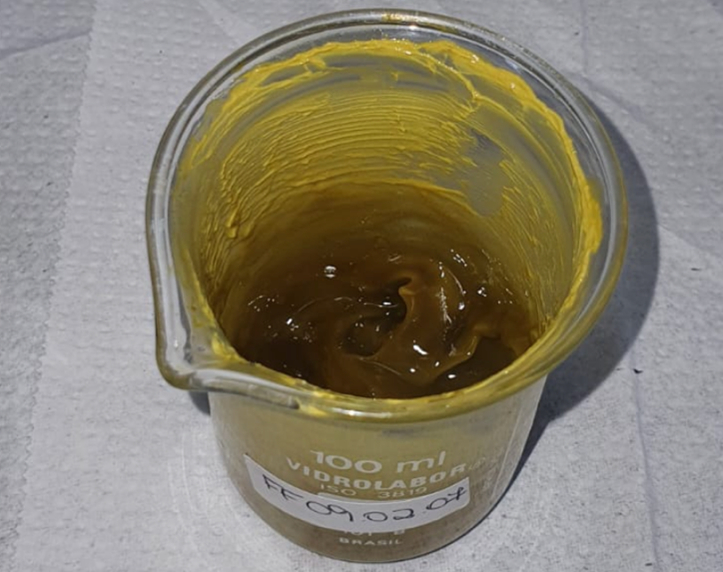
In the stage conducted by the Pharmacognosy Laboratory, the hop residue underwent ethanol extraction. Then, the extract was dried and analyzed chemically. A second extract was prepared from hops that had not undergone the beer-making process to allow for comparison of the “pure” and reused materials.
In the Cosmetology Laboratory, the extracts were incorporated individually (at a concentration of 10%) into sunscreen cream formulations containing two traditional sunscreens: one with UVB protection and the other with UVA protection. “We also evaluated different combinations with cosmetic ingredients commonly used in sunscreens, such as purified water and emollients like isopropyl myristate, isopropyl palmitate, and capric-caprylic triglycerides, to investigate which composition would perform best,” says André Rolim Baby, an associate professor at FCF-USP and one of the coordinators of the study.
The photoprotective efficacy was determined using one of the most robust and internationally recognized in vitro methods: diffuse reflectance spectrophotometry with an integrating sphere. This technology can calculate the sun protection factor (SPF) and other parameters related to sun protection, such as broad-spectrum protection.
“When we compared spent hops and hops that hadn’t gone through the brewing process, we found that the reused substance is more active. This is likely due to the elimination of volatile substances involved in beer production, leaving behind compounds with the necessary chemical bonds for photoprotection,” says Daniel Pecoraro Demarque, also from FCF-USP and a participant in the research, which was part of the master’s project of Ana Gabriela Urbanin Batista de Lima. De Lima is from the faculty’s Graduate Program in Pharmaceuticals and Medicines.
According to Baby, although the results were obtained in an in vitro assay, the research represents promising proof of concept. “But for this idea to reach the market, further studies and validations are needed, such as the long-term stability of the sunscreen, standardizing the bioactive compounds, and clinically evaluating safety and efficacy,” he states.
The article “Valorization of hop (Humulus lupulus L.) brewing residue as a natural photoprotective adjuvant” can be read at mdpi.com/2673-7256/6/1/8.
Republish
The Agency FAPESP licenses news via Creative Commons (CC-BY-NC-ND) so that they can be republished free of charge and in a simple way by other digital or printed vehicles. Agência FAPESP must be credited as the source of the content being republished and the name of the reporter (if any) must be attributed. Using the HMTL button below allows compliance with these rules, detailed in Digital Republishing Policy FAPESP.
