





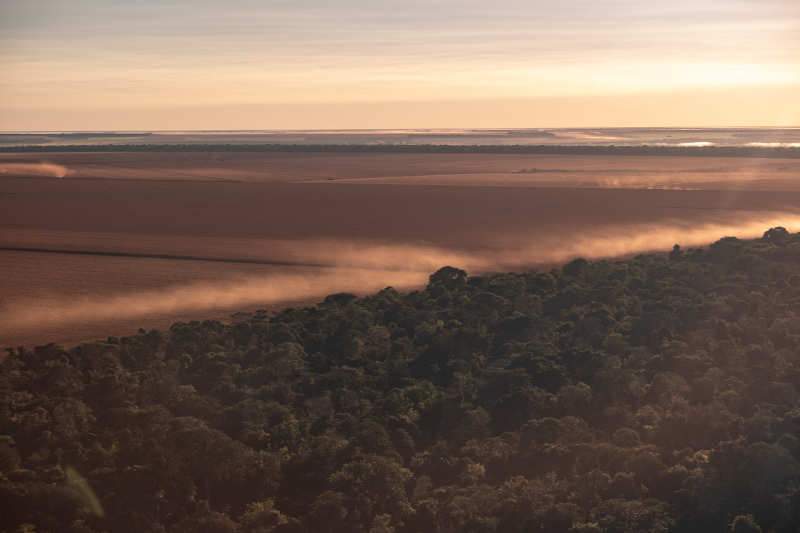
By Luciana Constantino | Agência FAPESP – Even after fires, severe droughts, and windstorms, the vegetation in degraded Amazonian forests demonstrates a high capacity for regeneration, including tree species. However, recovery occurs under new ecological conditions, resulting in a loss of diversity and increased vulnerability to new disturbances.
On April 20, research was published in the Proceedings of the National Academy of Sciences (PNAS), one of the world’s most cited scientific journals, showing that vulnerable species are being replaced by more resilient, generalist species. According to the authors, this indicates the formation of homogeneous forests but not a trend toward savannization, as some previous studies had suggested. This process reinforces the resilience of the biome.
However, the study, which was based on 20 years of field monitoring and was led by Brazilian researchers, highlights that the recovered areas are vulnerable to increasingly frequent extreme events in the biome, as well as to the impacts of deforestation and climate change. In addition to intensifying droughts and fires, global warming impairs ecosystem services such as water regulation and carbon sequestration.
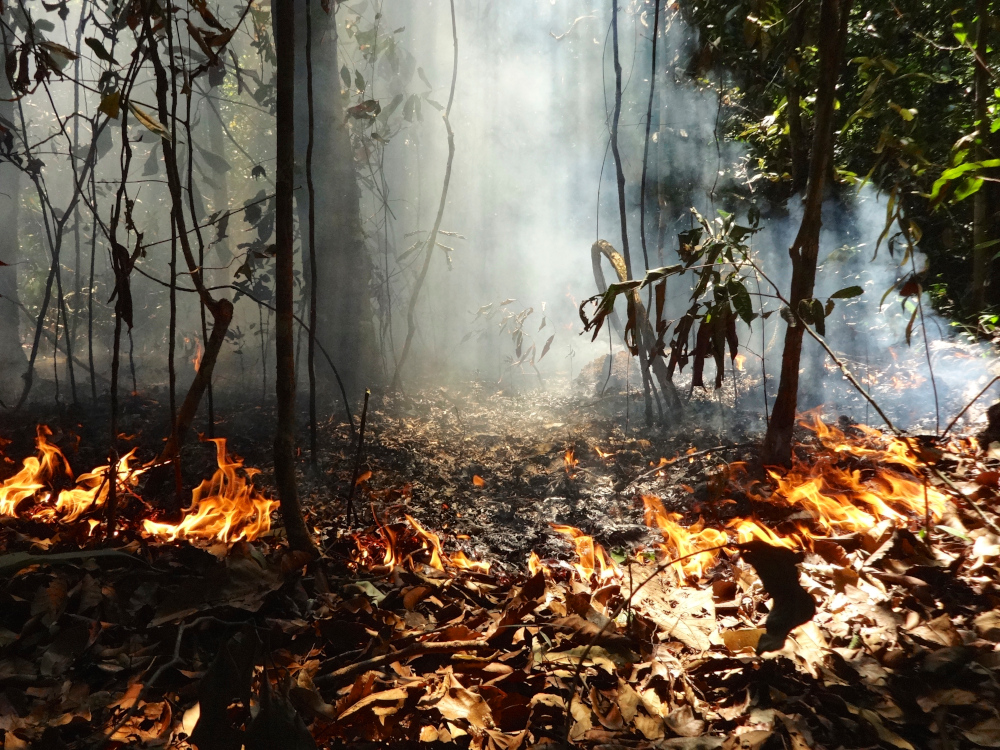
The group documented disturbance and recovery processes in an experimental forest called Tanguro in Mato Grosso state, which is located in a transition zone between the Amazon and Cerrado biomes. They monitored three 50-hectare plots: one control plot without burning; one burned annually between 2004 and 2010; and one with triennial burns in 2004, 2007, and 2010 (photo: Paulo Brando)
The researchers emphasize that this understanding is crucial for guiding forest conservation and mitigation strategies, particularly in the context of events like El Niño, which is characterized by the warming of the equatorial Pacific Ocean and causes changes in atmospheric circulation and rainfall patterns worldwide.
“The main message of our study is that, even when highly degraded, forests can recover. However, they’re very vulnerable to new disturbances. They’re resilient, but even so, they still need to be preserved. At the experimental site, we have control and fires no longer occur in the area, which isn’t possible to achieve across the entire Amazon,” Leandro Maracahipes tells Agência FAPESP. Maracahipes is a biologist and the first author of the article alongside forest engineer Paulo Brando.
The study is the result of Maracahipes’ postdoctoral research at the Institute of Biology at the State University of Campinas (IB-UNICAMP). He is currently a researcher at the Yale School of the Environment in the United States and a collaborator at the Amazon Environmental Research Institute (IPAM). Maracahipes and Brando receive support from FAPESP through a Postdoctoral Fellowship and a Thematic Project, respectively.
Monitoring
The group documented disturbance and recovery processes in an experimental forest called Tanguro in Mato Grosso state, which is located in a transition zone between the Amazon and Cerrado biomes. They monitored three 50-hectare plots: one control plot without burning; one burned annually between 2004 and 2010; and one with triennial burns in 2004, 2007, and 2010. Each plot is located near agricultural areas that were previously used as pastureland with exotic grasses.
“The choice of location is key, since climate models suggest that the transition zone between the Amazon and the Cerrado will be the first to undergo changes due to the impacts of global warming. This research is innovative because it integrates multiple stressors, such as fire, strong winds, and drought, and shows that the forest suffered, degraded, and then recovered. It’s now less species-rich, but still retains forest characteristics,” explains ecologist and IB-UNICAMP professor Rafael Silva Oliveira.
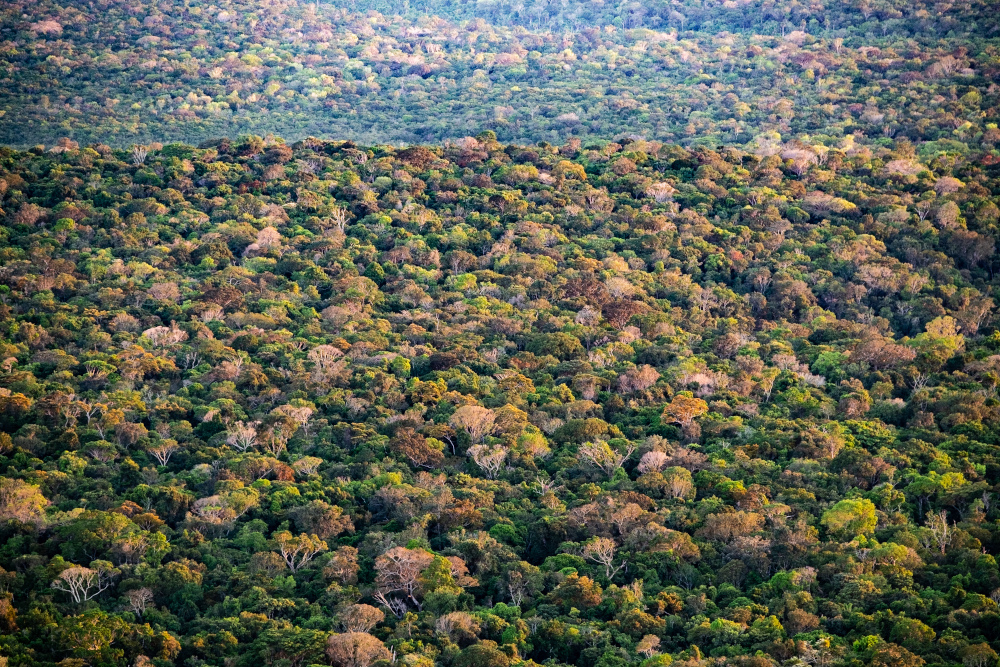
Over time, with increased tree cover (canopy closure) – especially starting in 2016 – these grasses decreased drastically. This suggests to the researchers that the damage to the forest did not transform it into a permanent savanna-like landscape (photo: Paulo Brando)
Oliveira is also an author of the article and was Maracahipes’s postdoctoral supervisor at the time. He adds: “Another important point is that the trees grew and the grasses disappeared, with no evidence of savannization. The models created by climatologists were useful for warning about risks to the Amazon, but they oversimplified tropical ecosystems by reducing them to either forest or savanna. This helped reinforce the idea of a ‘point of no return,’ which is still poorly supported by field data. In practice, the Amazon is much more diverse, with different types of forests and vulnerabilities. By incorporating this biological perspective, we show an Amazon that’s less predictable and more resilient in some regions than the models suggest.”
Oliveira also received support from FAPESP through the Research Partnership for Technological Innovation Program (PITE).
Step by step
The results showed that the structure and functioning of the forest interior recovered rapidly with the suspension of burning, and species diversity remained relatively stable.
However, in edge areas, the process was slower, with species richness declining by 20% to 46% between 2004 and 2024. The edge effect is an ecological phenomenon occurring at the margins of deforested areas where forests come into direct contact with open environments such as pastures, roads, and croplands. This alters the climate and biodiversity.
While some ecosystem services, such as carbon and water flows, recovered with the regrowth of vegetation after the fires, the species composition changed. The composition now consists of more generalist species with drought-tolerant characteristics, though they are operating at dangerous thresholds. Even after 14 years, the original species composition has not returned, particularly of those considered forest specialists.
Grasses played a key role in promoting high-intensity fires and impeding tree regeneration by initially expanding along the edges. Pasture-associated species were observed, such as Aristida longifolia and Imperata sp. of African origin. Following high-severity fires, invasive grasses, especially Andropogon gayanus, spread to the edges and reached their peak in 2012.
Over time, with increased tree cover (canopy closure) – especially starting in 2016 – these grasses decreased drastically, leaving only patches of shade-tolerant grasses. This suggests to the researchers that the damage to the forest did not transform it into a permanent savanna-like landscape.
“From a biological perspective, when we analyze the composition of grass species in the forest that has undergone disturbances, we see that they’re species used for pasture, such as Brachiaria and Andropogon. If the increase were in native species, we could say that the grass component would be an important factor in the recovery of degraded forests. Furthermore, there’s no influx of savanna woody species. Our experimental site is five kilometers from Cerrado savanna areas, which could serve as a source of propagation, and yet we haven’t observed this savannization,” adds Maracahipes, who has analyzed the species composition at the site over the years.
The research also showed that the forest is more vulnerable to fire due to the thin bark of the trees and that the low wood density makes it more susceptible to damage during windstorms. During severe droughts, some species operate near the threshold of hydraulic conductivity loss.
The presence of local fauna proved to be an important factor in forest regeneration, with mammals (such as tapirs and monkeys) and birds serving as key agents in promoting the reappearance of trees considered “forest specialists” – those with high wood density and long lifespans.
Scenario
Despite a significant decrease in deforestation in the Amazon over the last two years, the biome has suffered constant degradation. Fire has been the main factor. While deforestation completely removes vegetation, degradation weakens forests without destroying them entirely.
Between August 2025 and January 2026, deforestation affected 1,324 square kilometers (km²) of the so-called Legal Amazon (an area designated by the Brazilian government for socio-environmental development that encompasses the nine states where the biome is found), which is a 35% reduction compared to the previous cycle (August 2024 to January 2025). Meanwhile, forest degradation affected an area of 2,923 km² during that same period.
In the first three months of 2026, the second-lowest level for the first quarter of the year was recorded: 399.59 km², representing roughly a 7% drop compared to 2025. This data comes from DETER, the real-time deforestation alert system of the National Institute for Space Research (INPE).
Another concern for this year is the possibility of a “super El Niño” starting in the second half of the year and lasting until 2027. New projections from the European Centre for Medium-Range Weather Forecasts suggest that this phenomenon could be the most intense in 140 years. The drought that affected the Amazon in 2024 was caused by El Niño, and its effects are still being studied today.
“Despite the resilience of the forest, preservation is still the path we must pursue,” concludes Maracahipes.
The article “Forest recovery pathways after fire, drought, and windstorms in southeast Amazonia” can be read at www.pnas.org/doi/10.1073/pnas.2532833123.
Republish
The Agency FAPESP licenses news via Creative Commons (CC-BY-NC-ND) so that they can be republished free of charge and in a simple way by other digital or printed vehicles. Agência FAPESP must be credited as the source of the content being republished and the name of the reporter (if any) must be attributed. Using the HMTL button below allows compliance with these rules, detailed in Digital Republishing Policy FAPESP.
