





The researchers identified “autoantibody signatures” that can be correlated with immune status, neurological damage, and specific symptoms of each of the three diseases (image by Gerd Altmann on Pixabay)
Research from the University of São Paulo shows that a dysregulated immune system can trigger systemic attacks on neural connections, expanding our understanding of the complexity of diseases such as Alzheimer’s, Parkinson’s, and multiple sclerosis.
Research from the University of São Paulo shows that a dysregulated immune system can trigger systemic attacks on neural connections, expanding our understanding of the complexity of diseases such as Alzheimer’s, Parkinson’s, and multiple sclerosis.
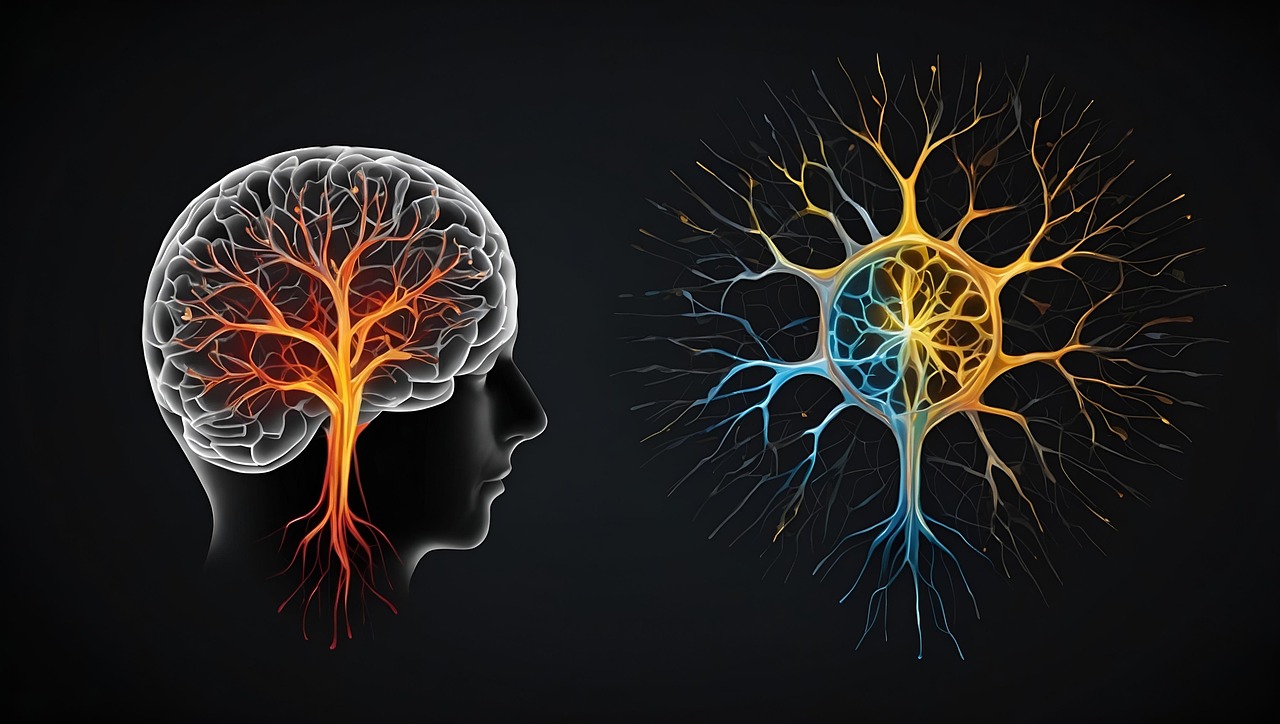
The researchers identified “autoantibody signatures” that can be correlated with immune status, neurological damage, and specific symptoms of each of the three diseases (image by Gerd Altmann on Pixabay)
By Maria Fernanda Ziegler | Agência FAPESP – Researchers at the University of São Paulo (USP) in Brazil discovered that neurodegenerative diseases, such as Alzheimer’s, Parkinson’s, and multiple sclerosis, are more complex than previously thought. Their analysis of nearly 600 blood samples from patients with and without these diseases revealed that neurodegenerative processes extend beyond the central nervous system, affecting various targets throughout the body.
“We conducted a systemic analysis based on autoantibodies – defense proteins [immunoglobulins] that mistakenly attack the body’s healthy cells, tissues, or organs instead of external pathogens. In this study, we saw that, contrary to what was previously thought, these diseases don’t involve an antibody attacking only a specific region of the connection between neurons [synapse], like a thief breaking in through a door. It’s a systemic attack, like machine-gunning an entire house,” explains Júlia Nakanishi Usuda, a FAPESP scholarship recipient and the first author of the study.
The study, published in the journal iScience, identified more than 9,000 autoantibodies from public databases. Based on the results, the researchers suggest that, rather than focusing on isolated molecular targets, treatment strategies for these diseases should focus on blocking the autoimmune response systemically. While the data science study still needs to be confirmed through in vitro and in vivo testing, it reinforces a new paradigm for treating neurodegenerative diseases.
“We use the analogy of a house full of doors and windows where all efforts are spent protecting and locking just one of them [a molecular target, such as beta-amyloid in Alzheimer’s disease]. But it turns out that the thief [the dysregulated immune system] is armed with a machine gun, firing at all the other doors. The attack is systemic, firing at multiple targets and striking synaptic networks in a coordinated manner,” explains Otávio Cabral-Marques, a professor at the USP Medical School (FM) and coordinator of the research, supported by FAPESP.
Immune and nervous systems
Neurodegenerative diseases, such as Alzheimer’s, Parkinson’s, and multiple sclerosis, are generally considered to be strictly related to protein accumulations or localized neuronal dysfunction.
Alzheimer’s disease, the leading cause of dementia, primarily affects people over the age of 65. It is linked to the accumulation of beta-amyloid protein plaques in the brain and tau protein tangles. This leads to a progressive loss of memory and reasoning ability.
Parkinson’s disease, the second most common neurodegenerative disease, also primarily affects older adults but manifests through symptoms such as tremors, rigidity, slowness of movement, sleep disturbances, and depression. These symptoms are associated with the aggregation of another protein, alpha-synuclein, and the degeneration of neurons involved in regulating behavior, emotion, cognition, and motor functions (dopaminergic neurons).
Multiple sclerosis, on the other hand, is more prevalent in young women and results from autoimmune inflammation that causes the loss of myelin sheaths on neurons, leading to neurodegeneration. Symptoms include fatigue, cognitive changes, and optic neuritis. The disease usually begins with relapsing-remitting episodes and may progress to a progressive form.
“Although they have different causes and symptoms, the three diseases share neuroimmune dysregulation as a common axis. In all of them, neuroinflammation and the immune response are central to disease progression. Therefore, studying autoantibodies – the molecules that attack the body itself – is essential to understanding how immunity influences the nervous system and contributes to neurological decline,” states Usuda.
Disease markers
The researchers identified “autoantibody signatures” in these diseases that can be correlated with immune status, neurological damage, and symptoms specific to each disease.
“The analysis of autoantibodies allowed us to map how they attack synaptic networks and correlate their presence with the failure of essential signaling pathways in these diseases. In the case of Alzheimer’s disease, for example, which is generally associated with the toxicity of beta-amyloid plaques, we identified the systemic role of autoantibodies. This reinforces strategies presented in recent studies in mice that indicate improved neural connections when there’s a reduction in B lymphocytes, which are responsible for antibody production,” says Cabral-Marques.
The article “Integrative analysis reveals the autoantibodyome neuroimmune signature of neurodegeneration” can be read at www.cell.com/iscience/fulltext/S2589-0042(26)00156-2.
The Agency FAPESP licenses news via Creative Commons (CC-BY-NC-ND) so that they can be republished free of charge and in a simple way by other digital or printed vehicles. Agência FAPESP must be credited as the source of the content being republished and the name of the reporter (if any) must be attributed. Using the HMTL button below allows compliance with these rules, detailed in Digital Republishing Policy FAPESP.
