





By André Julião | Agência FAPESP – In her 1962 book, Silent Spring, American biologist Rachel Carson revealed that DDT, a widely used pesticide at the time, was responsible for the mass death of birds, including the iconic bald eagle.
One reason was that the pesticide made eggshells thinner, causing mothers to break them when sitting on them to incubate. Silent Spring is considered the founding work of the modern environmental movement.
Most rich countries had banned DDT by the 1970s. In Brazil, the agricultural ban did not take effect until 1985; however, the poison was still permitted for controlling disease vectors, such as Aedes aegypti. In 2009, a law prohibiting the use, manufacture, and storage of dichlorodiphenyltrichloroethane in the country was passed, following the Stockholm Convention on Persistent Organic Pollutants.
However, a study published in the journal Environmental Monitoring and Assessment with support from FAPESP provides new evidence of the presence of DDT and other persistent organic pollutants (POPs) in birds.
“Even if they haven’t been used in a particular area, organic pollutants suffer from the grasshopper effect. In this phenomenon, they evaporate in the heat and condense again in the cold. As a result, they migrate through the air from the low latitudes of the tropics toward the polar regions,” explains Janeide de Assis Guilherme Padilha, a researcher at the University of Minho in Portugal and first author of the study.
Padilha and researchers from the Oceanographic Institute of the University of São Paulo (IO-USP, also in Brazil) analyzed the livers of seabird carcasses from six species found on the coast of Rio Grande do Sul during their annual migration to the South Atlantic, in partnership with researcher Maria Virginia Petry from the University of Vale do Rio dos Sinos (UNISINOS) in the Brazilian state of Rio Grande do Sul.
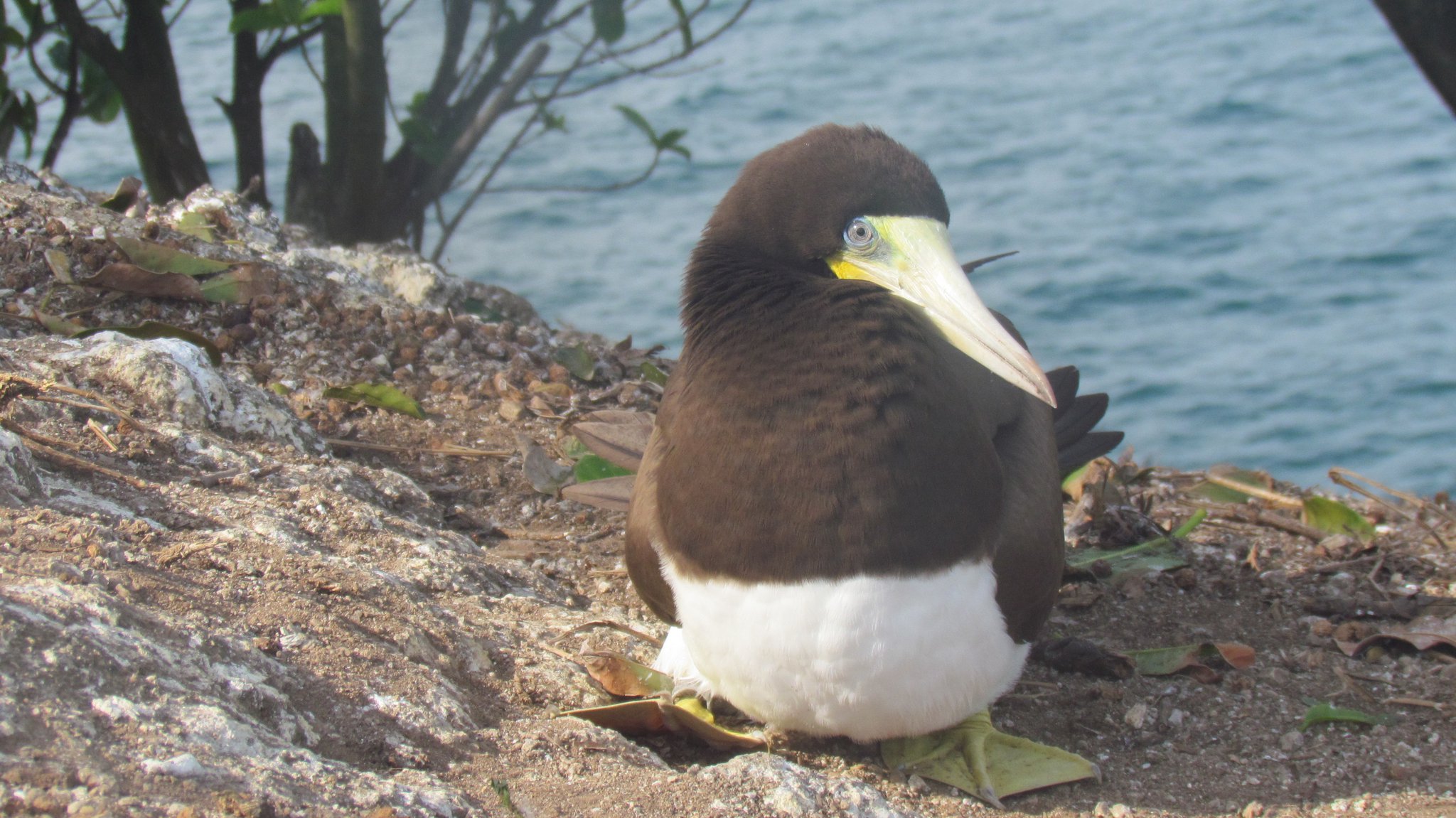
The researchers also analyzed the blood of a population of brown boobies (Sula leucogaster) residing in the São Pedro and São Paulo Archipelago. This group of rocky islands is located about 1,000 kilometers from the city of Natal in the state of Rio Grande do Norte.
Despite being so far from the coast and human activities, the brown boobies in the archipelago were contaminated by DDT and PCBs, which are industrial compounds that were formerly used in transformers and electric reactors.
Despite having different feeding habits, the six species analyzed off the coast of Rio Grande do Sul showed similar levels of POPs. However, the two great shearwaters (Ardenna gravis) analyzed had higher average levels of PCBs and mirex, an insecticide that has also been banned but persists in the environment.
The study was supported by FAPESP through multi-user equipment installed at IO-USP.
New questions
POPs can be transferred from mother to offspring in birds and cause eggshell thinning, among other problems. In humans, POPs are linked to certain types of cancer, endocrine disruption, and reproductive and developmental problems.
The researchers were surprised by the similarities in the levels found in species with different diets and sizes. Water and food are the main vectors of contamination in seabirds.
“We expected larger species, such as albatrosses, to have the highest concentrations of POPs, since they occupy higher trophic levels and tend to consume larger and longer-lived prey, which accumulate more contaminants throughout their lives. However, the great shearwater exhibited the highest values of PCBs and mirex,” says the researcher, who conducted part of the study during her postdoctoral studies at IO-USP.
The great shearwater travels extensive migratory routes and uses areas associated with fishing. It may also feed on prey caught in more contaminated regions of the South Atlantic, which helps explain why it has such a high pollutant load.
Another example is part of a study previously published by Padilha’s group. Populations of the same species, the brown booby, from three different locations had different contamination profiles.
One hypothesis explaining the higher concentration of toxic pollutants, such as tin, in birds on the Cagarras Islands in Rio de Janeiro compared to those in Abrolhos and the São Pedro and São Paulo Archipelago is that the Cagarras Islands receive more of these contaminants due to their proximity to urban areas.
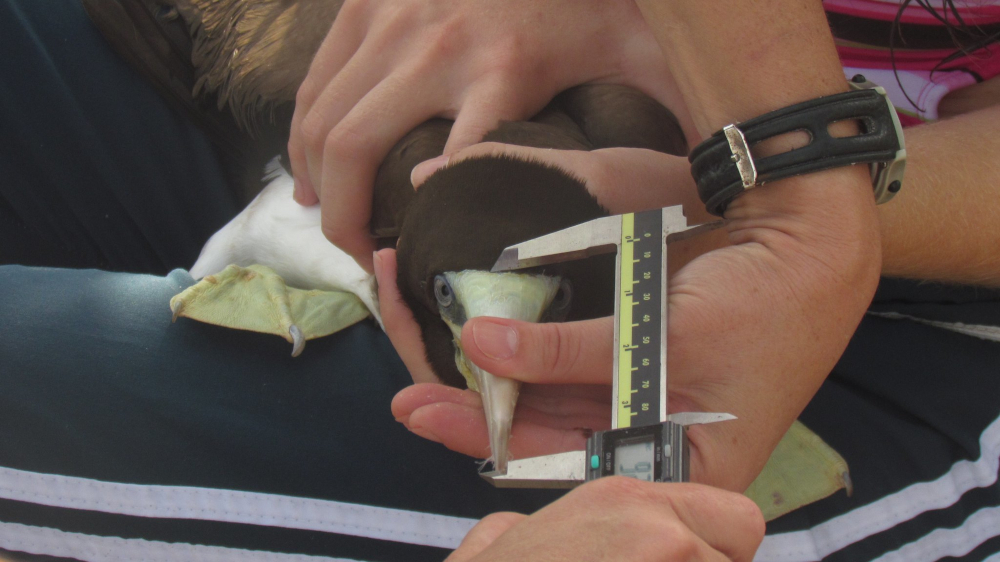
A brown booby is measured during monitoring at Cagarras Islands in Rio de Janeiro (photo: Janeide Padilha/personal archive)
Additionally, the bird population on the Cagarras Islands feeds predominantly on squid, which accumulates more toxic metals than the more abundant food sources in the other areas studied.
“It’s important to note that, in our current work, we’re analyzing different biological materials: livers in Rio Grande do Sul, from animals that are already dead, and blood from live brown boobies in the archipelago. Other types of analysis or tissues may reveal pollutants that we haven’t found using the methods currently employed,” Padilha points out.
Livers represent prolonged accumulation because many POPs have a low metabolic rate and remain in the organ for long periods. Blood, on the other hand, provides insight into what is circulating in the body.
Padilha is currently investigating the impact of plastic pollution on seabirds. Some POPs, such as flame retardants, are present in easily accessible plastics in the ocean.
“We suspect that some colors are associated with certain foods, which could be causing these birds to ingest pieces of plastic,” she says. During her fieldwork on the Cagarras Islands, Padilha witnessed seabirds using toothbrushes and lighters as part of their nests.
The article “Bioaccumulation of legacy POPs in seabirds: A multi-species comparison between Procellariiformes and Suliformes in the South Atlantic” can be read at link.springer.com/article/10.1007/s10661-025-14703-1.
Republish
The Agency FAPESP licenses news via Creative Commons (CC-BY-NC-ND) so that they can be republished free of charge and in a simple way by other digital or printed vehicles. Agência FAPESP must be credited as the source of the content being republished and the name of the reporter (if any) must be attributed. Using the HMTL button below allows compliance with these rules, detailed in Digital Republishing Policy FAPESP.
