





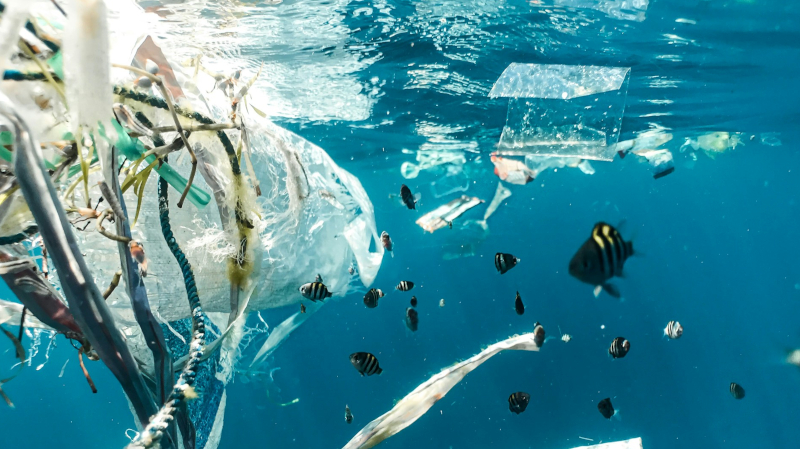
By José Tadeu Arantes | Agência FAPESP – “Dirty” or “extremely dirty”: these are the classifications of 46% of the world’s aquatic environments. This conclusion comes from a study that compiled and systematized data from 6,049 records of waste contamination in aquatic environments on all continents over the last decade.
The study, coordinated by researcher Ítalo Braga de Castro and led by doctoral student Victor Vasques Ribeiro from the Institute of Marine Science at the Federal University of São Paulo (IMar-UNIFESP) in Brazil, analyzed articles published between 2013 and 2023. The researchers calculated the cleanliness level of rivers, estuaries, beaches, and mangroves based on the Clean-Coast Index (CCI), an international metric that quantifies the density of solid waste in coastal environments. The results were published in the Journal of Hazardous Materials.
The study revealed an uneven distribution of monitoring efforts. Here, Brazil stands out, leading the number of records in the period. “But that doesn’t guarantee that the monitored environments are in good condition and clean. The results show that about 30% of Brazilian coastal environments were considered dirty or extremely dirty according to the CCI scale,” Castro says.
One of the most critical contamination cases is in the mangroves of Santos, Brazil, which are among the most contaminated spots on the planet.
The team’s global summary showed surprising homogeneity in waste composition, regardless of cultural, economic, or geographical differences. Plastics and cigarette butts account for nearly 80% of the waste found worldwide. “Places that are completely free of waste are extremely rare,” the researcher comments.
Plastics account for 68% of the recorded items. They dominate because they persist in the environment, fragment into micro- and nanoplastics, and are transported by ocean currents over long distances. Cigarette butts account for 11% of the waste and release more than 150 toxic substances that can harm aquatic organisms.
The study confirmed the positive role played by environmental protection areas with quantitative data. “We analyzed 445 protected areas in 52 countries. The conclusion is unequivocal: protection reduces contamination by up to seven times. About half of the protected areas investigated were classified as ‘clean’ or ‘very clean.’ Even so, protection is no guarantee of immunity from increasing human pressure. About 31% of protected areas were classified as ‘dirty’ or ‘extremely dirty,’ showing that they aren’t effectively immune to contamination by litter in the sea,” says Danilo Freitas Rangel, a master’s student at IMar-UNIFESP who participated in the research team.
One more sophisticated result of the work is the “edge effect” observed at the boundaries of conservation units. The team calculated the distance from each sampling point to the boundaries of the protected areas and identified a pattern. Waste accumulates mainly at the edges, which highlights the direct influence of surrounding human activities. “This effect is reinforced by external pressures such as tourism, nearby urbanization, and waste transport by rivers and ocean currents. The vulnerability of the edges suggests the need for territorial buffer policies, integrated management, and enforcement beyond the formal boundaries of conservation units,” Castro emphasizes (read more at agencia.fapesp.br/56473).
The study also broke new ground by cross-referencing contamination data with global socioeconomic indicators. The researchers used the Global Gridded Relative Deprivation Index (GRDI) to estimate development levels on a square-kilometer scale. “We observed a nonlinear pattern: in unprotected areas, contamination increases in the early stages of economic development but begins to decline when the country reaches a certain level of infrastructure and environmental governance. In protected areas, however, development tends to increase contamination – a sign that investments in management and enforcement aren’t yet keeping pace with economic activity,” says Leonardo Lopes Costa, one of the authors of the study.
Tackling waste contamination, especially plastic contamination, requires integrated actions throughout the production chain – from reducing manufacturing to implementing efficient collection and reuse systems to establishing multilateral agreements that prevent cross-border waste movements. Without structural changes in global waste governance, the crisis will only worsen. In this context, one of the most relevant aspects of the study is its direct usefulness in ongoing international processes. “The results offer an unprecedented scientific basis to support public policies and negotiations, such as the Global Plastic Treaty and the Kunming-Montreal Global Biodiversity Framework,” Castro argues.
FAPESP supported the study through a Regular Research Grant awarded to Castro, a postdoctoral fellowship awarded to Costa, and a doctoral scholarship awarded to Ribeiro.
The article “Influence of protected areas and socioeconomic development on litter contamination: a global analysis” can be accessed at www.sciencedirect.com/science/article/abs/pii/S0304389425033424.
Republish
The Agency FAPESP licenses news via Creative Commons (CC-BY-NC-ND) so that they can be republished free of charge and in a simple way by other digital or printed vehicles. Agência FAPESP must be credited as the source of the content being republished and the name of the reporter (if any) must be attributed. Using the HMTL button below allows compliance with these rules, detailed in Digital Republishing Policy FAPESP.
