





By Luciana Constantino | Agência FAPESP – Brazilian researchers have identified previously unknown forms of a protein linked to breast cancer. The discovery contributes to our understanding of variability in responses to treatment, even with the most advanced therapies.
The study increased the known number of HER2 protein variations in these tumors from 13 to 90. Additionally, the study revealed distinct patterns of protein domains (structural units with specific functions that can operate independently) and localization within cells, as well as new areas of antibody binding. This diversity may explain resistance to therapies that target the standard form of the HER2 protein. This broadens our understanding of the disease and opens up possibilities for searching for more targeted drugs.
HER2 is a membrane-bound protein that plays an important role in controlling cell growth when its levels are normal in the body. However, in certain types of cancer, its production is permanently activated. This overexpression stimulates the uncontrolled growth of cancer cells, making the tumor more aggressive and prone to spreading rapidly. About 20% of all breast cancer cases in Brazil are linked to HER2 overexpression.
The research conducted by a group at the Sírio-Libanês Hospital was published in the journal Genome Research. It was supported by FAPESP through a doctoral scholarship and a Young Investigator project awarded to Pedro Galante, corresponding author of the article and coordinator of the hospital’s Bioinformatics Group.
It was featured on the cover illustration of the scientific journal, signed by Alice Brassanini Mena Barreto dos Reis, a patient who overcame breast cancer after being treated by one of the co-authors, clinical oncologist Carlos Henrique dos Anjos. The illustration refers to the spirit of exploration and discovery, inspired by Lewis Carroll’s Alice in Wonderland. The illustration reimagines a scientist as Alice standing in front of a keyhole, which reveals an intricate molecular world. She holds a key, symbolizing the revelation of knowledge and the antibody-receptor interactions explored in the study.
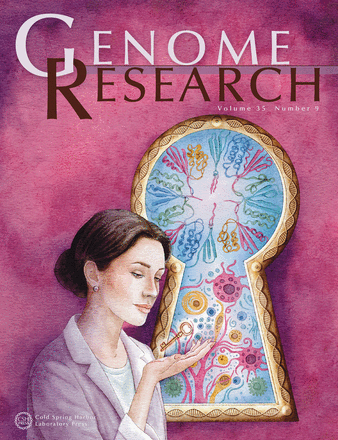
Illustration of patient Alice Brassanini Mena Barreto dos Reis, who overcame breast cancer after treatment with one of the co-authors of the article published in Genome Research (image: reproduction)
“When we reached 90 variations, we discovered that some of them don’t have protein domains that would allow the expected anchoring of HER2 to the cell membrane. In addition, they may lose this region of binding with the antibody. This is important because the antibody needs to be specific to each protein, just as a key fits into a lock,” Galante explains to Agência FAPESP.
He adds: “By analyzing cell lines, which are cell populations derived from human tumors, we were able to validate our hypotheses about treatment response. The cell lines that expressed alternative sets of HER2 proteins, which we had predicted wouldn’t respond, did indeed not respond to the drug. On the other hand, cell lines with the conventional protein, which were expected to respond to treatment, did indeed respond. This reinforced our hypothesis that variations in the HER2 gene in specific regions, caused by a molecular event called alternative splicing, are directly associated with differential responses to drugs: some variants respond well, others poorly, or simply don’t respond at all. That was our major finding.”
Alternative splicing is an essential step in gene expression that increases the diversity of versions of the same molecule (in this case, the protein). These variations arise from a single gene, but they differ slightly in structure and function. They involve modifications in RNA (ribonucleic acid) after its transcription from DNA. Changes in the splicing pattern are related to the development of genetic diseases and various types of malignant tumors.
“Since I joined the group ten years ago, I’ve been studying alternative splicing with particular attention. In this work, we were able to focus on a mechanism that isn’t widely explored in clinical practice but has an impact on different fronts, including response to therapies, as we saw in the case of HER2. It opens our eyes to this mechanism with a view, for example, to developing more specific drugs and new forms of diagnosis,” says Gabriela Der Agopian Guardia, the article’s first author and Sírio-Libanês researcher.
Pathways
The scientists examined 561 primary breast cancer samples from The Cancer Genome Atlas (TCGA), a public database of tumor genomes created in the United States.
They also evaluated cell lines cultured in the laboratory that were either sensitive or resistant to drugs such as trastuzumab and antibody-drug conjugates (ADCs), which deliver potent chemotherapy drugs directly to tumor cells.
The group used advanced genetic sequencing technologies in their analyses, which enabled them to detect details invisible in more common assessments. For example, they identified more versions of HER2 than were previously known.
Among breast cancer cases, tumors may have different levels of HER2 protein expression. Some have high levels and are classified as HER2-positive, indicating eligibility for specific targeted therapies. Others with lower or absent expression are called HER2-low or HER2-zero, respectively. These tumors belong to the HER2-negative group, though some newer treatments, such as antibody-drug conjugates, have also shown benefit in these cases.
For HER2-positive tumors, the standard treatment is a combination of chemotherapy and antibodies that block the growth signals of the protein. This therapy costs an average of BRL 40,000 (approximately USD 7,500.00) per patient and can cause side effects such as nausea, diarrhea, and a drop in white blood cell count.
The National Cancer Institute (INCA) notes that breast cancer is one of the most prevalent cancers among Brazilian women (excluding non-melanoma skin cancer) and the leading cause of cancer-related death among women. The estimated figures for total breast cancer diagnoses in 2025 point to 73,000 new cases, with the Southeast being the region with the highest incidence, according to the publication Breast Cancer Control in Brazil: Data and Figures 2025, which was released to mark Pink October, a month dedicated to raising awareness and fighting the disease.
The research group plans to expand analyses to other types of cancer, such as lung cancer, where the HER2 protein may be involved, and where similar drugs are already being used. The group also plans to validate the formulated hypotheses clinically.
For example, the scientists intend to investigate whether the expression pattern of HER2 isoforms influences the response to treatments in patients who have already received anti-HER2 therapies, especially antibody-drug conjugates (ADCs).
The article “Alternative splicing generates HER2 isoform diversity underlying antibody-drug conjugate resistance in breast cancer” can be read at genome.cshlp.org/content/35/9/1942.
Republish
The Agency FAPESP licenses news via Creative Commons (CC-BY-NC-ND) so that they can be republished free of charge and in a simple way by other digital or printed vehicles. Agência FAPESP must be credited as the source of the content being republished and the name of the reporter (if any) must be attributed. Using the HMTL button below allows compliance with these rules, detailed in Digital Republishing Policy FAPESP.
