





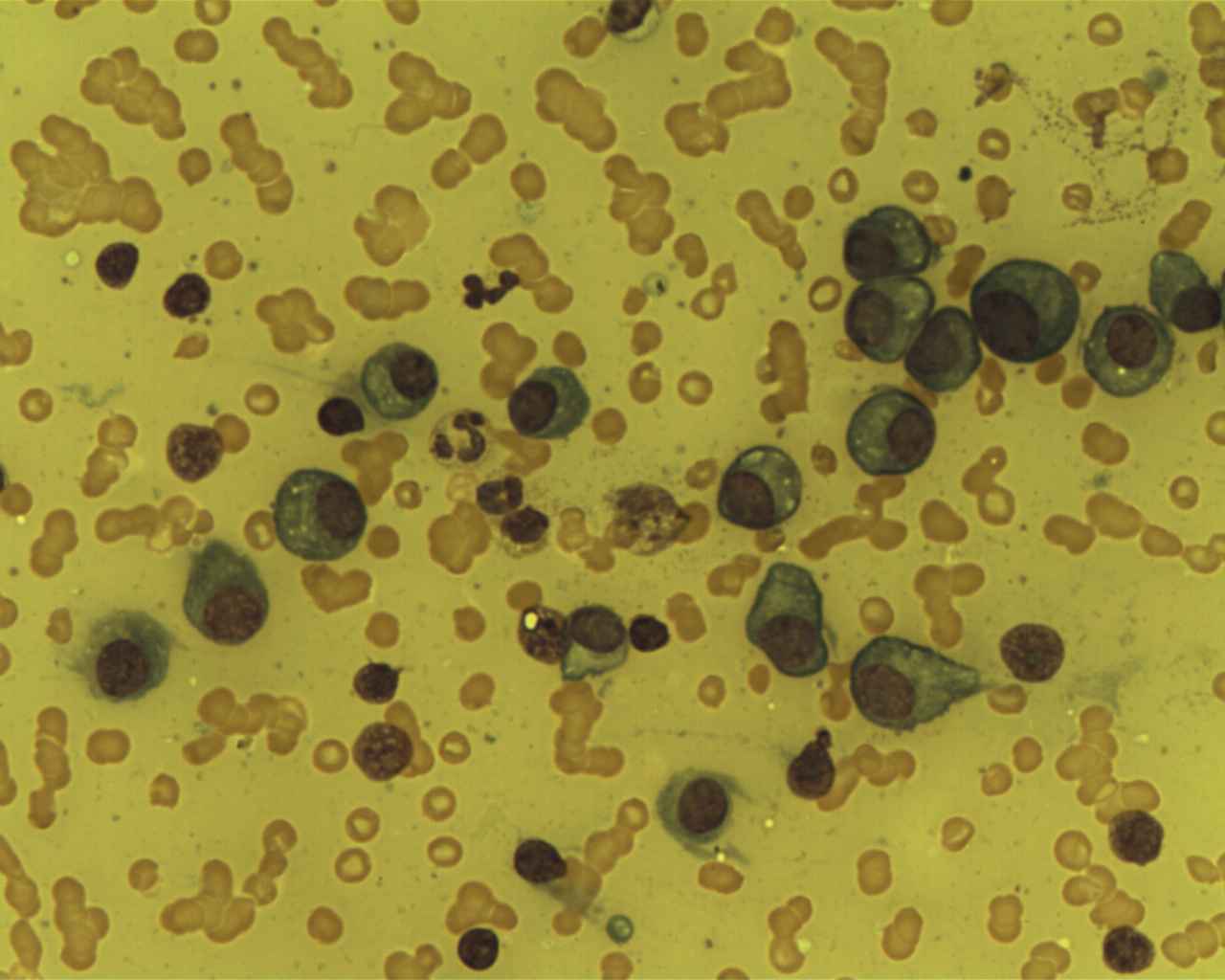
Agência FAPESP* – A pioneering project aims to produce carfilzomib, a chemotherapy drug used to treat multiple myeloma, an aggressive form of blood cancer, using a process that is 30% to 50% faster and cheaper. The development of a new synthetic route for obtaining the drug is the result of a partnership between a subsidiary of the Federal University of São Carlos (UFSCar) and a spin-off of the Center for Development of Functional Materials (CDMF), as well as the Brazilian Industrial Research and Innovation Company (EMBRAPII).
The CDMF is a FAPESP Research, Innovation, and Dissemination Center (RIDC) based at UFSCar.
The average cost of each 60 mg vial of carfilzomib is BRL 6,500. Over the estimated treatment time of three years, a patient may spend more than BRL 800,000. A study by the International Agency for Research on Cancer of the World Health Organization (WHO) found that, from 2020 to 2024, multiple myeloma was the second most common type of blood cancer worldwide. In Brazil, 45% of cases occur in people over 65 years of age.
The project is in the laboratory phase and undergoing tests for industrial scaling. It has received BRL 787,500 in funding from EMBRAPII and the spin-off. It is expected to be completed in 2026.
Carfilzomib production uses organocatalysts, photocatalysts, and other materials that accelerate chemical reactions. The project evaluates state-of-the-art catalysts to speed up and improve the selectivity of reactions. In asymmetric epoxidation reactions – an essential step in synthesizing the drug – such catalysts can reduce waste and eliminate the need for metals in the production process.
Rather than performing reactions in liquid solutions, the project uses a solid support, such as small resin spheres, to “anchor” the molecules during synthesis. This allows the drug to be built sequentially, eliminating the need for time-consuming purification steps. This technique reduces solvent use and simplifies the process, cutting costs.
Replacing liquid-phase synthesis with solid-phase synthesis, combined with the use of catalysts, can result in 30% to 50% savings in time and operating costs. This reduction is due to the decreased need for purification between coupling cycles, greater automation (which reduces the time needed for manual labor), lower demand for solvents and reagents, and the ease of scaling.
* With information from the CDMF
Republish
The Agency FAPESP licenses news via Creative Commons (CC-BY-NC-ND) so that they can be republished free of charge and in a simple way by other digital or printed vehicles. Agência FAPESP must be credited as the source of the content being republished and the name of the reporter (if any) must be attributed. Using the HMTL button below allows compliance with these rules, detailed in Digital Republishing Policy FAPESP.
