




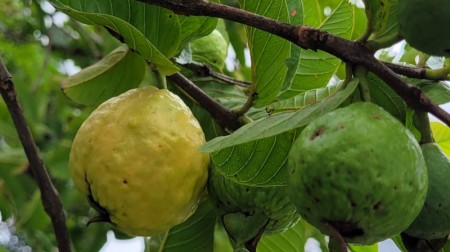
The next step is to validate the technology under real conditions at the producer’s facility and adapt the light application equipment to the fruit processing line (image: Daniel Dias/iNaturalist)
Radiation was able to combat anthracnose, a fungal disease that causes dark lesions on the fruit, rendering it unfit for consumption.
Radiation was able to combat anthracnose, a fungal disease that causes dark lesions on the fruit, rendering it unfit for consumption.
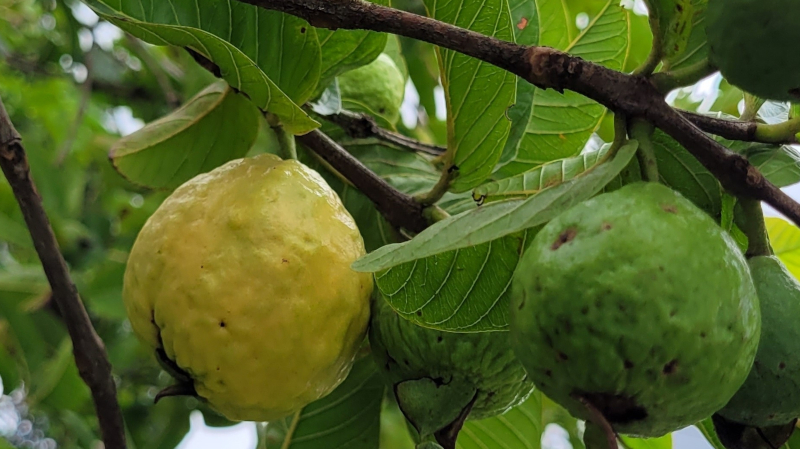
The next step is to validate the technology under real conditions at the producer’s facility and adapt the light application equipment to the fruit processing line (image: Daniel Dias/iNaturalist)
By Thais Szegö | Agência FAPESP – The application of modulated UV-C light to guavas – emitted in pulses or cycles rather than continuously – combated anthracnose. This fungal disease is caused by microorganisms belonging to the Colletotrichum gloeosporioides complex and triggers dark lesions on the fruit after harvest, reducing its shelf life. An article on the technique was published in the journal Horticulturae.
The disease usually manifests on the skin but can reach the pulp through injuries caused by insects, improper handling, or mechanical damage during transport. These factors, combined with inefficient post-harvest practices, contribute to an estimated 20% to 40% loss of total guava production in developing countries.
In this type of food, pathogen control has predominantly been carried out through the use of synthetic chemical pesticides, particularly fungicides. This involves immersing or spraying the fruit in a fungicide solution immediately after harvest, followed by drying and refrigerated storage.
“The chemicals used in post-harvest treatment end up causing chemical contamination, which is very harmful to human health, especially children, and to the environment. So, in this study, which was supported by FAPESP, our goal was not only to provide an effective method of controlling this disease post-harvest, but also to develop a clean and sustainable technology that would leave no residue and preserve the integrity of the food,” says Daniel Terao, an agronomist and researcher at the Brazilian Agricultural Research Corporation (EMBRAPA) who participated in the study.
The new treatment developed by EMBRAPA consists of a cylindrical device with a mirror and three internal UV-C germicidal lamps. One lamp emits rays of light perpendicular to the surface of the structure, creating a cylinder of light. The second lamp is strategically positioned toward the mirror to reflect on the guava. The third lamp faces the fruit directly. This mechanism ensures the food is illuminated by the maximum amount of radiation, which is absorbed on the surface and converted into heat. This inactivates microorganisms.
“This allows for more precise control of the product’s interaction with the light and reduces light energy losses, controlling the fungus that causes the disease and minimizing damage to the food’s epidermis. In this way, natural resistance mechanisms are enhanced, which means that the fruit itself is activated against the attack of microorganisms, preserving the quality of the food and increasing its shelf life,” Terao explains.
According to the researcher, the results of the study were very promising for treating guavas and other fruits, but they only occurred in a laboratory environment. The next step is to validate the technology under real conditions at the producer’s facility and adapt the modulated UV-C light application equipment to the fruit processing line. This will allow the technique to be applied in practice.
The article “Sustainable and innovative postharvest management of anthracnose disease in guavas through modulated UV-C light treatment” can be read at mdpi.com/2311-7524/11/11/1351.
The Agency FAPESP licenses news via Creative Commons (CC-BY-NC-ND) so that they can be republished free of charge and in a simple way by other digital or printed vehicles. Agência FAPESP must be credited as the source of the content being republished and the name of the reporter (if any) must be attributed. Using the HMTL button below allows compliance with these rules, detailed in Digital Republishing Policy FAPESP.
