Specialists gathered in São Paulo to debate managing climate extremes express concern over the difficulties journalists face in dealing with this complex theme
Study conducted at the Metropolitan Studies Center-FAPESP demonstrates how social networks influence poor people’s chances of obtaining better living conditions.
Brazilian researchers participate in the Double Chooz experiment in France, where neutrino oscillation measurements of unparalleled precision are made in flows produced by a nuclear reactor.
Work in the field reveals that the percentage of the nitrogen in fertilizers that is transformed into greenhouse gases is lower than expected. The study reinforces the environmental benefits of ethanol.
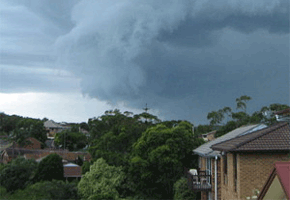
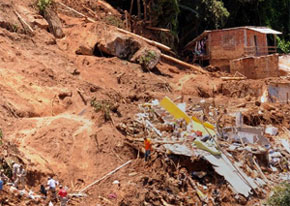
The risks of disasters caused by heat waves, record high temperatures and strong precipitation will depend on the level of vulnerability and exposure of populations, concludes the IPCC.
Estrogen stimulates the proliferation of cells responsible for the maintenance of spermatozoid production and can also be related to prostate cancer, say Brazilian researchers.
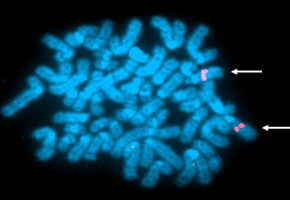
The 1982 discovery of these crystals sparked skepticism from the scientific community until they were finally accepted after more than a decade, says Israeli Daniel Shechtman.
The combined use of thalidomide and dexamethasone was more efficient in retarding the progression of the disease in transplant patients, indicates studies
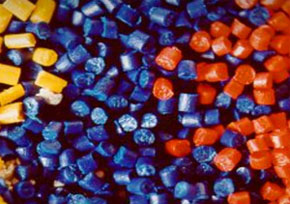
In a workshop at FAPESP, researchers sought interactions with industry to advance new alternatives for sugarcane bagasse use, including the manufacture of biodegradable plastic produced by bacteria from organic materials
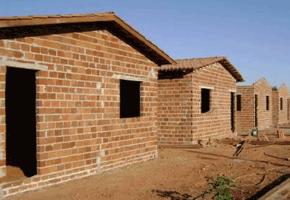
A book produced by the Metropolis Studies Center and Minister of Cities shows that a third of municipalities do not have the structure to manage housing policies.
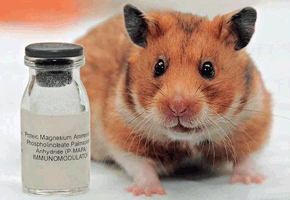
Scientists describe the potential mechanisms of action of P-MAPA, a drug that can activate immune system receptors, in an article in Infectious Agents and Cancer.
The São Paulo Advanced School of Comparative Oncology will present the most recent scientific advances in the area, which integrates naturally occurring cancer in domestic animals and humans.
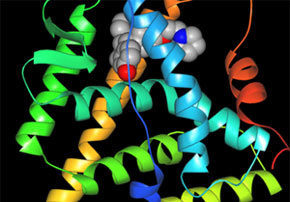
An enzyme from a metabolic pathway of the parasite that causes the disease could be a target for new medications that would impede Leishmania growth and infection in humans.
Research project contributes to understanding of the relationship between foreigners and the transformations that have occurred in São Paulo city since the 19th century.
The objective of the study was to identify drugs that can modulate the liberation of coagulating substances inside organisms, preventing hemorrhage and thrombosis.
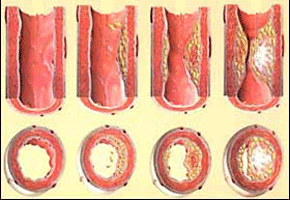
A study shows that mice exposed to São Paulo air during gestation and following birth developed 13 times more atheromatous plaques than the control group
Scientists participating in experiments at LHC announce discovery of a new subatomic particle that could be the Higgs boson particle, ending a half-century quest.
A study performed at the USP Polytechnic School indicates that changes to the treatment of sewage from the São Paulo coast’s oldest outfall will allow the system to maintain its current level of discharge.
A study tracks the international education of the Brazilian elite ruling class and identifies their strategies in competing for highly visible positions as spokespeople for word leaders.
The acronym HDL – which stands for "high-density lipoprotein," more popularly known as "good cholesterol" – has become familiar to even those outside health care, now that several studies have demonstrated the importance that this lipoprotein has in the prevention of atherosclerosis and cardiovascular disease.
Doing research is not enough, being a good scientist means knowing how to write scientific articles, says Carl Webster, editor of World Aquaculture Magazine
USP historian makes the above assertion in a study on the first stage of Japanese immigration to Brazil, which covers the process of cultural integration.
A study conducted in 11 Brazilian capitals revealed that more than 70% of the 4,025 interviewees were spanked when children. For 20% of them, physical punishment occurred regularly – at least once a week or more.
Study points to a 75% increase in the concentration of pollution and a 14% increase in deaths due to cardiorespiratory problems if Brazil’s largest city had no metro for a year
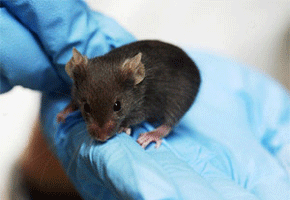
Over 16% of the researchers and employees that work in vivariums and laboratories develop allergies to the proteins that are shed in the urine, saliva or fur of the laboratory animals. Although their constant exposure to these allergens places these workers at risk of developing illnesses such as asthma, only 19.4% of workers routinely use protective masks.
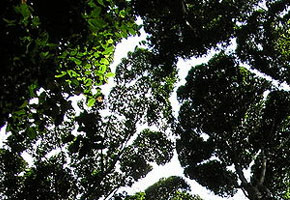
The program, undertaken in cooperation with the Natural Environment Research Council, will fund studies on biodiversity and ecosystem processes in human-modified tropical forests.
Marcelo Finger’s group at IME-USP is developing algorithms to improve the efficiency of search engines and automatic translators and thereby facilitate disease diagnosis.
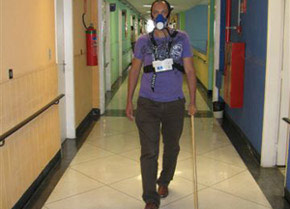
The walking aid reduces pain by approximately 30%, lowers the consumption of anti-inflammatory drugs and increases functional capacity by 20%, according to a new study
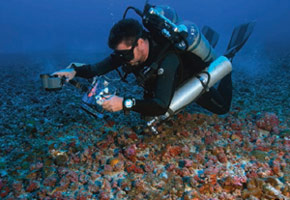
A study led by Brazilians maps out the Abrolhos Shelf and reveals that the region has the largest known stretch of calcareous algae reefs, which are highly vulnerable to marine acidification
The final result of the UN Conference on Sustainable Development (RIO+20), which ended on June 22 in Rio de Janeiro, is a document lacking focus that does not attend to the urgency of the problems the world is facing. Such is the analysis of Celso Lafer, FAPESP president.
A North American environmentalist, a BIOTA-FAPESP coordinator and the Brazilian Society for the Progress of Science will receive recognition for their environmental actions.
Tim Benton from the University of Leeds argues that sustainable agriculture is a more complex concept than it appears and that, if misunderstood, it can worsen environmental impacts.