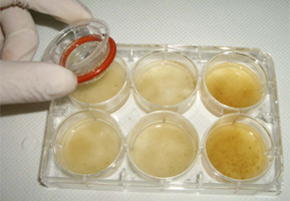
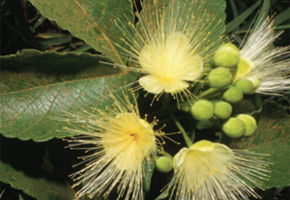
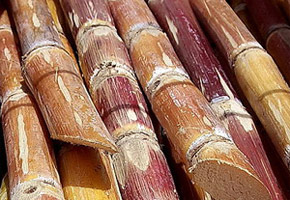
The objective now is to create a genetically modified plant that produces a type of lignin that is easier to separate from cellulose, easing the production process of second generation ethanol, explains Paulo Mazzafera (Unicamp), coordinator of the FAPESP Thematic Project.
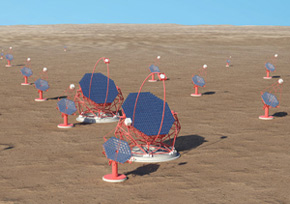
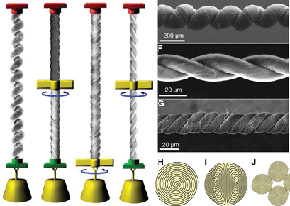
Researchers from USP, UFSCar and other institutions develop film for mirrors and metal structures that will support the 100 telescopes in the Cherenkov Telescope Array.
Study shows that capsules covered in whey protein may protect lactobacilli against acid in the digestive tract, improving their potentially improving their efficacy.
Made from cheap, ubiquitous raw materials, the supplement may help diminish anemia, which affects 21% of all children under 5 and 43% of pregnant women in Brazil.
Scientists from different nations define priority topics for one of the largest studies on the topic, which is expected to be part of an international call for proposals released by FAPESP.
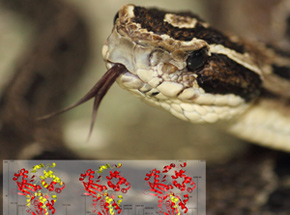
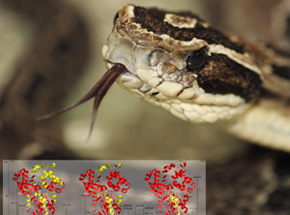
Researchers at the Butantan Institute map a set of venom peptides from three species of genus Bothrops, including the jararaca, and find molecules with potential pharmacological activity.
On the first anniversary of the death of FMUSP Professor Emeritus and FAPESP’s former CEO, scientists remember that Brazil’s outstanding position in cancer treatment and research is largely due to Professor Brentani.
A FAPESP initiative aims to establish collaborative projects between institutions in São Paulo and high-level researchers like Ruth and Victor Nussenzweig from New York University, who will coordinate a project at Unifesp.
Book offers a collection of articles by specialists working in the same fields as Lafer, the FAPESP president and retired law professor at Universidade de São Paulo’s Law School.
The partnership anticipates more than R$ 10 million in investments over the next five years. The first call for proposals is expected to be announced in December and will include topics related to the bioeconomy.
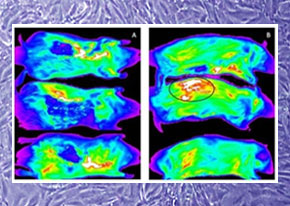
Through the application of undifferentiated hepatic stem cells extracted from the liver bud, USP researchers have reduced the liver regeneration time by half in rats subjected to surgery removing 70% of the organ.
The institutions announced a public call for proposals to select a project for the creation of an center aimed at the development of biofuel-powered combustion engines.
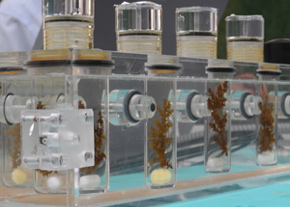
For BIOEN’s international consultants, advances in research conducted by members of the program in the areas of sugarcane improvement and pre-treatment of bagasse for the production of cellulosic ethanol area are on the cutting edge of science.
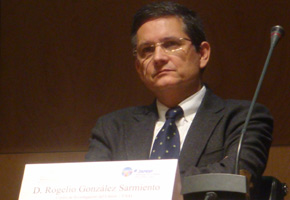
Rogelio González-Sarmiento, of the University of Salamanca Cancer Research Center relates how advances in sequencing techniques and gene expression profile analysis are enabling the planning of personalized therapy strategies.
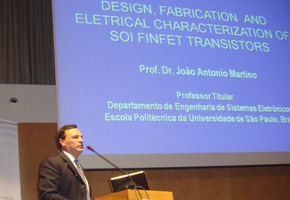
Group led by João Antonio Martino of USP is developing transistor prototype that paves the way for the manufacture of electronic devices that are smaller and have more processing capacity.
A group of researchers led by Anamaria Aranha Camargo of the Ludwig Institute of Cancer Research and the Molecular Oncology Center of the Syrian-Lebanese Hospital look for genetic markers that may help physicians predict a response to treatment.
Sociologist and former Brazilian President kicks off the seminar in Spain and highlights the "the university’s sense of cooperation." FAPESP and Salamanca University announce a call for proposals.
A study by a PUC-SP researcher presents the philosophical foundation of the therapeutic education method. The author uses this method in both individual and group counseling.
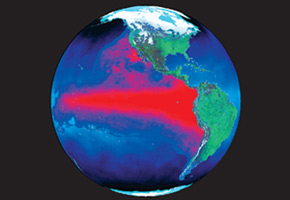
Events on one side of the planet can affect those on the other, say scientists. One example is El Niño, which causes drought in the Northeast of Brazil and intense rains in the South, and cause of which may be related to warming of the Indian Ocean.
Initiatives such as Blue Waters, which cost US$ 170 million, and the Virtual School of Computational Science and Engineering were presented at the São Paulo School of Advanced Sciences.
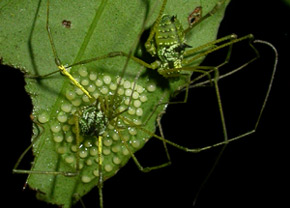
A study performed at the USP Biosciences Institute shows that single males of the species Iporangaia pustulosa live longer and have more chances to copulate with young females.
Discovery made by University of São Paulo researchers opens pathways to the development of antibiotics to fight some types of bacteria, including Streptococcus and Pseudomonas.
Initiative puts the country, home of the planet’s greatest biodiversity, into a global network for sharing tools and experiences related to the management of biological information resources.
Researchers are investigating the influence of cells in the microenvironment of breast cancer on tumor progression. Their study could contribute to the application of personalized chemotherapy.
Extremely rare encounters between large and small asteroids provoke changes in their orbits, says a study carried out by Brazilian researchers presented in Italy at the Accademia dei Lincei.
A study conducted at Unicamp and published in Blood magazine shows that the drug used in the chronic treatment of the disease can also provide relief for acute occlusive vessels, which are currently untreatable.
Little collaboration with researchers from other countries is one of the factors contributing to the low citation rate of Brazilian scientific articles, say specialists.
The European Organization for Nuclear Research visits FAPESP during mission to evaluate country’s request to join the institution as an associate member.
Brazil is in select group of nations conducting high-level research. FAPESP scientific director recommends measures for driving Brazilian research forward in an article from the same issue.