




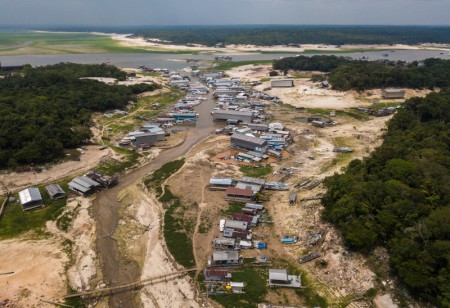
In 2023, a severe drought associated with a heat wave led to unprecedented temperatures in Amazonian rivers and lakes. In some places, water temperatures exceeded 37 °C, and one of the monitored lakes reached 41 °C (image: Rafa Neddermeyer/Agência Brasil)
Research indicates that rivers in different regions of the planet are undergoing profound transformations that exceed their capacity for resilience.
Research indicates that rivers in different regions of the planet are undergoing profound transformations that exceed their capacity for resilience.
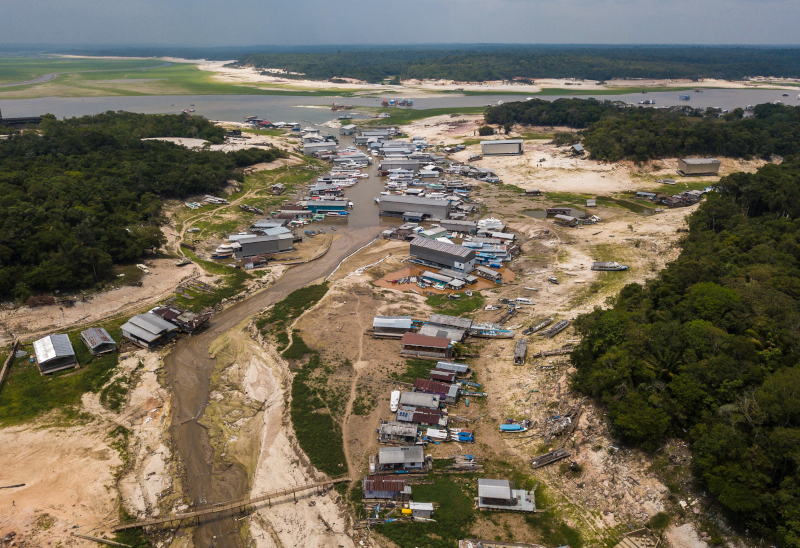
In 2023, a severe drought associated with a heat wave led to unprecedented temperatures in Amazonian rivers and lakes. In some places, water temperatures exceeded 37 °C, and one of the monitored lakes reached 41 °C (image: Rafa Neddermeyer/Agência Brasil)
By Michelle Braz | Agência FAPESP* – Severe droughts, intense floods, and heat waves are pushing river ecosystems beyond their natural limits of resilience. A review of data on river systems across several continents published in the journal Nature Reviews Biodiversity shows that, in most cases, nature is unable to return to its previous state after successive extreme weather events. The consequences range from local extinctions and food chain collapses to permanent changes in the services that rivers provide to human societies.
“Extreme weather events are increasing in severity and frequency, fundamentally reshaping river ecosystems. Rivers function as interconnected networks, and therefore the impacts of an extreme event are almost never restricted to a single point; they spread throughout the entire system,” warns Tadeu Siqueira, one of the authors of the article. He is a professor at the Institute of Biosciences of São Paulo State University (IB-UNESP) in Rio Claro, Brazil, and the Integration Coordinator at the Center for Research on Biodiversity Dynamics and Climate Change (CBioClima), one of FAPESP’s Research, Innovation, and Dissemination Centers (RIDCs).
One of the scenarios addressed by the study involves severe droughts that lead to the interruption of flow at river headwaters. Under these conditions, organic matter accumulates in dry areas. When water returns, large volumes of this material are carried downstream. This process can result in water deoxygenation, fish die-offs, and damage to human activities such as power generation.
So-called compound extreme events, which are combinations of droughts accompanied by heat waves or wildfires followed by heavy rains, produce disproportionate impacts and intensify the risk. Recent examples include the plankton collapse in the Yangtze River in China in 2022 and the fish die-off in the Klamath River in California after a series of fires and storms.
In Brazil in 2023, a severe drought coupled with a heat wave resulted in unprecedented temperatures in Amazonian rivers and lakes. In some locations, water temperatures exceeded 37 °C, and one of the monitored lakes reached 41 °C throughout the water column. These levels of warming cause massive die-offs of fish and other aquatic organisms and indicate that events approaching the thermal limits tolerable by life forms may become more common in tropical systems.
Satellite data reinforce this trend, showing a gradual warming of Amazonian waters of about 0.6 °C per decade since the 1990s. The combination of intense solar radiation, shallower waters, light winds, and high turbidity creates conditions conducive to overheating.
The study also reveals the limitations of traditional conservation strategies and shows that depending on natural climate refuges, or cooler protected areas, may not suffice in the face of longer, more intense heat waves. In this scenario, Siqueira advocates a paradigm shift from local, reactive actions to proactive, large-scale strategies. “To address increasingly intense events, it’s time to think about watershed management and large-scale resilience,” the researcher emphasizes. His proposals include extensive habitat restoration, improved river connectivity, protection of aquifer recharge areas, and adoption of nature-based solutions.
According to Siqueira, effective alternatives require investment in high-resolution, high-frequency monitoring programs that can record extreme events as they take place. Additionally, long-term research must be strengthened to understand the impacts that persist long after extreme events occur.
The article “Extreme events and river biodiversity under climate change” can be read at nature.com/articles/s44358-026-00131-7.
* Michelle Braz is a FAPESP Science Journalism scholarship holder affiliated with CBioClima
The Agency FAPESP licenses news via Creative Commons (CC-BY-NC-ND) so that they can be republished free of charge and in a simple way by other digital or printed vehicles. Agência FAPESP must be credited as the source of the content being republished and the name of the reporter (if any) must be attributed. Using the HMTL button below allows compliance with these rules, detailed in Digital Republishing Policy FAPESP.
