





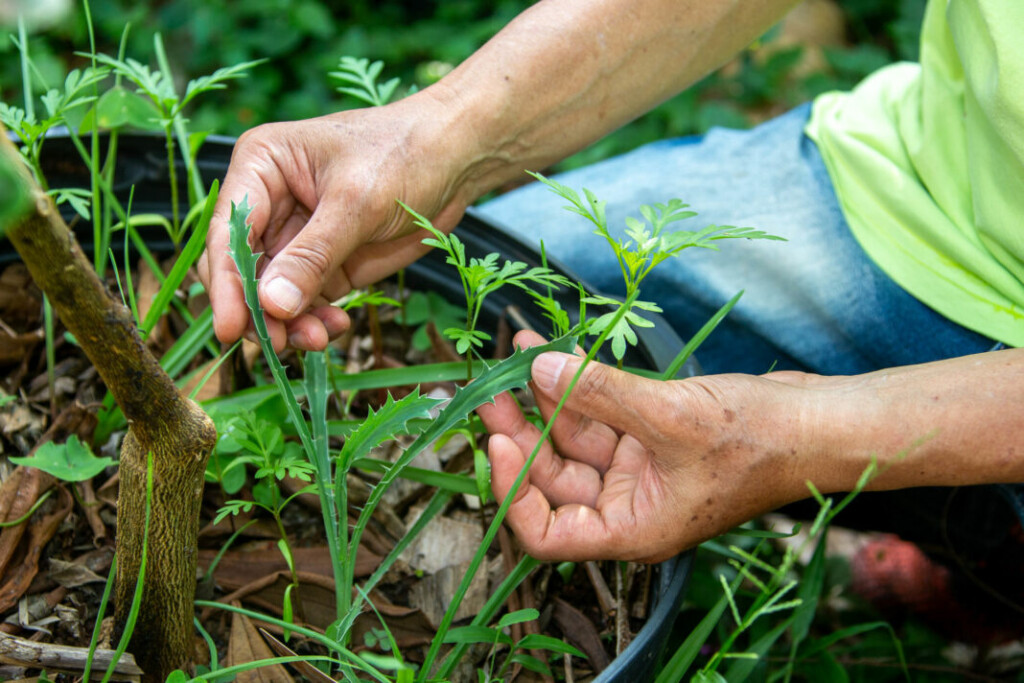
Agência FAPESP* – Research conducted as part of projects at the Research Center for Greenhouse Gas Innovation (RCGI) has revealed that diversifying and intensifying the variety of plant species can more than double the rate of carbon fixation in the soil. The two-year study indicates that this practice contributes to carbon dioxide (CO₂) capture and offers long-term benefits for agricultural production.
The RCGI is an Applied Research Center (ARC) established with support from FAPESP and Shell, as well as other companies. It is based at the Engineering School of the University of São Paulo (POLI-USP) in Brazil.
Cimélio Bayer of the Federal University of Rio Grande do Sul (UFRGS) is leading the work. He has been studying the effects of soil management on carbon capture for over two decades. Bayer and his team are part of the “Improving Pasture Management as a Nature-Based Solution for Soil Carbon Sequestration in Brazil” project, which is coordinated by professors Carlos Eduardo Pellegrino Cerri and Maurício Roberto Cherubin from the Luiz de Queiroz College of Agriculture (ESALQ-USP). The program aims to develop tropical solutions to reduce greenhouse gas emissions in agriculture. These solutions include increasing carbon sequestration in the soil through techniques such as restoring native vegetation and managing pastures properly, as well as implementing integrated agricultural systems.
In experimental areas of the Cerrado (a Brazilian savana-like biome) and the Pampas (grasslands stretching across Brazil, Argentina, and Uruguay) that were previously used for monocultures, such as soybeans and cotton, a significant increase in carbon sequestration was observed when diverse species were planted. “Practices that maintain year-round production and reduce soil disturbance [erosion and nutrient loss] are essential. No-till farming, combined with species diversification, has proven to be particularly effective,” explains Bayer.
The no-till system, which sows the land without plowing or harrowing, was found to be effective in monocultures but limited. In diversified systems, however, carbon sequestration capacity more than doubled, reaching values above 0.6 tons per hectare per year.
In the long term
The research also analyzed carbon fixation over several decades and found that the capacity to sequester carbon remains after 30 to 40 years of adopting conservation management systems. This finding contradicts the previous expectation that CO₂ accumulation in the soil would be limited to 20 years. “Our results indicate that soil can continue to accumulate carbon in deeper layers, which has important implications for sustainable agricultural practices in the long term,” said the UFRGS professor.
Soil samples were collected at depths of up to one meter, unlike the common practice of taking samples from the surface only. This allowed for a more accurate analysis of carbon fixation in the lower layers based on internationally recognized methodologies.
Currently, the researchers are evaluating the impact of this carbon accumulation on agricultural productivity and investigating how increased organic matter improves factors such as water retention and nutrient availability to crops. At the same time, as part of the project, they are analyzing the contribution of plant aerial parts and roots to carbon fixation using isotopes that enrich plants and allow for a separate study of these structures.
* With information from the RCGI Press Office
Republish
The Agency FAPESP licenses news via Creative Commons (CC-BY-NC-ND) so that they can be republished free of charge and in a simple way by other digital or printed vehicles. Agência FAPESP must be credited as the source of the content being republished and the name of the reporter (if any) must be attributed. Using the HMTL button below allows compliance with these rules, detailed in Digital Republishing Policy FAPESP.
