




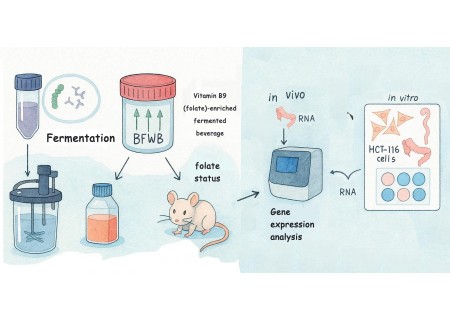
A formula with probiotics was analyzed in mice subjected to a vitamin B9-deficient diet (figure: Ana Clara Candelaria Cucick/created with BioRender)
Formula containing whey and grape by-product extract was developed by researchers at the University of São Paulo and tested in partnership with a center in Argentina.
Formula containing whey and grape by-product extract was developed by researchers at the University of São Paulo and tested in partnership with a center in Argentina.
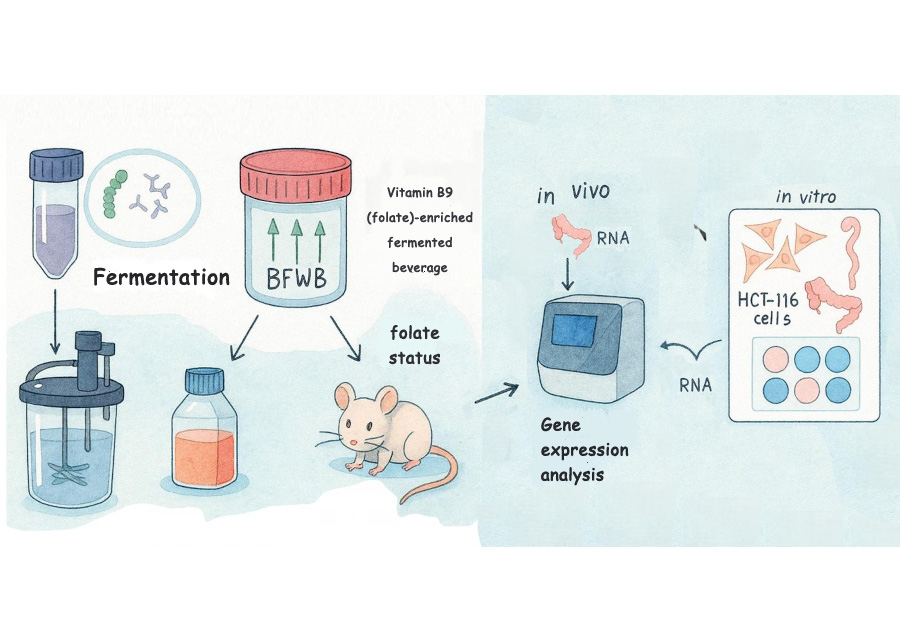
A formula with probiotics was analyzed in mice subjected to a vitamin B9-deficient diet (figure: Ana Clara Candelaria Cucick/created with BioRender)
By Thais Szegö | Agência FAPESP – Consuming a fermented, bio-enriched milk drink made with grape by-product extract can increase the expression of genes related to the absorption and transport of folate (vitamin B9) and vitamin D by the body. This was demonstrated through in vitro and in vivo tests conducted by researchers at the University of São Paulo’s School of Pharmaceutical Sciences (FCF-USP) in Brazil and the Reference Center for Lactobacilli (CERELA-CONICET) in Tucumán, Argentina. The research results were published in the scientific journal Food Bioscience.
Vitamin D is essential for bone health, immune function, and metabolism (read more at: agencia.fapesp.br/56984). However, some individuals do not respond to supplementation because their cells lack the receptor for this nutrient. Evidence from the scientific literature suggests that activation of the vitamin D receptor (VDR) increases the delivery of folate to various organs in the human body. Folate is a vital nutrient for red blood cell formation, DNA synthesis, and brain tissue development and function. However, the relationship between folate and vitamin D had not been extensively explored in the intestine.
“We decided to investigate how this interaction occurs with intestinal cells, specifically those of the colon, and to assess whether a bio-enriched fermented milk with folate could influence the expression of vitamin D receptors and folate transporters in the body,” says Susana Marta Isay Saad, a retired full professor from FCF-USP and advisor for the study.
The drink was selected because previous research by the FCF-USP group showed that certain probiotic lactic acid bacteria and yogurt cultures can produce folate, and the presence of residues from the fruit and soy food industries positively influences this production.
The exact mechanism by which these ingredients influence folate biosynthesis is not fully understood, but the researchers believe the presence of soluble fibers and phenolic compounds in grape extract may promote conditions favorable to folate production by bacterial strains.
The first step of the FAPESP-supported project was to prepare a folate-enriched drink formulated with grape by-products and whey, which was then fermented by specific, potentially probiotic microorganisms that increase the natural content of vitamin B9.
Initially, the formula was tested on a line of human intestinal cells grown in a laboratory setting.
“In this experiment, we observed that in the group of cells treated with the drink, there was an increase in the expression of genes related to folate transport and the gene related to the vitamin D receptor, compared to the control group [without treatment],” explains Ana Clara Candelaria Cucick, who conducted the experiment during her doctoral studies.
The probiotic formula was also analyzed in mice on a vitamin B9-deficient diet. The animals were divided into six groups. The first group received no supplementation and had a folate-deficient diet. The second group consumed 15 milliliters of the bio-enriched beverage. The third group received the same amount of unfermented milk drink. The fourth group received the same amount of unfermented milk drink supplemented with folic acid at the same concentration as in the fermented drink, as well as vitamin D3. The fifth group ingested a bio-enriched fermented drink supplemented with vitamin D3. The sixth group was used as a control and received a normal diet with folate.
“After 21 days of experimentation, we analyzed the blood and intestines of the mice. It became clear that the fermented drink helped prevent signs of folate deficiency in the mice, but its absorption may have been limited by characteristics of the milk matrix itself. Small changes in the formulation, such as adding less whey, could mitigate this problem,” says Cucick, who is part of the Food Research Center (FoRC), one of FAPESP’s Research, Innovation, and Dissemination Centers (RIDCs).
The study revealed that a folate-deficient diet significantly reduced VDR expression in the colon of mice, suggesting a potential link between folate metabolism and VDR activation in this organ. “This finding is very important because it can pave the way for new research, helping to better understand this relationship and even leading to discoveries with therapeutic applications,” says the researcher.
This work paves the way for developing functional foods that contribute to intestinal health and human nutrition. Increased VDR gene expression in the colon brings several benefits, mainly anti-inflammatory action. However, further studies are needed to optimize the beverage formula and ensure its effectiveness. Other research with animal models and, eventually, clinical trials are necessary to confirm the findings and clarify the respective mechanisms.
The article “Impact of folate bio-enriched fermented beverage on vitamin D receptor and folate transporters expression in the colon: Insights from in vitro and in vivo studies” can be read at www.sciencedirect.com/science/article/abs/pii/S2212429225002822.
The Agency FAPESP licenses news via Creative Commons (CC-BY-NC-ND) so that they can be republished free of charge and in a simple way by other digital or printed vehicles. Agência FAPESP must be credited as the source of the content being republished and the name of the reporter (if any) must be attributed. Using the HMTL button below allows compliance with these rules, detailed in Digital Republishing Policy FAPESP.
