




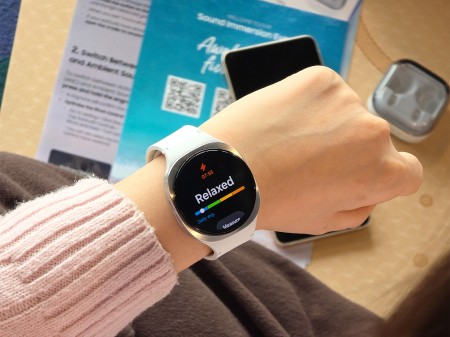
The research will focus on developing embeddable AI algorithms and technologies that run directly on smartwatches or smart rings to enable efficient, real-time processing (image: Samsung)
Created by FAPESP, the State University of Campinas, and Samsung, Viva Bem will develop algorithms and AI technologies embedded in these devices to detect signs of Parkinson’s disease and other conditions even before symptoms appear.
Created by FAPESP, the State University of Campinas, and Samsung, Viva Bem will develop algorithms and AI technologies embedded in these devices to detect signs of Parkinson’s disease and other conditions even before symptoms appear.
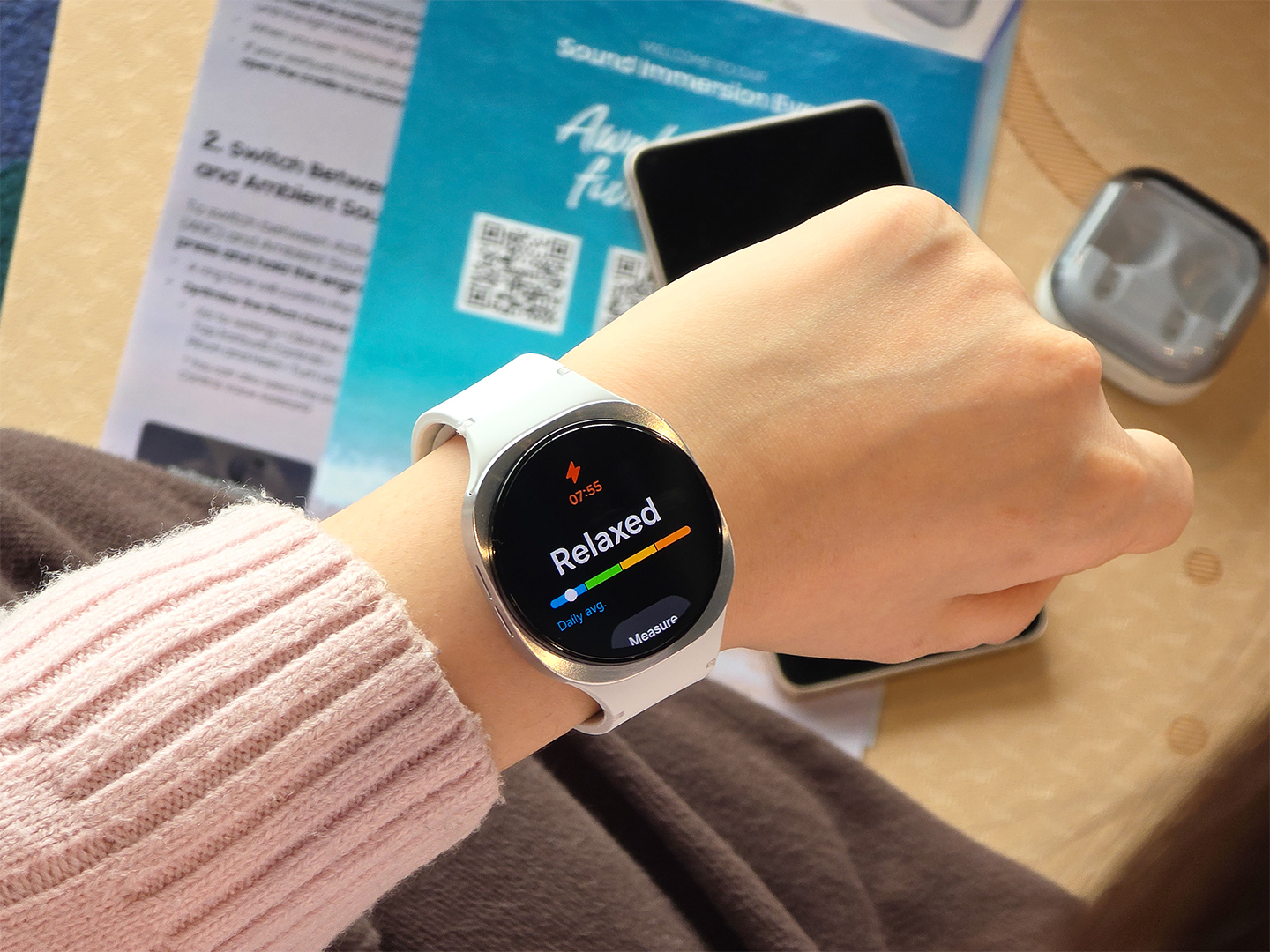
The research will focus on developing embeddable AI algorithms and technologies that run directly on smartwatches or smart rings to enable efficient, real-time processing (image: Samsung)
By Elton Alisson | Agência FAPESP – Smartwatches and smart rings are often viewed merely as accessories for counting steps or calories and monitoring sleep. However, at Viva Bem: Artificial Intelligence for Health and Well-Being, they are considered key components for advancing preventive medicine. The new Applied Research Center (ARC), the result of a partnership between FAPESP, the State University of Campinas (UNICAMP), and Samsung, will use artificial intelligence to transform these devices into tools for early diagnosis. The goal is to detect subtle biological changes and identify serious conditions, such as Parkinson’s disease and heart disorders, well before symptoms appear.
“We want to use these increasingly popular and accessible wearable devices to detect invisible signs of disease long before symptoms become evident,” said Anderson Rocha, a professor at UNICAMP’s Institute of Computing and coordinator of Viva Bem, during the center’s official launch ceremony held on July 3.
Currently, smartwatches and smart rings are equipped with sensors that can measure heart rate, blood pressure, temperature, skin electrical conductivity, body composition (including hydration levels), and movement. In the coming years, the Viva Bem researchers aim to employ algorithms and AI technologies capable of processing all this data simultaneously. Combining them will make it possible to extract and identify subtle patterns that can serve as objective measures for monitoring various health conditions.
“We’ve already found, through a previously developed project, that anxiety and stress, for example, cause changes in skin electrical conductivity that can be detected by a smartwatch,” said Rocha (read more at agencia.fapesp.br/58305).
In the case of Parkinson’s disease, AI technologies can analyze tremors, gait changes, and sleep patterns to identify signs years before a traditional clinical diagnosis. For cardiovascular health, the technology can function as a continuous electrocardiogram, identifying arrhythmias and abnormal blood pressure patterns and predicting heart attacks or strokes based on heart rate variability.
Additionally, sleep disorders detected by AI in smartwatches can predict neurodegenerative diseases. In older adults, the technology could identify declines in strength and mobility months in advance, enabling preventive interventions to reduce the risk of falls.
“These conditions represent some of the 11 areas of application for the research we’ll conduct at the center and that we’ve identified as having the potential for significant impact,” said Rocha. “Our goal isn’t to replace the doctor. We want to alert users when they should see a specialist to ensure a better quality of life,” he added.

“We want to use these increasingly popular and accessible wearable devices to detect invisible signs of disease,” said Anderson Rocha, a professor at UNICAMP’s Institute of Computing and coordinator of Viva Bem (photo: Rogério Augusto Bordini)
Every body is unique
To ensure that diagnoses made using the AI developed at Viva Bem are reliable, strict guidelines will be followed. One of these guidelines is to train the system to recognize that every body is unique. This approach moves away from the conventional method of evaluating only the average population and instead considers individual variability.
Another guideline is explainability. The system will not only need to indicate a risk, but also explain why it reached that conclusion. “That’s essential for doctors to trust the AI’s recommendations and make safe clinical decisions,” said Rocha.
The research will focus on developing AI algorithms and technologies that can be embedded in smartwatches or smart rings to enable efficient, real-time processing. “The algorithms will learn directly from raw signals without relying exclusively on constant manual labels [classifications] to facilitate continuous learning about the human body,” Rocha stated.
Sensitive data
According to the researcher, one of the major advantages of using smartwatches for health research is that data is collected during the user’s normal routine. This allows for the detection of patterns that a one-time, 15-minute doctor’s visit might not reveal. “Unlike traditional medicine, which is often based on episodic data [obtained during an annual checkup, for example], AI allows for 24/7 monitoring,” he compared.
To ensure security and privacy, the management of collected data will follow strict guidelines. All data collection must be conducted with the approval of ethics committees and rely on the voluntary participation of individuals who will give their consent after receiving detailed explanations about the process.
Data processing and algorithm development will involve direct participation from experts at UNICAMP and Samsung, ensuring rigorous technical and clinical oversight. Samsung will focus its data collection on signals captured by its own sensors and devices, such as the Galaxy Watch and Galaxy Ring, and will integrate this information into its data platform in accordance with the center’s research protocols, Rocha explained.
“Health data is the most intimate thing there is,” the researcher emphasized. The project explicitly aims to prevent the leakage of sensitive data, which could have serious consequences for users, such as discrimination in hiring processes or job loss.
Maturing the relationship
The initiative to create the new ARC, which requires an initial investment of BRL 20 million, stems from a collaborative innovation hub maintained by UNICAMP and Samsung for the past five years. This hub is the result of a research collaboration that has been in place for over a decade, according to Rocha.
“Discussions with Samsung began about 15 years ago. In 2020, in the midst of the COVID-19 pandemic, we discussed a broader idea, which culminated in the Viva Bem hub. Now, we’re taking it to the next level with an Applied Research Center, with the goal of increasing the capacity for collaboration between the company, the university, and FAPESP to bring real solutions to society,” he said.
The Viva Bem ARC is Samsung’s first research partnership in Brazil under the ARC model involving a university, a company, and a research funding foundation, said Otávio Penatti, the company’s director of artificial intelligence research and development in Brazil, to Agência FAPESP.
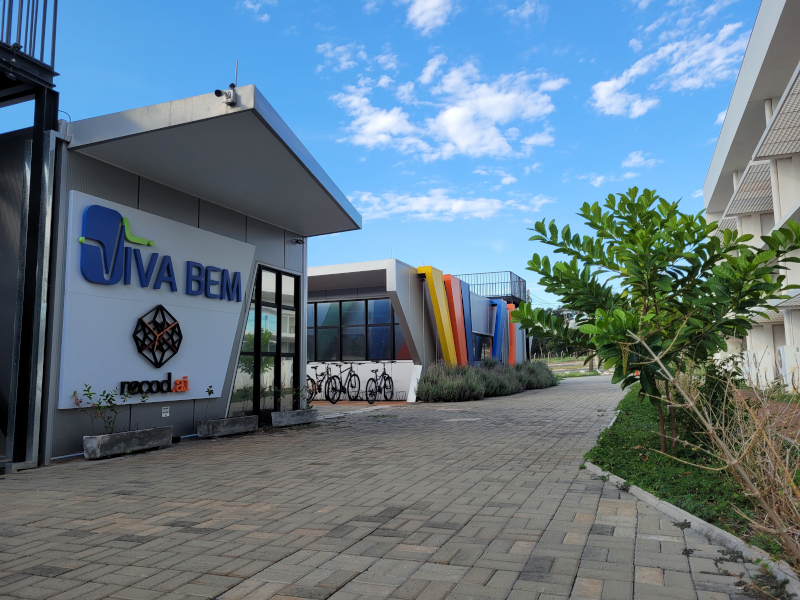
Under the ARC model, FAPESP will act as a co-funding partner, contributing funds that double Samsung’s investment (photo: Rogério Augusto Bordini)
“Samsung has had more than 50 partners since the beginning of its R&D partnerships and has carried out more than 100 projects with universities, but here at UNICAMP, we have a unique partnership. The company has been in Brazil for almost 40 years, and today, we play a leading role in Samsung’s global research and development ecosystem. Three of the four key technologies in the new smartwatch that the company will soon launch were developed by our R&D team here in Brazil,” Penatti said.
Rodolfo Jardim de Azevedo, general coordinator of Technologies and Innovation Partnerships at FAPESP, said the ARC model is a game-changer. “There’s no such thing as a ten-year funding commitment from a research funding agency under a single contract anywhere in the world. FAPESP decided to bring this [to Brazil]. It’s signing a five-year agreement, renewable for another five, enabling high-impact planning, unlike short-term research that’s spread out [across small projects],” he noted.
Under the ARC model, FAPESP will act as a co-funding partner, providing resources that will double the company’s investment. This will enable the planning of long-term strategic research. Samsung will contribute financial resources, market insight, expertise in applied research, and its global product ecosystem to bridge the gap between science and real-world societal problems. UNICAMP will contribute scientific excellence by involving more than 70 researchers from various university departments, including the Institutes of Computing and Physics, the Schools of Electrical and Computer Engineering and Physical Education, and the School of Medical Sciences, as well as UNICAMP’s general and teaching hospital (“Hospital de Clínicas”).
“The project will bring together scientific excellence and talent development, combining Samsung’s product vision with the need for real-world solutions for society that the university seeks to deliver,” said Mônica Alonso Cotta, UNICAMP’s vice-dean for undergraduate studies.
The Agency FAPESP licenses news via Creative Commons (CC-BY-NC-ND) so that they can be republished free of charge and in a simple way by other digital or printed vehicles. Agência FAPESP must be credited as the source of the content being republished and the name of the reporter (if any) must be attributed. Using the HMTL button below allows compliance with these rules, detailed in Digital Republishing Policy FAPESP.
