




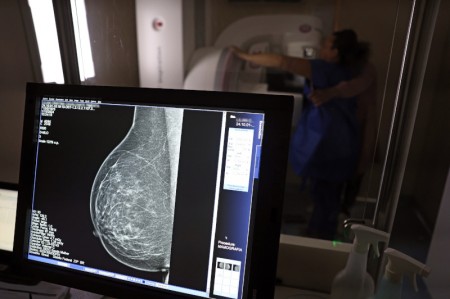
The Cancer Control in the State of São Paulo project proposes an “organized screening” model, in which all eligible women are identified, invited, and monitored individually at all stages (image: José Cruz/Agência Brasil)
Studies were conducted by the São Paulo Oncocentro Foundation with support from FAPESP.
Studies were conducted by the São Paulo Oncocentro Foundation with support from FAPESP.
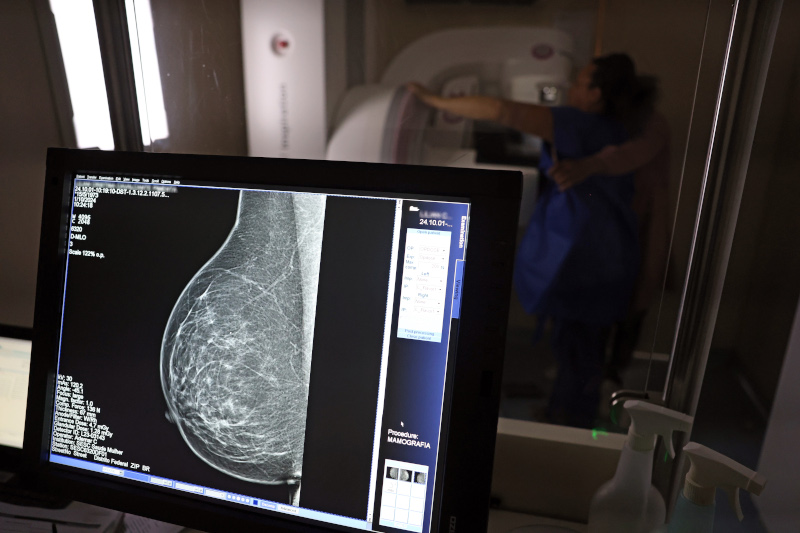
The Cancer Control in the State of São Paulo project proposes an “organized screening” model, in which all eligible women are identified, invited, and monitored individually at all stages (image: José Cruz/Agência Brasil)
By Fernanda Bassette | Agência FAPESP – Although Brazil offers free screening tests for cervical and breast cancer, many women still face obstacles beyond the mere availability of the service. Fear of diagnosis, pain during exams, shame, delays in scheduling or receiving results, and even factors such as skin color, education level, and employment status continue to hinder adherence to screenings. In Brazil, cervical cancer is the third most common cancer among women and the fourth leading cause of cancer death. Breast cancer is the most common type, excluding non-melanoma skin cancer.
Two studies funded by FAPESP (projects 22/09419-3 and 22/15539-1) reveal that these barriers are directly linked to social inequalities. The studies were conducted with women treated at 50 UBSs (primary health care centers) in 37 municipalities in the state of São Paulo. They conclude that, although screening programs have advanced in coverage, they still fail to reach all women, especially the most vulnerable.
“Today, Brazil carries out opportunistic screening. In other words, women undergo screening when they have the opportunity, usually because they visit the health center for some other reason. The problem is that this model only reaches those who are already in the system and leaves out precisely those who need it most,” explains Carolina Terra de Moraes Luizaga, a postdoctoral researcher at FOSP and the University of São Paulo School of Public Health (FSP-USP).
Fear of the results
In the case of the Pap smear, a fundamental test for preventing cervical cancer, the survey interviewed 384 women between the ages of 25 and 64 – the age group eligible for screening. Although 87% said they had taken the test within the last five years, nearly half cited barriers that hindered consistent screening.
Among those interviewed, 41% reported fear of a bad result as one of the barriers to taking the test. Additionally, 30% said an obstacle to screening is the long wait to take the test, 30% reported delays in receiving results, and 29% said they were too embarrassed to take the test. These difficulties appeared even more intensely among women with lower levels of education and income.
“Literature reviews indicate that fear of discovering something wrong is one of the main barriers to screening. Even so, we were struck by the number of women who reported fear of the results. That’s because this barrier not only influences the first exam, but can also compromise repeat exams, which are essential to the program’s effectiveness. The delay in results also generates anxiety and a lack of confidence in the healthcare system,” Luizaga says.
Pain and inequality in mammography
In the case of breast cancer, the study surveyed 170 women between the ages of 50 and 69 who attended the same UBSs. The survey revealed that 84% had undergone a mammogram within the past five years; however, they also reported significant barriers to adherence. The main barrier was pain during the exam, cited by 59% of respondents. Other barriers included long waits for mammograms (44%), difficulty scheduling (40%), and fear of diagnosis (32%).
“Pain appears to be the main obstacle. That indicates that previous negative experiences have a lasting impact, influencing whether women will repeat or avoid the exam. Therefore, what caught my attention the most was pain as the most cited barrier,” says Alice Barros Câmara, a researcher at FOSP and author of the study. “Studies often emphasize costs, distance, lack of information, or fear of the result. But the physical experience of pain, the most reported, suggests that it isn’t enough to just structure the system; it’s necessary to improve the user experience,” she continues.
Difficulties in scheduling the exam show that bureaucracy and logistics (schedules, availability, and proximity to units that offer mammograms) are real barriers, even in a public system that theoretically offers this service.
The data also revealed how sociodemographic factors influence the perception of barriers. Black and brown women reported more embarrassment, scheduling difficulties, and long waits. White women, on the other hand, cited more fear and pain. Low education and income were also associated with obstacles to screening. Employed women reported problems such as forgetting, lack of time, and scheduling conflicts.
“These findings reinforce how racial, social, and economic inequalities still shape access to healthcare in Brazil. Women in informal or inflexible jobs, for example, find it much more difficult to get tested, reflecting how different groups access the healthcare system,” Câmara points out.
Opportunistic screening
Brazil still uses an opportunistic screening model for cervical and breast cancer. In this model, the initiative comes from the woman or the healthcare professional treating her at the UBS without active mapping of the eligible population.
The Cancer Control in the State of São Paulo (ConeCta-SP) project, one of the Science Centers for Development (SCDs) supported by FAPESP, aims to propose an organized screening model. This model identifies, invites, and individually monitors all eligible women at every stage, from examination to cancer treatment when necessary.
“In countries with more structured and organized programs, women are systematically invited by the health system to undergo screening at the recommended age. Here, we don’t have that. If women don’t attend the UBS, they’re often not reached. It’s precisely this group that may arrive with the disease at a more advanced stage, with less chance of cure,” Luizaga notes.
The group began a pilot project in Mococa, located in the interior of the state of São Paulo, to validate a computerized system that can map women of screening age and consolidate data from the Brazilian Unified Health System (SUS) on exams performed and their respective results in a single interface. The tool was developed to support primary care professionals in continuously monitoring users and facilitating appropriate referrals within the health network.
According to Luizaga, although Brazil’s cervical cancer screening coverage rates are close to World Health Organization recommendations, these rates do not reflect reality.
“National surveys and SUS data point to relatively satisfactory coverage, but there’s great inequality between regions. In São Paulo, for example, after almost two decades of decline, mortality has begun to rise again, especially among young women aged 25 to 39. In total, about 45% of diagnoses still occur at advanced stages, when the chances of cure are lower. Many women with abnormal test results get lost in the system, and we don’t know if they received the necessary treatment. And there are still those we can’t even reach because they don’t undergo screening,” she explains.
Addressing these barriers requires action on multiple fronts, according to the researchers. Within the healthcare system, it is necessary to reduce waiting lists, simplify scheduling, expedite result delivery, and increase appointment availability, including through mobile units that reach more distant regions. It is also crucial to improve the patient experience by minimizing the discomfort of mammograms, providing support during Pap smears, and strengthening educational initiatives to reduce fear and shame.
“A patient-centered approach is essential. It isn’t enough to say that screening is important. We need to listen to these women, understand their difficulties, and adapt strategies according to their realities,” Luizaga says.
Câmara adds that specific policies aimed at the most vulnerable groups are fundamental. “It’s no use treating all women as equal. Education, income, race, and working conditions directly influence adherence to screening. Without considering that, we’ll continue to reproduce inequalities,” she warns.
The article “Barriers and attitudes toward cervical cancer screening among eligible women” can be read at link.springer.com/article/10.1007/s10552-025-02058-4.
The article "The influence of sociodemographic factors on barriers to breast cancer screening: A cross-sectional study" can be read at pubmed.ncbi.nlm.nih.gov/40435845/.
The Agency FAPESP licenses news via Creative Commons (CC-BY-NC-ND) so that they can be republished free of charge and in a simple way by other digital or printed vehicles. Agência FAPESP must be credited as the source of the content being republished and the name of the reporter (if any) must be attributed. Using the HMTL button below allows compliance with these rules, detailed in Digital Republishing Policy FAPESP.
