





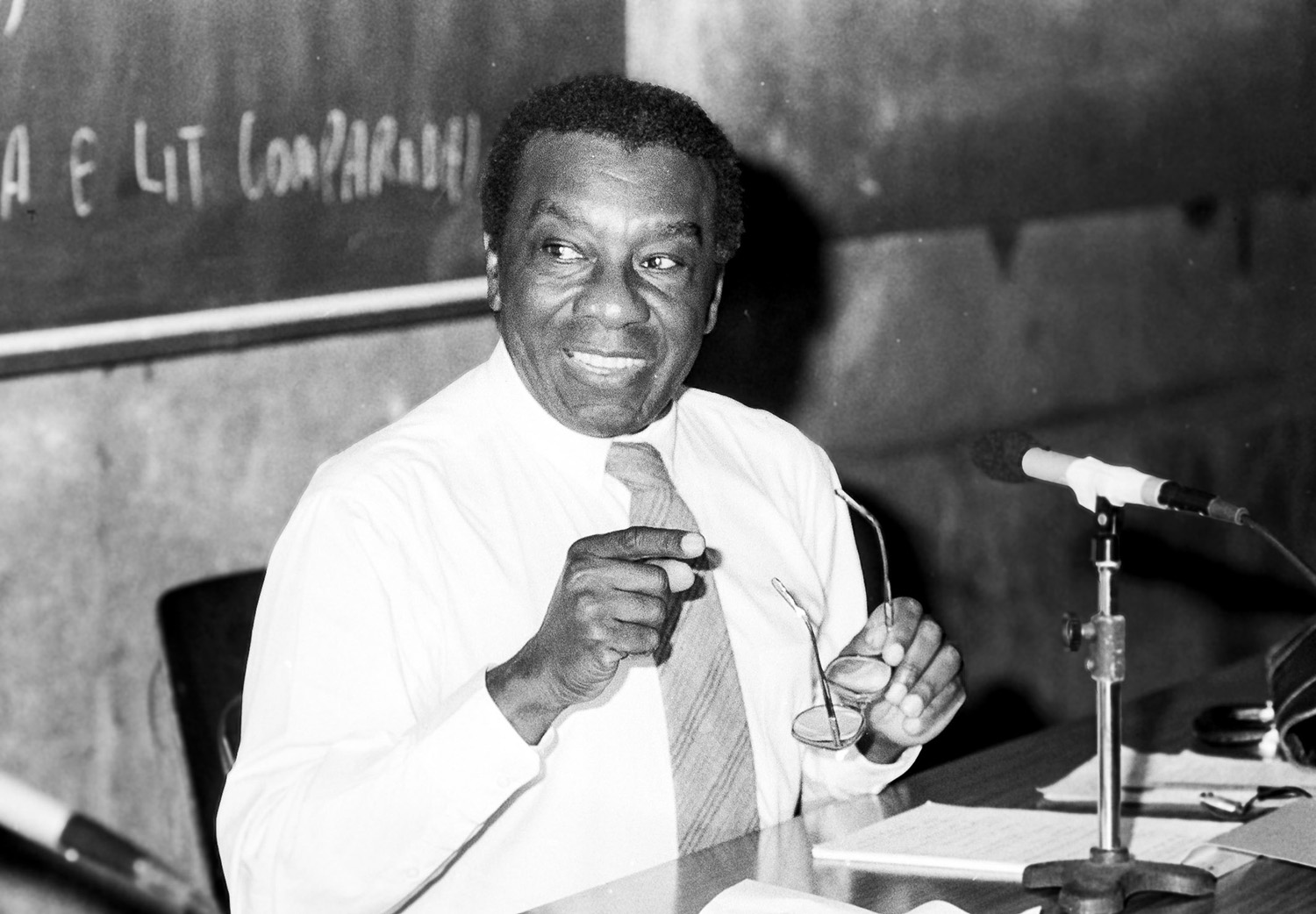
By José Tadeu Arantes | Agência FAPESP* – Milton Santos never accepted the world as a given. For him, what seems natural – the city, territory, and globalization – is always the result of history, decisions, interests, and inequalities. Throughout his career, which began in a small town in Bahia and spanned journalism, politics, imprisonment, exile, and extensive international travel, the geographer formulated a central idea: space is not a passive backdrop to social life but a fundamental mode of its production.
This vision arose from a concrete experience. Born Black in a region with few resources, yet strongly encouraged by his parents and teachers, Milton encountered inequalities from an early age. These inequalities would later become the subject of his reflection. He transformed this experience into a theory of geography capable of rigorously explaining how the world is organized – by whom and for whom.
Family, school, and the beginning of his teaching career
Milton Almeida dos Santos was born on May 3, 1926, in Brotas de Macaúbas, in the region of Chapada Diamantina (which translates as “Diamond Plateau”) in the hinterland of Bahia state. This area was marked by isolation and poor living conditions. His paternal grandfather spent part of his life in slavery. His parents, Adalgisa Umbelina de Almeida Santos and Francisco Irineu dos Santos, were elementary school teachers and played a fundamental role in his literacy and early education. He had two siblings: Nailton and Ieda.

Milton Santos’s parents: Francisco Irineu dos Santos, his father, and Adalgisa Umbelina de Almeida Santos, his mother (photo: Daniel Antônio/Agência FAPESP)
His childhood was marked by frequent moves, with the family relocating repeatedly to other cities within the state: Ubaitaba, Alcobaça, and Salvador. As a result, his schooling was irregular, punctuated by interruptions and the need to adapt to different environments. Nevertheless, he excelled in his studies. At age 10, he began living away from his parents in Salvador to attend the Bahian Institute of Education, a boarding school where he entered in first place.
In a memorable interview with the website Geledés: Institute for Black Women, he offered some revealing insights into his early, formative years. We have translated and condensed his comments here: “My childhood was sheltered. I learned things early on that were uncommon for children my age. My father was a highly educated and refined man. He believed that education wasn’t just about learning content, but also about learning how to conduct oneself in the world. He taught me French, algebra, and good manners. Manners were very important for him. He advised me not to look down. He said we had to look ahead, look people in the eye,” Milton recalled.
He added, “I was raised to lead, to command, to carry myself with a certain poise in front of others. Relationships are about power, knowing how to behave, how to speak, and how to carry oneself. All of that was part of the upbringing I received so that I wouldn’t stand out in white society. I knew the codes. I knew how to enter and exit places.”
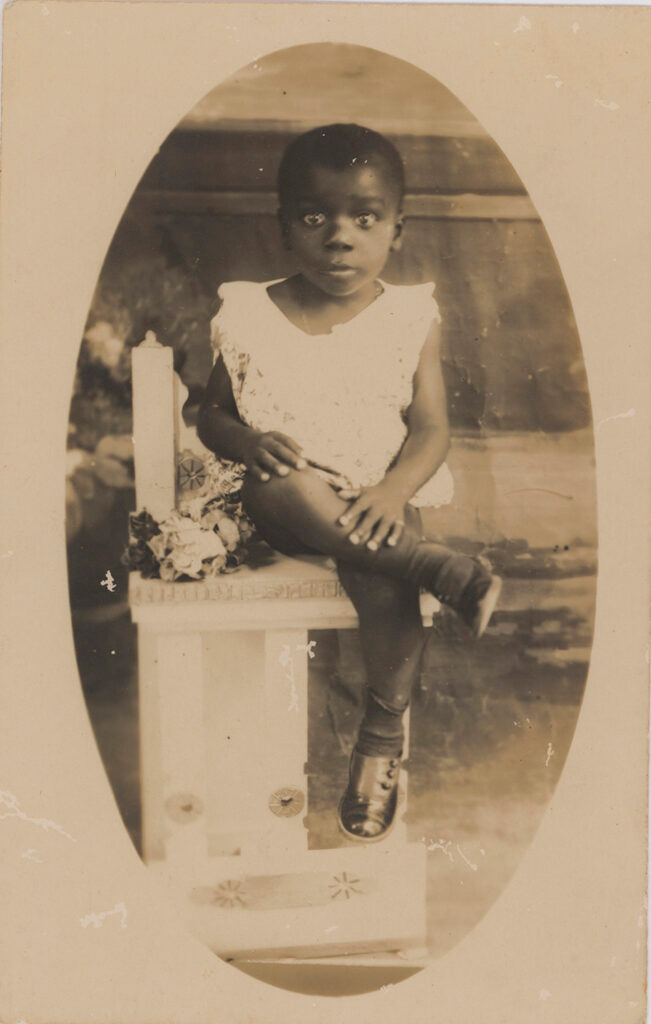
His childhood was marked by frequent moves between different cities and schools; nevertheless, he excelled in his studies (photo: family archive)
Teaching came early, out of necessity and design. While still young, he began working as an assistant teacher, an experience he would later recognize as pivotal: “Teaching emerged early as a means of support and also as a vocation. That moment marked the beginning of my intellectual life,” he wrote in a biographical memoir preserved in the vast and precious Milton Santos Collection in the archives of the Institute of Brazilian Studies at the University of São Paulo (IEB-USP). At age 13, he was already teaching mathematics at the Bahian Institute of Education itself. At 15, he began teaching geography as well. His familiarity with mathematics and the so-called exact sciences is an important feature of his biography. Later, he would develop a keen interest in technology and incorporate this into his view of societies. While still in high school, he created and edited two newspapers: O Farol and O Luzeiro. He also began participating in the student movement.
In an interview originally published in issue 7 of the magazine Geosul in 1989 and republished in issues 12 and 13 in 1991 and 1992, Milton provided important information about this and other periods of his life. This text has been translated and reproduced here with minor editorial adjustments: “I was the founder of the Brazilian Union of High School Students. I was in my first or second year of the Complementary Course [in 1942 or 1943],” he stated.
“When we founded the Bahian High School Students’ Union, we created a schism with the UEB [Bahian Students’ Union], led by Fernando Santana, who was a sort of leader of ours. We idolized him, just as we did Jacob Gorender – ugly though he was, he was a good orator – and they were the leaders in Salvador who pushed for Brazil’s entry into the war [World War II]. We all followed them wholeheartedly, and at that moment, there was, so to speak, a physical closeness with those leaders who were closer to the Communist Party,” he continued.
He added, “However, when I convened the Brazilian Congress of High School Students and the slate for the presidency of the organization was formed, Mário Alves, who was older than me, and others denied me the chance to be president, claiming – in order to strike a deal with the Church – that a Black man would have difficulty communicating with the powers that be in politics and society. And that upset me. Perhaps that episode, which must have been the result of my inability to inspire confidence, played an important role in my outlook for a good part of my life.”
It should be noted that Mário Alves (1923–1970) would be killed under torture by the repressive apparatus of the Brazilian civil-military dictatorship in 1970. Jacob Gorender (1923–2013), who was also imprisoned and tortured, later wrote part of the book Colonial Slavery in prison. It was published in 1978 and became a seminal work on Brazil’s economic and social formation. Fernando Santana (1915–2012) was one of the coordinators of the “O Petróleo é Nosso” (“The Oil Is Ours”) campaign in defense of the Brazilian state’s ownership of subsoil resources. He was also stripped of his political rights by the dictatorship. After the amnesty, he resumed his parliamentary activities and actively participated in the 1987 National Constituent Assembly.
While still in his youth, Milton came into contact with the work of Josué de Castro (1908–1973), a physician and social scientist who wrote the classic Geography of Hunger. Castro’s reflections on hunger and social inequalities left a lasting mark and helped define the core of Milton’s career: reflecting on society and grounding that reflection in his experience as a teacher. Many years later, Milton and Josué met in person while both were exiled in France and remained friends until Josué’s death in 1973.
Law, journalism, and geography
In 1948, Milton graduated from the University of Bahia with a law degree. The university was later federalized and renamed the Federal University of Bahia (UFBA). Salvador is considered the largest Black city outside of Africa. The album containing the graduation photographs of Milton’s class – carefully preserved in the IEB-USP collection – stands out for the scarcity of Black faces: only three among dozens of graduates. Nevertheless, he overcame this barrier of racial exclusion, just as he would overcome many others later in life.
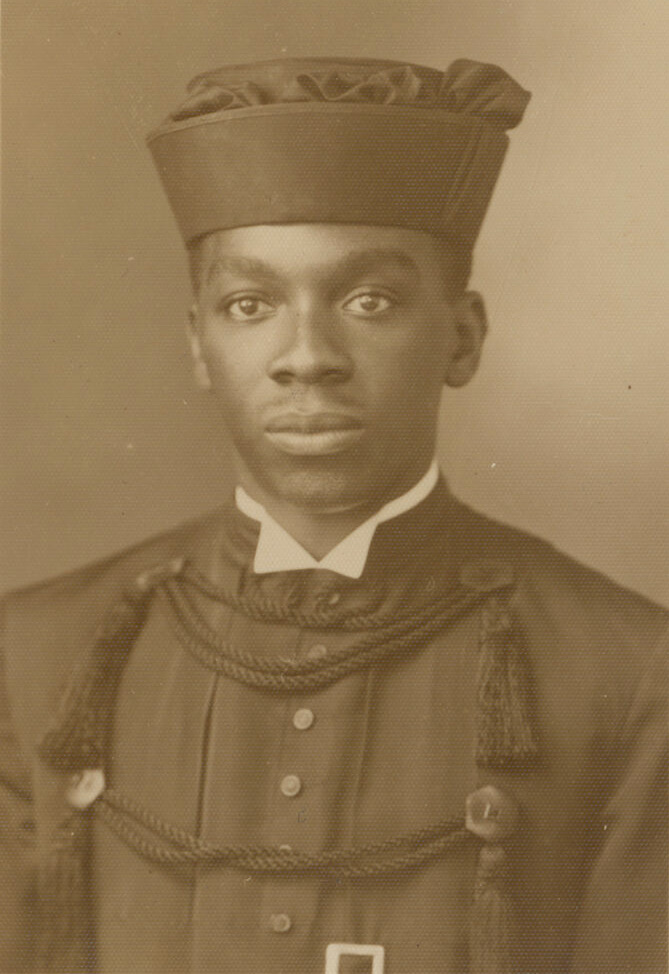
Graduating at Law School in University of Bahia, 1948 (photo: family archive)
However, his work was never limited to the legal field. From an early age, he engaged in various activities: teaching, research, journalism, and public advocacy. In Ilhéus, in southern Bahia, where his teaching career took off, he researched the monoculture of the cocoa-growing region and presented his first paper to the Association of Brazilian Geographers (AGB), titled “The Cocoa Zone.” At the same time, he began working at the Salvador newspaper A Tarde, where he started by writing a column and would later go on to write editorials and analyses on urban, social, and political issues. This combination of empirical practice, theoretical reflection, and public engagement would become a defining feature of his career.
The article “Milton Santos – some aspects of his life and work”, by historian and geographer Maria Auxiliadora da Silva (UFBA), is a good source of information on the period. It was reproduced on the website Milton Santos, organized and maintained by his family.
While still in Ilhéus, Milton met his first wife, Jandira Rocha. They had a son together, Milton Almeida dos Santos Filho, known as Miltinho. He later separated from Jandira but maintained close and frequent contact with his son. Miltinho was a professor at the UFBA School of Economics and Secretary of Finance for the City of Salvador during Lídice da Mata’s administration. His premature death in 1996 was a heavy blow to his father.
Between science and politics
In the 1950s and early 1960s, Milton Santos solidified his academic standing by earning his doctorate from the University of Strasbourg under the guidance of the French geographer Jean Tricart (1920–2003). His thesis was titled “The City Center of Salvador.” Tricart had enormous admiration for Milton’s humor, intelligence, and culture and encouraged him to study Marxism.
This first trip to Europe, which was later extended to Africa, resulted in the book Marianne in Black and White, published in 1960. The Marianne of the book is not a real person but a symbolic personification of the French Republic, founded on the triad “Liberty, Equality, Fraternity.” The book is essentially a travelogue, permeated by what could be called a “foreign gaze” – a perspective that often captures what the native gaze overlooks.
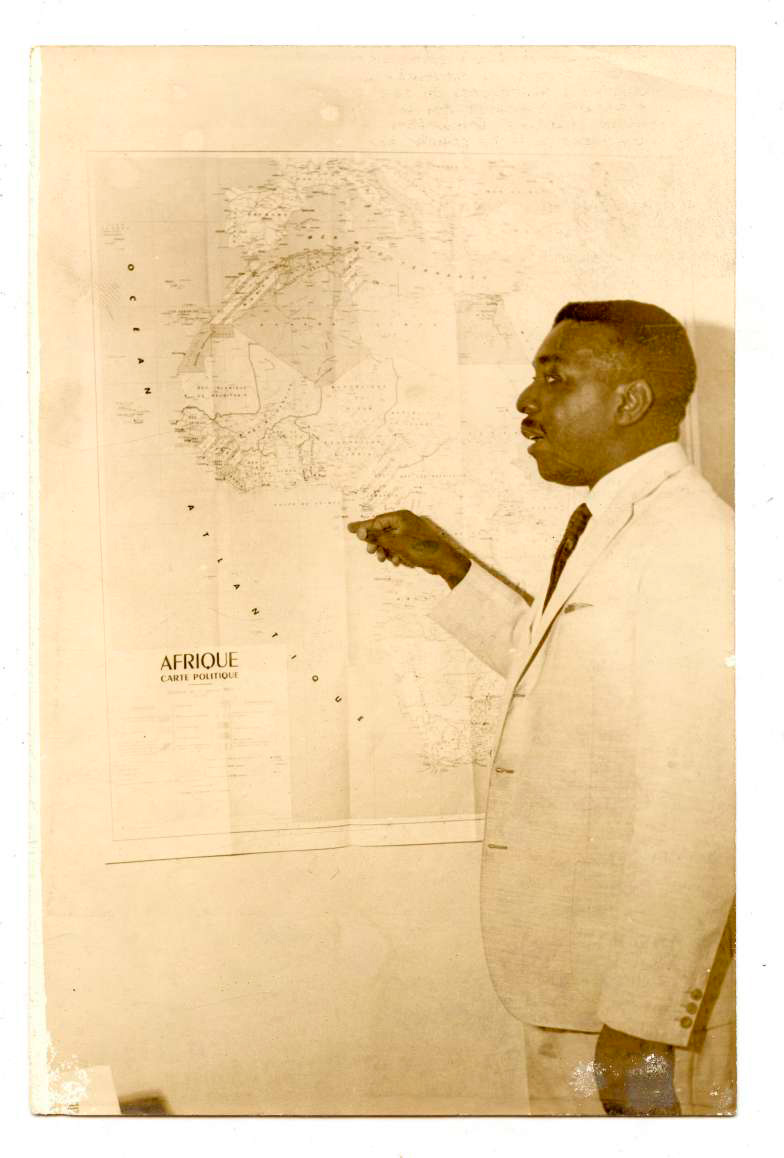
In the 1950s and early 1960s, Milton Santos solidified his academic standing (photo: family archive)
Upon returning to Brazil, Milton became a lecturer at the University of Bahia. As Maria Auxiliadora da Silva reveals in the aforementioned article, Milton’s application for a lecturing position at the University of Bahia’s Faculty of Philosophy was initially boycotted due to veiled racial prejudice. He had to fight in court and win at every level to perform brilliantly in the 1960 competition with the thesis “Regional Studies and the Future of Geography.” His lawyer Nelson Carneiro (1910–1996) was a federal deputy at the time and would later become a senator.
With the support of Rector Edgard Santos (1894–1962), Milton founded the Laboratory of Geomorphology and Regional Studies, which contributed to the development of academic geography in Brazil. At the same time, he took on a public office as president of the Economic Planning Commission (CPE) of Bahia.
The article “Milton Santos’s journey through exile and the formation of his network of cooperation” by Breno Viotto Pedrosa, a professor at the Federal University of Rio Grande do Sul (UFRGS), provides extensive information on this period and the one that followed.
In March 1960, Jânio Quadros (1917–1992), a candidate for the Presidency of the Republic, visited Cuba, where he was received with full honors and courtesies by Fidel Castro. Although the Cuban state had not yet officially declared itself socialist – a declaration that would come in April 1961 – it was already under attack by the United States and had begun its process of rapprochement with the Soviet Union following the agrarian reform and first nationalizations. In this context, tainted by the Cold War, Quadros’s visit was harshly criticized by conservative sectors in Brazil. As a member of the Bahian state government, Milton was part of Jânio’s delegation. This would come back to haunt him years later during the 1964 civil-military coup.
In the aforementioned interview with Geosul magazine, Milton recounted that Jânio’s delegation included “a constellation of intellectuals,” led by the journalists and writers Rubem Braga, Fernando Sabino, and Carlos Castelo Branco. He added that, in 1960, Jânio, already president, summoned him with the intention of appointing him ambassador. “He urgently needed to appoint a Black ambassador, but I was in Paris, where spring was beautiful, so I delayed my return. Upon arriving here, the president appointed me deputy chief of his civil cabinet and his personal representative in Bahia. That experience gave me a full sense of the futility of power,” he said.
At the same time, Milton participated in missions to Africa, where he came into contact with ongoing decolonization processes. His work at the helm of the Bahian CPE was strongly influenced by Celso Furtado’s developmentalist thinking and by the work of SUDENE, a federal agency created in 1959 to promote development, reduce inequalities, and attract investment to the Northeast. Milton’s brother, Nailton Santos, was involved with the institution, which facilitated their connection. Both Furtado and Milton understood “underdevelopment” as a structural phenomenon rather than merely a lag behind core countries in the global capitalist system.
1964: imprisonment, exile, and “crossing the desert”
Milton’s activism placed him at the center of the national political debate. It also exposed him directly to the consequences of the institutional breakdown brought about by the 1964 civil-military coup. After being warned that he was in danger, the Honorary Consul of France in Salvador, Raymond Van der Haegen, invited him to take refuge in his home. He remained there for a few days as a refugee. Nevertheless, he was arrested.
In the jargon of the civil-military dictatorship, he was accused of the CPE being “infiltrated by communists” and was characterized as a “useful innocent” for “subversive” activities. According to a report by the Milton Santos Commission for Memory and Truth at the Federal University of Bahia, the geographer was imprisoned from April 9 to June 23, 1964. With the support of diplomatic pressure and a campaign by intellectuals, the French consul managed to negotiate his release and departure from the country with the military authorities.
In December 1964, Milton left Brazil, beginning an exile that would last a decade. His first place of refuge was the University of Toulouse-Le Mirail (now Université Toulouse-Jean Jaurès), a public institution in France focused on the humanities, social sciences, literature, and the arts. He remained there for about three years.
He later moved to Bordeaux, where he lived for a year. This period was very important to him for a personal reason; it was there that he met Marie-Hélène Tiercelin, an Algerian geographer, whom he would marry years later and who would be his partner until the end of his life.
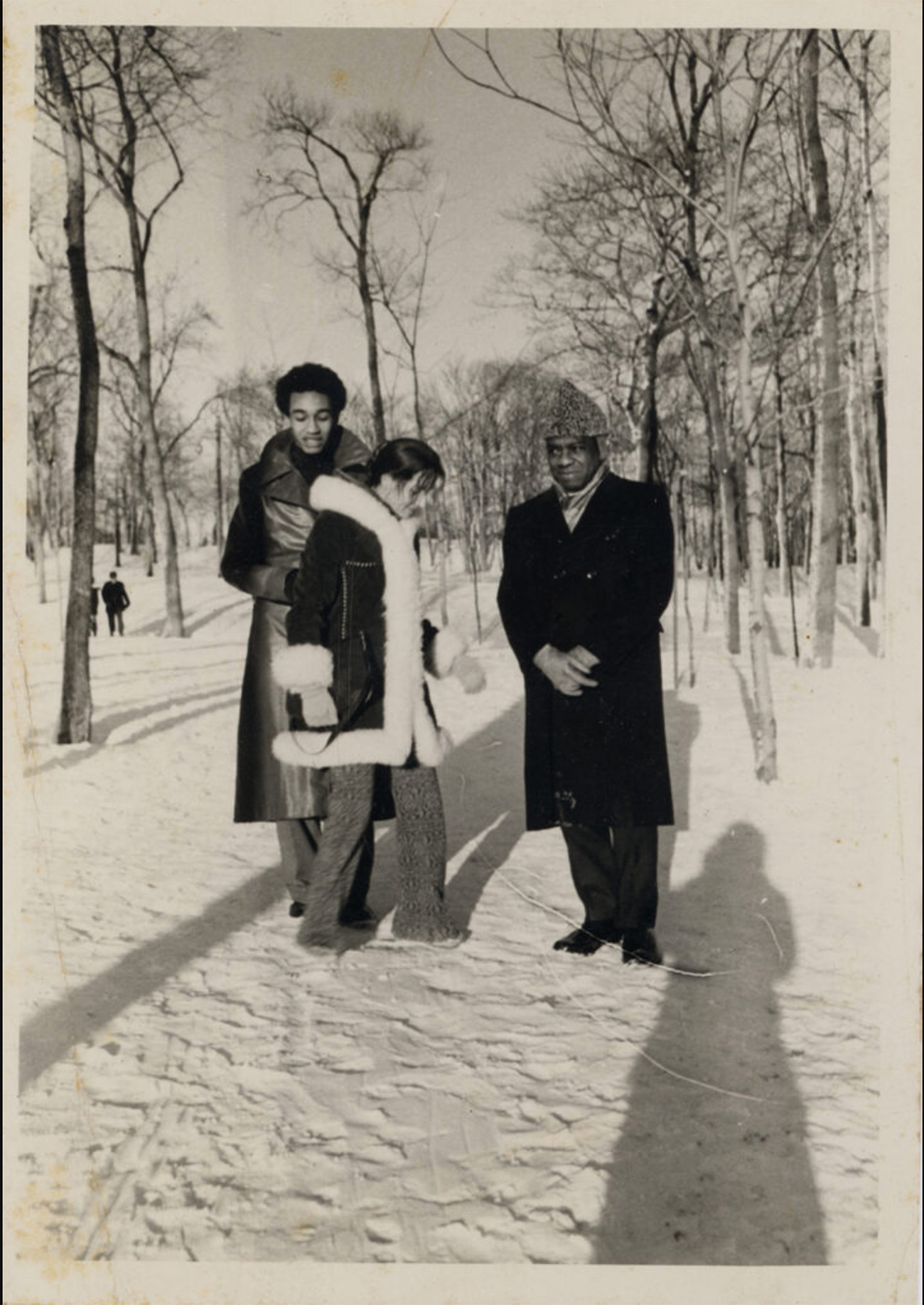
Milton Santos with his son Miltinho and Marie-Hélène in Montreal, Canada, 1971 (photo: family archive)
In 1968, Milton moved to Paris, where he lived until 1971. During this period, he taught at the Sorbonne and served as director of urban planning research at the Institut d’Études du Développement Économique et Social (IEDES). In the Revue Tiers Monde (Third World Review), an important IEDES publication, he published articles on food in underdeveloped countries, the geography of hunger and regional planning, food trade, and urban dynamics.
This was followed by a period of intense activity during which he taught at the University of Toronto in Canada, served as a visiting researcher at the Massachusetts Institute of Technology (MIT) in the United States, returned to Paris, taught at the Central University of Venezuela, and organized the graduate program in geography at the University of Dar es Salaam in Tanzania, where he stayed for two years.
In addition to these longer stays, his travels abroad included short-term assignments in various contexts: Mexico (1966), Peru (1973), and Costa Rica (1975). As part of missions and research projects linked to the International Labour Organization (ILO), he traveled through several countries in Africa and Latin America, including the Ivory Coast, Dahomey (now Benin), Ghana, Togo, Tunisia, Algeria, Cuba, Mexico, and Colombia. Amid all these travels, he married Marie-Hélène Tiercelin in Port-au-Prince, Haiti, in 1972.
According to the aforementioned study by Breno Viotto Pedrosa, Milton’s extensive network of international relations expanded significantly during his exile. In France, he established ties with leading figures in geography and development economics, such as Pierre George, François Perroux, Bernard Kayser, Yves Lacoste, and Michel Rochefort. Initially aligning with their approaches, he later developed his own critique. Throughout his travels, he also came into contact with critical geography intellectuals in the United States, such as the British scholar Richard Peet, co-founder of the Marxist-oriented journal Antipode.
His connections extended beyond academic circles in the core countries to the intellectual and political spheres of the so-called Third World. His time at the University of Dar es Salaam in Tanzania from 1974 to 1976 took place amid significant African liberation and nation-building movements and critical reflections on colonialism, both practical and theoretical. Under Julius Nyerere’s (1922–1999) presidency, Tanzania experienced a particularly fertile period politically and intellectually. The country sought to establish an African socialism encapsulated by the term Ujamaa, which means “unity” or “family” in Swahili. This attracted researchers from around the world. Milton became friends with Nyerere.
As geographer Billy Malaquias, a student and collaborator of Milton’s, notes, one African politician and thinker who strongly influenced Milton was Amílcar Cabral (1924–1973), leader of the liberation movements in Guinea-Bissau and Cape Verde. Another important influence was Akinsola Akiwowo, a Nigerian sociologist who proposed an “indigenous sociology” based on Yoruba categories. He sought to reconstruct social theory from African epistemologies rather than solely from European frameworks.
But it must be said that Milton never lost his connection to Brazil. Among the wide circle of intellectuals with whom he maintained close contact abroad, at least three who played a prominent role in Brazilian life deserve mention: Celso Furtado, Maria da Conceição Tavares, and Paulo Freire. Another important contact during his exile was Miguel Arraes (1916–2005), the former governor of Pernambuco.
It should be emphasized that exile was not a marginal episode in Milton Santos’s life but rather a formative experience in his career. By living and working in various countries and interacting with people from diverse cultural backgrounds, he gained experiences that broadened the scope of his thinking. According to Elisabete Marin Ribas of IEB-USP, Milton Santos received more honorary doctorates than any other Brazilian, from universities in Brazil and abroad. These titles are attestations of his profound experience as a citizen of the world, not mere academic honors.
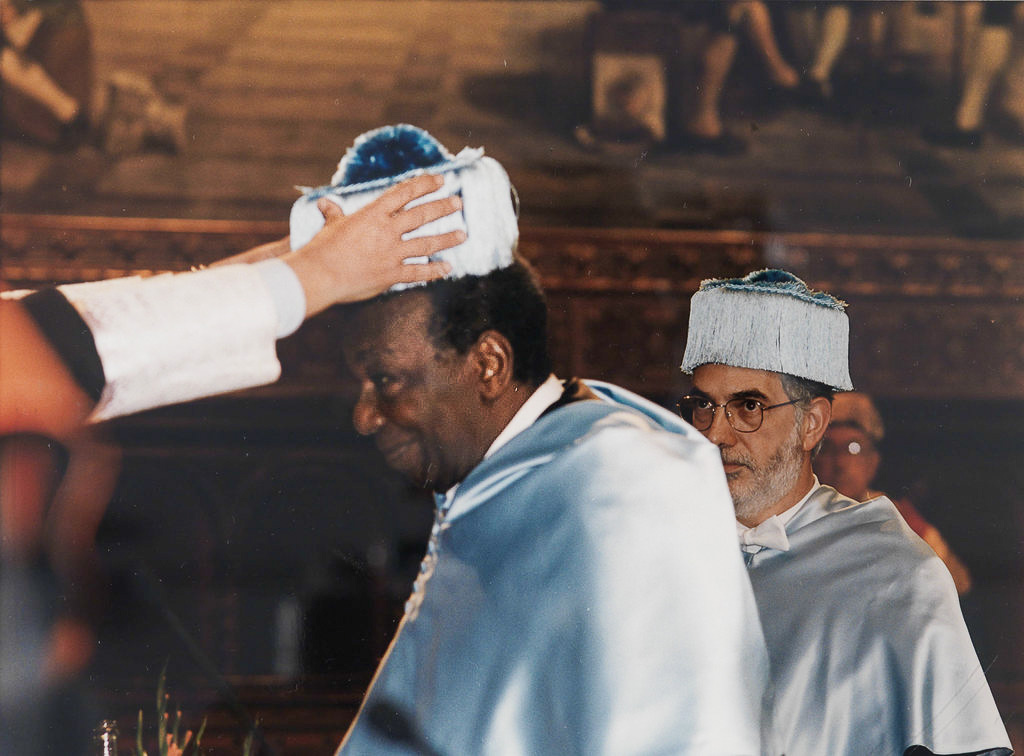
Granting of the Honoris Causa degree by Barcelona University, 1996 (photo: J.B. Conti/Itaú Cultural)
Later, when referring to his exile, he compared it to “crossing the desert.” However, Milton did not cross the desert and leave it behind. On the contrary, he embraced it, carrying it with him just as he carried Brazil. In his handwritten notes for the speech he delivered at the 1995 ceremony marking his reinstatement at the Federal University of Bahia, he wrote: “Yesterday, a journalist wanted to know how I felt about returning home. Returning home is a metaphor, however true the act of returning may be. Churchill used to say that first we make our homes, and then our homes make us. Our land, places, we don’t make them. It’s they who, body and soul, literally make us. In the wanderings that life has reserved for me, I never left the old stones behind. That’s the miracle of living. Even the stones follow us.”
Return to Brazil and establishment at USP
Before leaving Tanzania in 1976, Milton received his first invitation to return to Brazil from the State University of Campinas (UNICAMP). However, under the government of General Ernesto Geisel, the fourth president of the civil-military dictatorship, the country was undergoing an incipient and unstable process of political opening with timid advances and dangerous setbacks, which discouraged a return. During this period, he was in Venezuela again and then went to Columbia University in New York.
His return to Brazil did not occur until 1977. Marie-Hélène came with him. The couple’s son, Rafael, was born on Brazilian soil that same year. However, Milton’s professional reintegration into Brazilian society was difficult. While several universities abroad opened their doors to him, Brazilian universities, still under the heavy yoke of the dictatorial regime, were reluctant. The Federal University of Bahia, his alma mater, did not reinstate him as a professor at that time.
His friend, the geographer Maria Adélia Aparecida de Souza, a former student of Pierre George, Yves Lacoste, and Celso Furtado who earned her doctorate at the University of Paris, was working as coordinator of Regional Action in the São Paulo state government under Paulo Egydio Martins. She invited him to serve as a consultant while he awaited an opportunity at the university. Later, he taught as a visiting professor at the Federal University of Rio de Janeiro (UFRJ) until 1983.
The country had entered a politically intense period. The movement for redemocratization had gained momentum with the large student marches of 1977 and the strike by workers in the ABC region of São Paulo from 1978 to 1980. It had diversified and garnered support from various segments of society, including groups that had previously supported the dictatorship. The regime was crumbling with the repeal of Institutional Act No. 5 (1978), which had granted exceptional powers to the military leadership; the end of the two-party system and creation of new parties (1979); the Amnesty Law, which allowed for the release of political prisoners and return of exiles (1979); and the gradual abolition of censorship (1979–1980). These factors converged and culminated in the broad campaign for direct elections (1983–1984).
Milton Santos joined USP in this new context, having been hired as a full professor in the Department of Geography in 1984. He remained at USP even after retiring in 1997, serving as a visiting professor. During this period, he consolidated his theoretical work, which culminated in seminal books such as The Nature of Space (1996) and Toward an Other Globalization (2000).
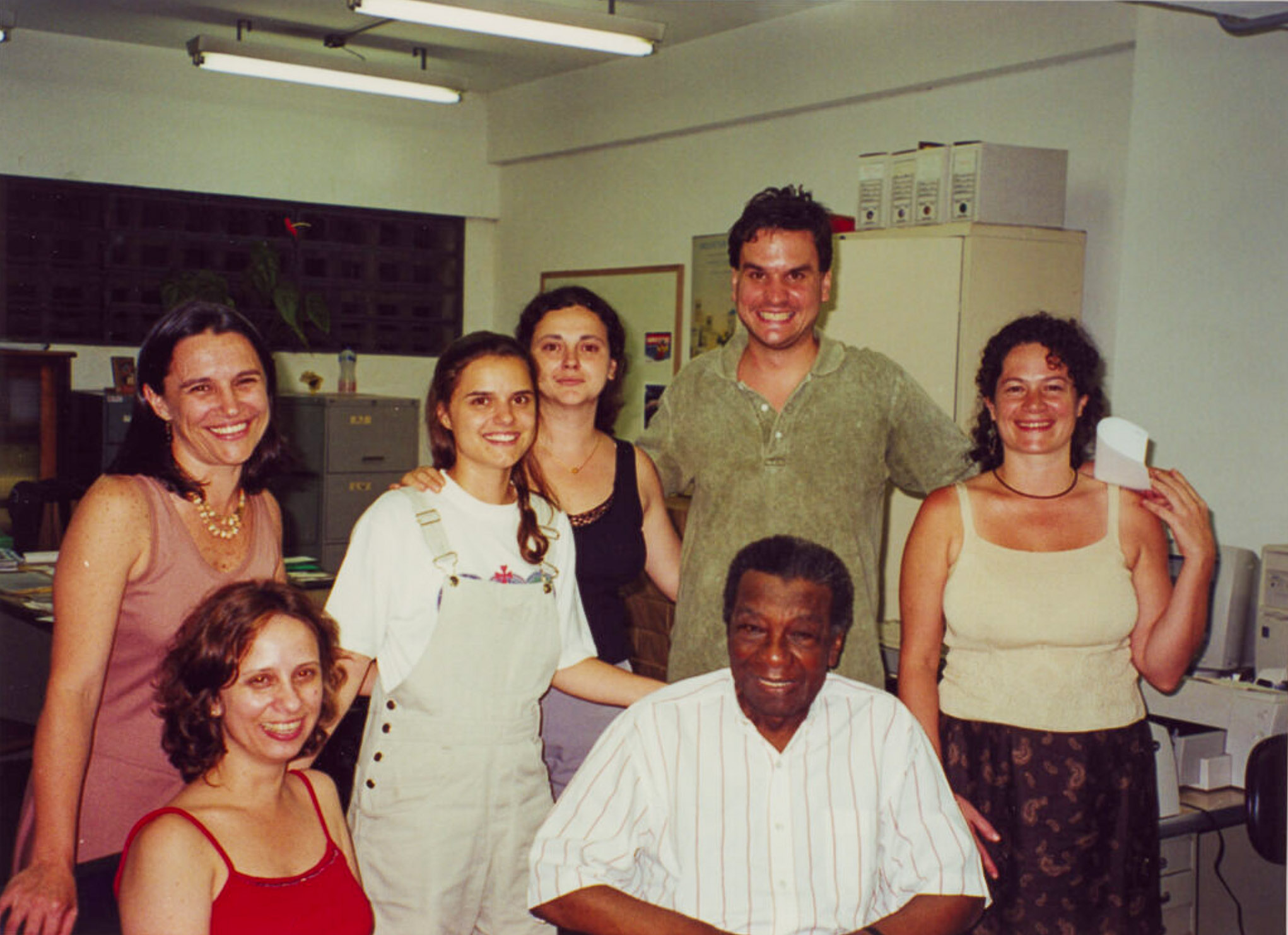
Milton Santos in 1999 with his students Eliza Almeida, Mônica Arroyo, Flávia Grimm, Adriana Bernardes Fabio Contel and Lydia Antongiovanni (photo: family archive/Itaú Cultural)
Intellectual output and idiosyncrasies
A defining feature of his work is his new understanding of the nature of geographical space. Rather than treating it as an inert setting, he viewed it as a dynamic reality produced by the interaction between material elements and social practices. For Milton, space is inseparable from technologies, economic organizations, social structures, and political decisions. Infrastructures, cities, and territories are not neutral components of a disjointed whole; rather, they embody intentions, create inequalities, and define possibilities for action. This approach transforms geography into a general theory of society capable of explaining historical processes.
These and other fundamental elements of his thought are addressed in some of the texts that make up this edition.
On a personal level, Milton was known for his meticulousness and discipline. Billy Malaquias, who knew him well, recalls his very formal way of dressing: “I don’t remember ever seeing him in a T-shirt. At most, he’d wear a short-sleeved dress shirt. In the classroom, he’d usually show up in a light-colored suit, dress shirt, with a briefcase in hand. One student even called him ‘the most French Bahian on the face of the earth,’ a description I find fitting, since this manner of presenting himself would have been partly learned in France and adopted as a personal trait.”
He devoted the same care to preparing his classes as he did to his attire. It was never improvised, but rather a meticulously prepared encounter. The Milton Santos Collection in the IEB-USP archives contains a large number of impeccably typed lesson preparation notes from a time before personal computers were in use. This reflects his evident respect for knowledge and the students who would receive it.
Malaquias recounts his own experience as a student: “He would bring texts he was writing to class and submit them to the students’ critique. They would respond with their own references and interpretations. That process of dialogue led him to continually seek greater conceptual precision. This reinforces the idea that, for Milton, concepts are historical, dated, and permanently reworkable.”
At the same time, his compulsion to accumulate reading notes, lesson plans, book outlines, speech drafts, and papers of all kinds suggests that he may have also acted with an eye toward posterity, as if amassing a vast collection of primary sources for his future biographers. It is no surprise that his collection at the IEB-USP is by far the largest. Consider that the archive contains collections by Mário de Andrade, Guimarães Rosa, and Graciliano Ramos, among many others.
Intensive research and media exposure
In addition to teaching, Milton devoted himself intensely to research. The extent of his commitment can be gauged by the number of research grants and funding applications he submitted to FAPESP. Between 1990 and 1994, he served as the coordinator of the Architecture and Urbanism Division of FAPESP’s Scientific Board. He had a profound understanding of what an academic career entailed and of the intellectual’s social responsibility.
At times, he could be quite caustic in his assessments when the academic environment did not meet his expectations. Professor Jaime Tadeu Oliva, his former student and collaborator, recalled hearing him say on several occasions that there were two types of people in university education: the well-read and those who think. “He was very critical of the way the university operates. He said that system turns professors into bureaucrats and discourages deeper thought and reflection.”
Oliva recounts an episode characteristic of his stance: “At the ceremony where he received the title of Professor Emeritus at USP, a thank-you speech was expected. He did the opposite: he criticized the university. He said that the university wanted to turn professors into an assembly line for articles, that people were repeating texts, fragmenting ideas, and choosing topics based on funding rather than intellectual interest. He also criticized the absence of Black people at the university. It was a totally unexpected speech. He remained the same Milton, even at that moment.”
It should be added that although he was clearly a left-wing intellectual with a vast network of contacts in that political sphere, Milton refused to join parties or organizations. He believed that doing so would limit his freedom of thought and compromise the rigor of his critical work. He attributed this maverick stance, which he adopted early on, in part to French influence: “It’s responsible for an independent style I learned from Sartre, far removed from any form of activism except that of ideas,” he wrote.
Needless to say, this stance placed him in a position of relative isolation. Despite that, over the years, Milton gained increasing media exposure and was invited to conferences, debates, and interviews. In 1997, he appeared on TV Cultura’s Roda Viva program, where he clearly explained his approach: “As an intellectual, I have to get used to being alone. The intellectual is characterized by his critical force; he exists to create discomfort. I can’t be both an intellectual and ‘the establishment.’ When intellectuals decide to become ‘the establishment,’ they abandon their critical spirit.”
In the mid-1990s, Milton was diagnosed with prostate cancer. Despite his illness, he continued to engage in intense intellectual and academic activities, publishing new works and teaching. He taught at USP until 2000. In 2001, his final book, Brazil: Territory and Society at the Beginning of the 21st Century, was published. He wrote it in collaboration with María Laura Silveira, an Argentine geographer and his doctoral student.
That same year, his health deteriorated. Admitted to the Hospital do Servidor Público Estadual in São Paulo, he passed away on June 24, 2001, at the age of 75. His final research project, conducted jointly with Maria Laura Silveira and supported by FAPESP, could not be completed.
In the aforementioned draft of his reinstatement speech at the Federal University of Bahia, Milton left another valuable note that serves as an epilogue to his career: “The lessons of this day: life is worth living. It’s good to look back as long as the past doesn’t serve as a guide. Our guide is the future. However, it’s only possible to think about the future when one is anchored in the present. Am I not stating a contradiction? Places are also made up of things from the past; places are an accumulation of times.”
* With the collaboration of Fabiana Pereira from the FAPESP Memory Center.
Republish
The Agency FAPESP licenses news via Creative Commons (CC-BY-NC-ND) so that they can be republished free of charge and in a simple way by other digital or printed vehicles. Agência FAPESP must be credited as the source of the content being republished and the name of the reporter (if any) must be attributed. Using the HMTL button below allows compliance with these rules, detailed in Digital Republishing Policy FAPESP.
