





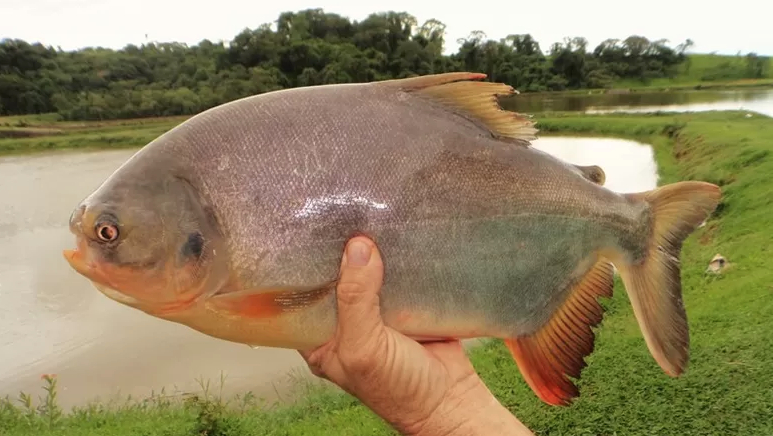
By Thais Szegö | Agência FAPESP – Using the skin of an Amazonian fish known as tambatinga as the raw material, researchers at the University of São Paulo (USP) and EMBRAPA Pecuária Sudeste – a decentralized unit of the Brazilian Agricultural Research Corporation (EMBRAPA) located in São Carlos, São Paulo state – have developed a biofilm that can be used in food packaging.
The tambatinga, the result of crossbreeding the female tambaqui (Colossoma macropomum) and the male pirapitinga (Piaractus brachypomus), is recognized for its excellent growth performance and as a valuable, sustainable source of collagen-rich material. Due to its tropical origin, the skin of this species may contain higher levels of amino acids, which can enhance the functional and structural properties of the gelatin derived from it.
In a study supported by FAPESP through the Food Research Center (FoRC), one of the Foundation’s Research, Innovation, and Dissemination Centers (RIDCs), the animal was used to produce biodegradable polymers that could replace, at least partially, the films (thin, flexible materials) used in food packaging made from synthetic materials, such as petroleum. The results were published in the scientific journal Foods.
“We’ve been working for over 25 years on the development of films based on biopolymers, such as proteins and polysaccharides, with the aim of applying this material to food packaging and reducing the environmental impact, since there are many problems associated with the accumulation of synthetic packaging in nature,” says food engineer Paulo José do Amaral Sobral. Sobral is a professor in the Department of Food Engineering at the USP campus in Pirassununga. He supported the work of zootechnician Manuel Antonio Chagas Jacintho and food engineer Fernanda Ramalho Procopio, both from EMBRAPA.
The first step of the experiment was to clean the fish skins and subject them to a gelatin extraction process using hot water and acetic acid to remove impurities. Next, films were made from the material, using two grams of gelatin for every 100 grams of film-forming solution. The result was a transparent, flexible material with uniform surfaces.
Additionally, the material proved to be highly resistant and able to block ultraviolet rays more effectively and have lower water vapor permeability than other gelatin-based materials reported in the literature. These results demonstrate the potential of fish skin, which is generally considered industrial waste, as a renewable, high-value raw material for producing sustainable biopolymers.
Despite the promising results, the obtained material had one limitation: sensitivity to moisture. “For that reason, for now, they can only be used in dehydrated products, such as nuts and chestnuts,” says Sobral.
The researcher believes it is necessary to continue the work to enable the use of the biopolymer obtained from tambatinga skin in food packaging, pharmaceuticals, and biomedical products. This would add economic value to the aquaculture sector and promote an integrated, environmentally responsible production chain.
The article “Sustainable biopolymer films from Amazonian tambatinga fish waste: gelatin extraction and performance for food packaging applications” can be read at mdpi.com/2304-8158/14/22/3866.
Republish
The Agency FAPESP licenses news via Creative Commons (CC-BY-NC-ND) so that they can be republished free of charge and in a simple way by other digital or printed vehicles. Agência FAPESP must be credited as the source of the content being republished and the name of the reporter (if any) must be attributed. Using the HMTL button below allows compliance with these rules, detailed in Digital Republishing Policy FAPESP.
