





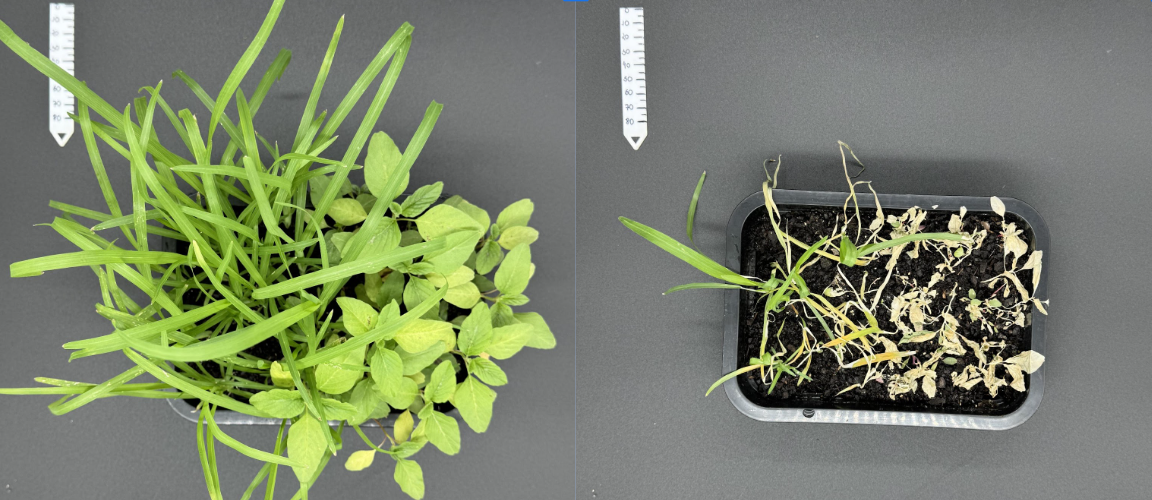
By Karina Ninni | Agência FAPESP – New formulations of nanopesticides with natural ingredients have appeared in specialized literature using terms such as “green pesticide,” “ecological,” “based on natural elements,” and “with natural nanoparticles,” among others. However, there is no consensus on what truly constitutes a green pesticide, and these terms are used even when the active ingredients are synthetic or conventional and only encapsulated in formulations based on natural polymers.
The subject was the theme of a review published in Sustainable Materials and Technologies by the Environmental Nanotechnology Group at the Institute of Science and Technology of São Paulo State University (ICT-UNESP), Sorocaba campus, Brazil. According to the authors, this “green shift” has been an international trend in research on the subject. The search for green nanoformulations has become a means of achieving publication and scientific dissemination.
“If it has ‘green’ in the name, it gets media coverage, is published, and is successful. But is it really green? To answer this question, we began scrutinizing the published work. Sometimes the polymers and active ingredients are natural, but synthetic surfactants are used in the composition for stability, or only the polymer is natural. Therefore, these terms should be used sparingly to define this new generation of pesticides,” warns Vanessa Takeshita, lead author of the article.
According to her, over the last 20 years of developing nanoformulations for agriculture, the academic community has changed its strategy and approach. Initially, the focus was on reducing the amount of the formulation deposited in the environment. “The focus was on gaining efficiency for dose reduction,” she recalls, emphasizing that nanotechnology was a fundamental tool for that purpose. She adds that the products of this first generation of nanoformulations are already better for the environment than the traditional formulations used in agriculture for decades, but they still need to reach the market.
As the work progressed, however, the team led by Leonardo Fernandes Fraceto, currently innovation coordinator at the Center for Research on Biodiversity Dynamics and Climate Change (CBioClima), a FAPESP Research, Innovation, and Dissemination Center (RIDC), and coordinator of INCT NanoAgro, found that formulations with natural characteristics capable of promoting biorecognition by the plant tended to be more efficient. “When natural molecules or natural compounds are used, the plant identifies them as known compounds. We realized that it was easier and less environmentally hazardous to be efficient using non-synthetic ingredients. So, we moved forward in developing increasingly sustainable formulations.”
According to her, a product must have an active ingredient and polymer of natural origin, as well as a clean production chain, to be considered “green.” Additionally, even if a product is classified as environmentally friendly, it is essential to assess its toxicity, as biodegradability does not exempt products from associated environmental impacts.
The article traces the history of green nanopesticide research and suggests a flowchart to help decision-makers classify formulations. Based on this information, they can then move forward with registering these new, efficient, environmentally safe molecules.
“We believe that the registration process for proven green molecules should be facilitated. As long as it can be shown, throughout the various stages, that the product is more efficient, has low or no toxicity, that the formulation without the active ingredient is also non-toxic, and that the result is as good as that of a conventional formulation, or one that isn’t entirely green, the registration process could be accelerated. That’s what we’re proposing at the end of the study. We want green molecules to reach the market and producers more quickly,” the researcher argues.
Tracking and registration
In Brazil, Federal Law No. 14.785/2023 rules the attributions related to pesticide registration, monitoring and inspection. The conduction of the registry process is shared in three ways between the Ministry of Agriculture and Livestock (MAPA), the Brazilian Health Regulatory Agency (ANVISA), and the Brazilian Institute of the Environment and Renewable Natural Resources (IBAMA), with the federal agencies complementing each others’ competencies.
According to Takeshita, Brazil still lacks specific standards for regulating nanoformulations. Everything is analyzed and reviewed on a case-by-case basis. She undermines that Europe is slightly ahead, and that the Organization for Economic Cooperation and Development (OECD) is developing guidelines to help regulate these products. Brazilian institutions require these guidelines for registering similar products, including tests of molecule mobility in the environment and toxicity levels.
“We need to show MAPA that the formulation works at least as well as those already on the market; prove to ANVISA that the molecule has low toxicity, through a series of studies; and IBAMA will also request information on toxicity to non-target organisms, whether the molecule has the potential to reach groundwater, whether it’s mobile in the soil, whether it’s degradable in the environment, among other questions,” Takeshita explains. According to her, the process is usually lengthy, and even a conventional molecule can take more than ten years to be approved.
ANVISA, through its press office, states that nanoformulations are subjected to the same regulatory process applicable to other plant protection products, following the current general guidelines and considering the specific technologies of each product. “Nevertheless, considering the possible physicochemical and biokinetic particularities associated with the nanoscale, the assessment is conducted on a case-by-case basis. Whenever characteristics requiring further analytical examination are identified, additional information or studies may be requested during the analysis, in order to ensure scientific robustness and proper characterization of risks to human health,” the statement says.
Currently, it takes between 3 to 4 years to conduct such assessment, which fits the timeframe of international agencies which perform similar assessments, according to ANVISA.
IBAMA also informed, through its press office, that so far it has not conducted any environmental assessment of agrochemical nanoformulations for registration purposes and that it does not yet have specific regulations to address the environmental evaluation of this type of formulation. If it becomes necessary to carry out an environmental assessment of any herbicide nanoformulation, the analysis must be conducted considering the specific case and based on current regulations. “For the environmental assessment of pesticide nanoformulations, information would be requested according to the criteria currently adopted, taking into account the specific characteristics of these molecules, as well as the possibility of adapting criteria used by international regulatory agencies to national conditions,” the note states. According to IBAMA, ecotoxicological studies and environmental behavior studies currently required should be adopted as a starting point, with the appropriate adaptations to the particular characteristics of nanoformulations.
MAPA clarifies that Law No. 14,785/2023 does not provide a definition of “nanopesticides” and that, currently, there is no specific regulation for “nanoformulations.” “These products are analyzed and registered in the same queue as other chemical products, following exactly the same regulatory process. Just like any other product submitted for registration, it is necessary to prove efficacy, including through comparison with already registered products, and it must demonstrate performance at least equivalent to those already available on the market,” states the note sent by the press office. Regarding deadlines, in 2025, approved registrations had an average analysis time of approximately four and a half years.
The ideal regulatory mechanism for the agronomist would be a kind of bonus system: the greener the molecule, the faster the registration process. “But that doesn’t exempt companies from submitting all the necessary dossiers. Most likely, for nanoformulations, it’ll be necessary to submit all the studies that are already submitted for conventional pesticides, plus some additional information. The detailed characterization of this nanoparticle, for example, according to established and recognized criteria, will likely be an important step, since, as mentioned, it interacts differently with the environment.”
Nano vs. conventional
Vanessa Takeshita explains that conventional formulations are mixtures of ingredients, such as the surfactant, active ingredient, and emulsifier, that are blended together. “The molecules are loose in a mixture. This helps the active ingredient reach the plant, adhere to the surface, and remain present in the plant’s environment. A nanoformulation, on the other hand, is a structure that can be assembled in various formats, such as small squares made of layers of clay, capsules, or hydrogels. For pesticides, the capsule format [<1000 nm] is most interesting. In this case, the active ingredient is inside the capsule, which protects and carries it into the plant.”
There are many advantages. For example, the plant can be “tricked” by the capsule. The scientists call this mechanism a Trojan horse. “The plant recognizes the capsule as a compound that’s good for it, but it’s inside that the active ingredient is found. In the case of herbicides, which we need to apply to weeds in large quantities, we can apply a smaller dose because it’s possible to deliver more product directly into the plant, which is more efficient.”
The researcher reiterates that progress has been made and that it is possible to have sustainable products that benefit agriculture. However, she acknowledges that there are bottlenecks. “It’s possible to have truly green formulations that can reach national and international markets and be used on a large scale, even for first-generation nanopesticides, i.e., those that combine synthetic or synthetic and natural compounds. The active ingredients can come from plants, microorganisms, or the substances they produce, but we know that there’s still a large gap in identifying these molecules, determining which compounds work, and extracting the active ingredients.”
Nanostructures, on the other hand, can be made with bioproducts such as zein, a protein extracted from corn; lignin, a biopolymer that supports plants; and cellulose, among others. “However, in addition to all the regulatory issues, the industry must be willing to adapt its industrial plants or develop these greener molecules for the market. A study has shown that producers are willing to pay 22% to 40% more for nanoformulations that are more efficient and less dangerous than conventional products. In other words, producers are willing to accept technology that helps them,” Takeshita summarizes.
FAPESP also supported the work through a Regular Research Grant; four postdoctoral fellowships (24/07260-2, 23/16519-7, 23/00335-4, and 23/07905-0); a research internship abroad; a doctoral scholarship; and a scholarship for Retention of Young Doctors in Brazil.
The article “The green horizon of agricultural nanotechnology: A pathway for truly sustainable pesticide formulations” can be read at doi.org/10.1016/j.susmat.2025.e01756.
Republish
The Agency FAPESP licenses news via Creative Commons (CC-BY-NC-ND) so that they can be republished free of charge and in a simple way by other digital or printed vehicles. Agência FAPESP must be credited as the source of the content being republished and the name of the reporter (if any) must be attributed. Using the HMTL button below allows compliance with these rules, detailed in Digital Republishing Policy FAPESP.
