




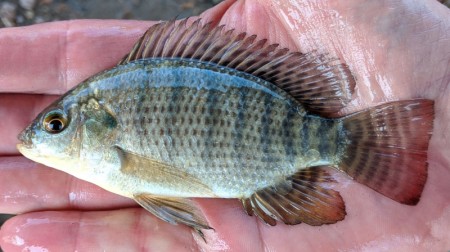
Results indicate that strains linked to the GIFT (“Genetically Improved Farmed Tilapia”) international program have higher fillet yields, while others, such as Chitralada, tend to show slower growth (image: uconnbirdfish/iNaturalist)
Scientists have collected over 2,600 specimens, forming a genetic reserve that serves as a “savings account” for the future of tilapia farming, which accounts for 65% of farmed fish production in Brazil.
Scientists have collected over 2,600 specimens, forming a genetic reserve that serves as a “savings account” for the future of tilapia farming, which accounts for 65% of farmed fish production in Brazil.
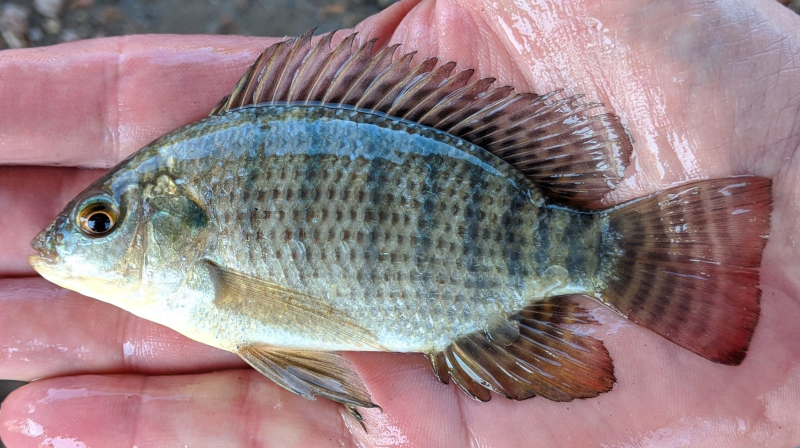
Results indicate that strains linked to the GIFT (“Genetically Improved Farmed Tilapia”) international program have higher fillet yields, while others, such as Chitralada, tend to show slower growth (image: uconnbirdfish/iNaturalist)
Agência FAPESP* – The Fish for Health Research Center has created a comprehensive Brazilian germplasm bank for Nile tilapia (Oreochromis niloticus) by analyzing nine populations of the species sampled from Santa Catarina state in the south to Ceará state on the equatorial coast. Tilapia farming accounts for 65% of Brazil’s farmed fish production.
Despite similar morphological characteristics, the study revealed genetic differentiation forming four groups, as well as significant signs of inbreeding or crossbreeding between close relatives, which can reduce diversity and compromise productive performance over time.
The scientists gathered more than 2,600 specimens at the Fisheries Institute in São José do Rio Preto, São Paulo state, forming a genetic reserve that functions as a “savings account” for the future of tilapia farming.
The characterization of these animals involved body and fillet yield measurements, including innovative ultrasound techniques, as well as molecular analyses with DNA markers.
The results indicate that strains linked to the international Genetically Improved Farmed Tilapia (GIFT) program have a higher fillet yield. In contrast, strains such as Chitralada tend to have lower growth rates. This knowledge enables the selection of fish better adapted to Brazilian conditions with greater climate resilience and better economic returns.
The Fish for Health Research Center is supported by FAPESP through the Science Centers for Development program (SCDs) and is based at the Oceanographic Institute of the University of São Paulo (IO-USP). Researchers from the Fisheries Institute, the São Paulo State Department of Agriculture and Supply, and the universities of Mogi das Cruzes (UMC) and Rio Grande do Norte (UFRN) also participate.
* With information from the Fish for Health Center
The Agency FAPESP licenses news via Creative Commons (CC-BY-NC-ND) so that they can be republished free of charge and in a simple way by other digital or printed vehicles. Agência FAPESP must be credited as the source of the content being republished and the name of the reporter (if any) must be attributed. Using the HMTL button below allows compliance with these rules, detailed in Digital Republishing Policy FAPESP.
