




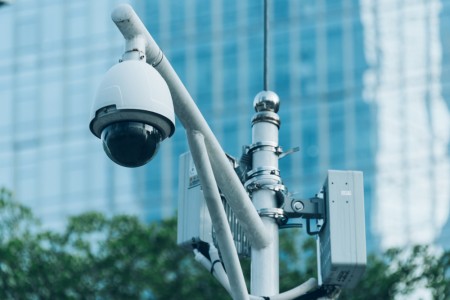
“A camera without analysis is just a huge archive that’s rarely consulted in a productive way,” says Rafael Libardi, founder of Noleak (imagem: Fanjianhua/Magnific)
Autonomous learning technology developed by a FAPESP-supported startup filters out irrelevant images and reduces human error in surveillance.
Autonomous learning technology developed by a FAPESP-supported startup filters out irrelevant images and reduces human error in surveillance.
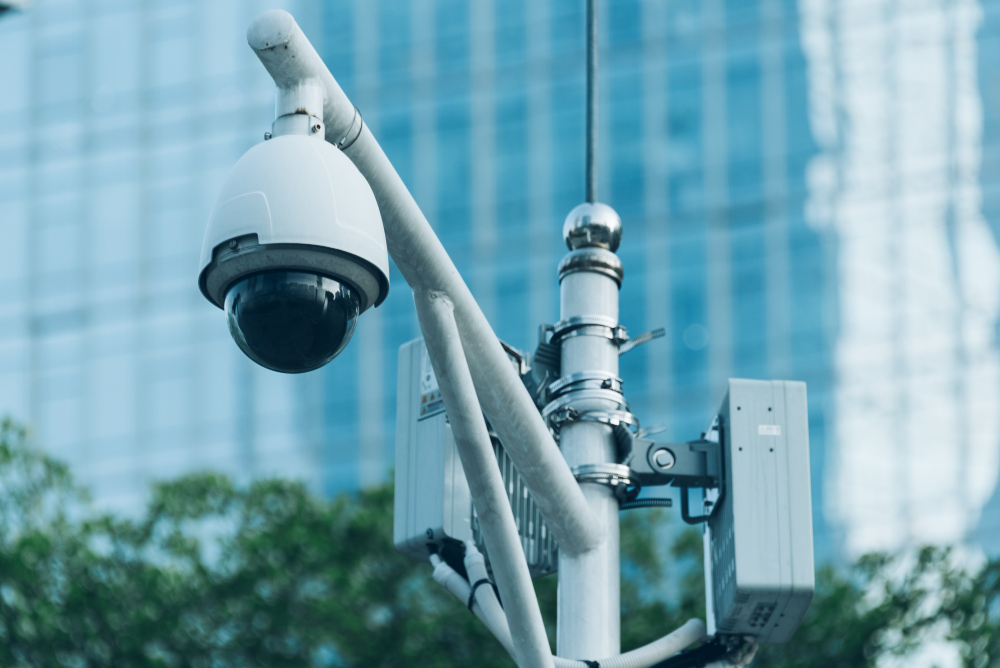
“A camera without analysis is just a huge archive that’s rarely consulted in a productive way,” says Rafael Libardi, founder of Noleak (imagem: Fanjianhua/Magnific)
By Roseli Andrion | Agência FAPESP – Noleak, a startup headquartered in São Paulo, Brazil, has developed a solution that optimizes the use of security cameras by transforming thousands of hours of video into useful information. The tool, called Agatha, uses artificial intelligence (AI) to learn behavioral patterns in monitored environments and issue alerts when changes occur. Thus, the system transforms passive cameras into active monitoring devices, discards irrelevant images, and enables a single professional to monitor numerous screens without being overwhelmed by unnecessary notifications.
Rafael Libardi, the startup’s founder, questioned the limitations of traditional systems when creating the solution. Why do security cameras still function as sophisticated but not very intelligent motion sensors? Libardi initially tested the logic of the platform in the realm of digital data protection while working on a project for the Armed Forces of a Latin American country. The goal was to identify anomalous behavior in internal computer networks, a common technique in cyberattack prevention, to detect foreign intrusions into local digital infrastructure. The system achieved this by recognizing unusual communication patterns on the network.
Libardi realized that this method could be applied to security camera footage. All he had to do was replace data packages with pixels and cyberattacks with non-standard behaviors. “What was available on the market was basically motion detection, and any deviation triggered an alert. That generated thousands of notifications per hour and rendered the system largely useless,” he says. “I decided to combine what I knew about cybersecurity with visual security.”
During the transition to physical monitoring, the platform observes the environment rather than operating through fixed programmed rules. It establishes what is considered normal in that context, such as which locations typically have parked cars, the times of day with the most activity, and the areas with the most frequent traffic. Based on this baseline, the system issues alerts and forwards them for human evaluation when deviations occur.
Libardi cites studies on video surveillance to illustrate the limits of human attention in this type of task. Research on CCTV monitoring indicates that loss of focus occurs rapidly. One classic study in the field shows that after about 12 minutes of continuous observation, an operator may fail to notice up to 45% of the activity on the screen. After 22 minutes, up to 95% of what happens goes unnoticed, even when only a few cameras are in view.
In this context, a human operator can effectively monitor only a few dozen cameras before fatigue compromises surveillance. However, with automated screening, professionals can oversee 1,000 to 2,000 cameras simultaneously because they only receive segments requiring analysis. In practice, the tool filters out more than 99.8% of irrelevant images, preserving the analyst’s attention so they can focus on what really matters. “They only see what’s out of the ordinary,” the researcher summarizes.
Data avalanche
The number of installed cameras is steadily growing in apartment complexes, businesses, on public roads, and at events. The Brazilian Association of Electronic Security Systems Companies (ABESE) estimates that the sector generated BRL 14 billion in revenue in 2024, which is a 16.1% increase from the previous year.
In this scenario, the difference between simply recording everything and understanding what was recorded can determine the efficiency of security policies and industrial processes. “A camera without analysis is just a huge file that’s rarely consulted in a productive way,” says Libardi.
In addition to real-time monitoring, the technology enables forensic analysis, consisting of the automated review of large volumes of video to quickly identify unusual activity.
For example, an energy distributor in the state of Minas Gerais faced recurring thefts at substations. After each incident, the technical team had to review weeks of footage. With Agatha’s intervention, however, hours of video were narrowed down to the exact ten minutes containing the moment of the intrusion. This made it possible to identify a service provider in a restricted area. He knew the location and assumed that the volume of recorded footage would make tracking him in a timely manner impossible.
Other applications
The solution has also been used in contexts far removed from traditional security. These applications include identifying the correct use of personal protective equipment (PPE), such as helmets, vests, and goggles; detecting behaviors that precede workplace accidents; and controlling inventory in warehouses.
The criterion is the same in all cases: if a human operator can spot a problem by looking at the screen, then the technology can be trained to detect it as well. “Any process that relies on the human eye for image analysis can, in principle, be automated. All it takes is research, the right context, and proper device placement,” says Libardi.
One example of this versatility is the detection of wear on large chains at an agro-industrial facility in Belém, Pará state. Before adopting the tool, unscheduled machine downtime resulted in over BRL 100 million in losses in a single year. With the technology, the system began issuing preventive alerts based on the identification of subtle deviations from patterns, such as atypical vibration, irregular tilt, or a visual change in the texture of a component.
Another project used the technology to count bags of cement, feed, and grains in real time at the Port of Santos, replacing error-prone manual processes.
Learning period
The time it takes to adapt the tool varies depending on the complexity of the application. For example, PPE usage monitoring can be implemented in less than 24 hours, while bag counting at ports can be set up in about a week. Conversely, fine-tuning the algorithms for highly specific industrial applications may require months.
In residential complexes and monitored neighborhoods, the AI maps license plates and sends alerts when unfamiliar vehicles linger in the area for an extended period. In one instance, the system issued an alert when a child approached an opening automatic garage door. The system identified the combination of variables – child, door movement, and proximity – as an anomaly, enabling the operator to stop the mechanism in time.
The tool can also monitor large-scale events. At festivals and public celebrations, the combination of behavioral analysis and integration with public systems can significantly enhance the response capacity of security teams.
Public initiatives, such as the Smart Sampa program by the City of São Paulo, use facial recognition technology to locate suspects in everyday situations and crowded areas. This type of surveillance is becoming increasingly common in so-called smart cities, and the platform developed by the startup can complement existing monitoring systems by focusing on the behavioral analysis of images.
However, experts point out that technologies like facial recognition have margins of error and require human validation. Libardi corroborates this view: “No solution should operate in isolation. They function as precision filters. There must always be subsequent verification because the tool doesn’t replace the human eye. Instead, it reorganizes priorities.”
The researcher also emphasizes the need for adequate basic infrastructure. “We need to educate the client because technology isn’t magic. The camera must be placed correctly and provide reasonable image quality. Sometimes, clients believe they’ll be able to identify something 200 meters away using a low-cost camera,” he explains.
With support from FAPESP’s Innovative Research in Small Businesses Program (PIPE), the startup was able to restructure its data architecture and refine its mathematical models, achieving economies of scale. Libardi points out that the funding was crucial for the business: “The researcher masters the technique but doesn’t always know how to turn it into a commercially viable product.”
The Agency FAPESP licenses news via Creative Commons (CC-BY-NC-ND) so that they can be republished free of charge and in a simple way by other digital or printed vehicles. Agência FAPESP must be credited as the source of the content being republished and the name of the reporter (if any) must be attributed. Using the HMTL button below allows compliance with these rules, detailed in Digital Republishing Policy FAPESP.
