




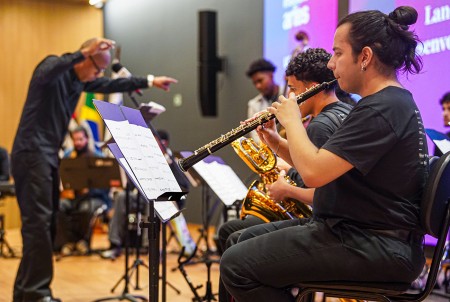
CiDPMus is the first SCD supported by FAPESP dedicated to the arts (photo: Daniel Antônio/Agência FAPESP)
Based in the city of São Paulo, the Interdisciplinary Center for the Development of Music Research is a partnership between FAPESP, São Paulo State University, and the Department of Creative Culture, Economy, and Industry.
Based in the city of São Paulo, the Interdisciplinary Center for the Development of Music Research is a partnership between FAPESP, São Paulo State University, and the Department of Creative Culture, Economy, and Industry.
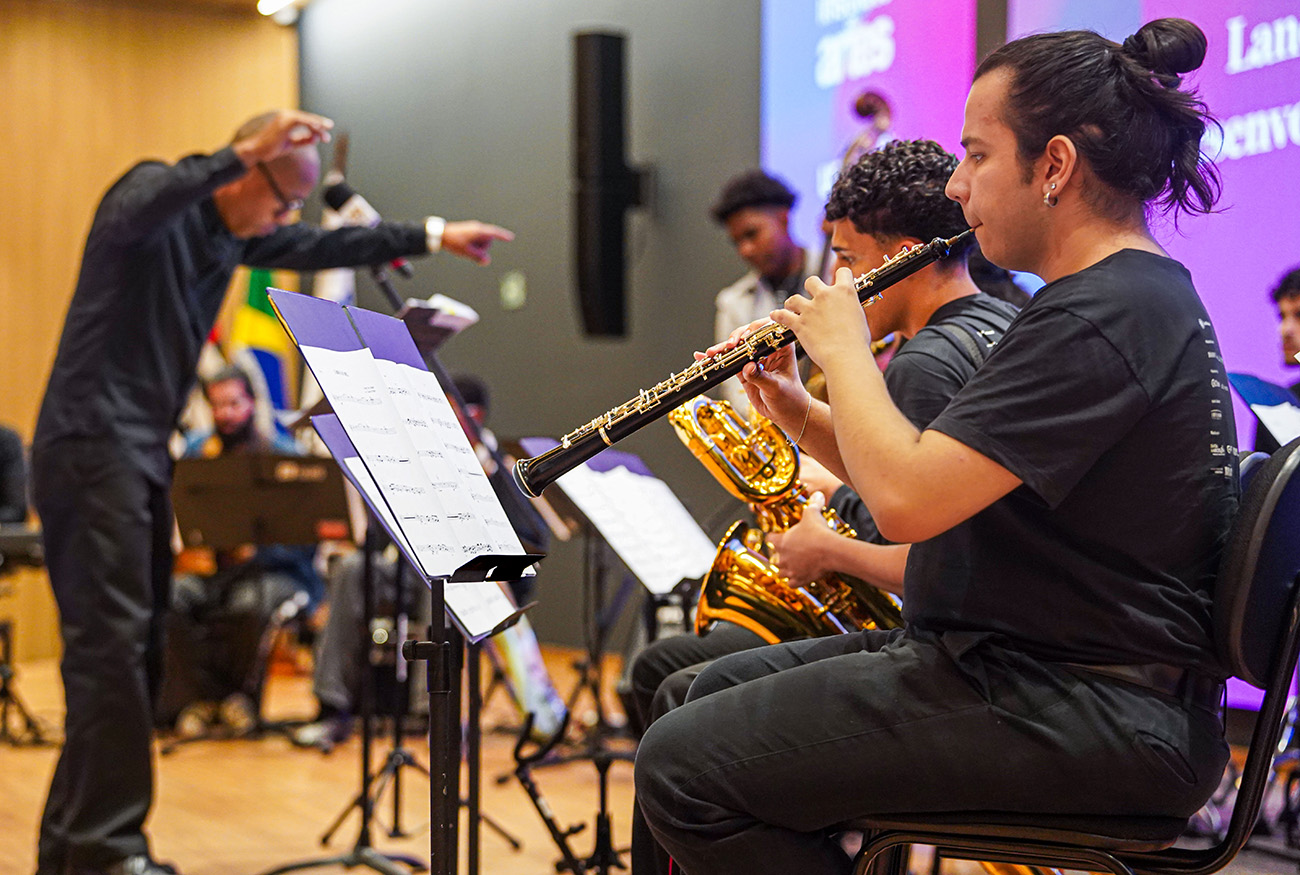
CiDPMus is the first SCD supported by FAPESP dedicated to the arts (photo: Daniel Antônio/Agência FAPESP)
By André Julião | Agência FAPESP – To what extent can studying music influence the mental health of young people and adolescents? This is one of the fundamental questions that a new research center at São Paulo State University (UNESP) will seek to answer as part of a project in partnership with FAPESP and the São Paulo State Department of Creative Culture, Economy, and Industry.
The new Interdisciplinary Center for the Development of Music Research (CiDPMus), inaugurated on June 15, is located at UNESP’s Institute of the Arts in the city of São Paulo. The inauguration ceremony took place at the Rector’s Office and featured a performance by the Big Band of the Guri project, conducted by Daniel Filho.
The project is part of FAPESP’s Science Centers for Development (SCDs) program, which funds collaborative projects among universities, research institutions, government agencies, companies, and nongovernmental organizations. CiDPMus is the first of these centers dedicated to the arts.
“It’s an interdisciplinary center. The team includes researchers from the fields of music education, psychology, statistics, and neuroscience. The idea is to focus on mental health and the study of music. We’ll administer mental health questionnaires to young people aged 13 to 28, ranging from those who are just starting out in music to those who are pursuing professional careers,” explains Graziela Bortz, director of the UNESP Institute of the Arts and coordinator of CiDPMus.
One of the center’s objectives is to screen music students and musicians early in their careers for depression, anxiety, and psychoactive substance use. Students from the Guri project, Brazil’s largest music education and social inclusion initiative, and from the São Paulo State School of Music (EMESP Tom Jobim) will undergo evaluation. These initiatives are both managed by Santa Marcelina, a social organization and partner of the SCD.
“Our hypothesis is that studying music initially improves aspects of mental health. As they become professionals, young people may experience a decline due to competition and the job market. We also believe that gender and race-related factors influence this decline in mental health,” Bortz adds.
Social impact
CiDPMus is the seventh center of its kind based at UNESP. The center will receive an investment of BRL 7.7 million from FAPESP over the next five years.
“FAPESP has a long history of supporting research in the arts. The Science Centers for Development program is the most important public policy initiative in Brazil today because it addresses issues directly related to people’s lives. And art is an essential element in the crystallization of culture, unity, and human development,” emphasized Marco Antonio Zago, president of FAPESP, at the launch ceremony.
Carlos Graeff, CEO of FAPESP’s Technical and Administrative Council (CTA) and professor at the Faculty of Sciences at UNESP in Bauru, believes that the SCD’s focus is highly relevant.
“The SCD program is one of FAPESP’s crown jewels, and although it’s relatively new, it’s been highly successful and has had a significant impact precisely because it seeks to solve societal problems by bringing together the key players needed for those solutions. Mental health among young people is a pressing issue in this increasingly abstract world. Perhaps music is one of the paths to a solution,” he said.
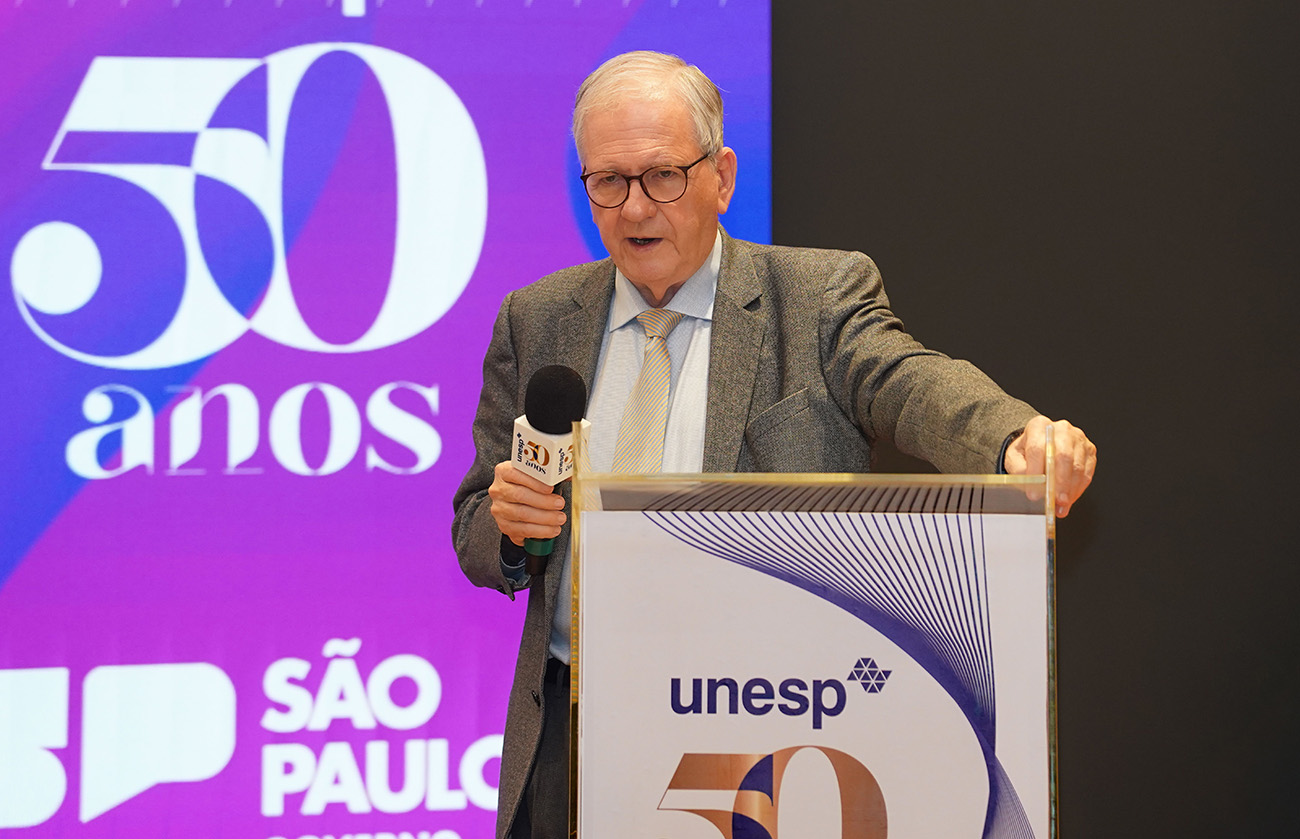
Marco Antonio Zago, president of FAPESP: “The Foundation has a long history of supporting research in the arts” photo: Daniel Antônio/Agência FAPESP)
Scientific evidence
The project “The Effects on Brain Structures and Social and Cognitive Skills in Children Exposed to the Guri Santa Marcelina Program in Greater São Paulo: A Quasi-Experimental Study”, which was supported by FAPESP under the Public Policy Research Program (PPP), was a precursor to CiDPMus and was also coordinated by Bortz.
“At that time, we measured cognitive and executive functions and conducted MRI scans of the Guri students’ brains," the professor recalls.
For Paulo Zuben, the artistic and educational director of the social organization Santa Marcelina, CiDPMus could mark the beginning of a process that will inspire future research.
“You can’t make public policy without evidence. This research won’t answer everything; it’ll offer one perspective on a much more complex situation. We hope it’ll inspire other researchers to develop studies that shed more light on what we do,” he said.
UNESP Dean Maysa Furlan believes the SCDs program offers interesting opportunities for the institution, such as partnerships to establish a center like CiDPMus. According to Furlan, the dialogue between different fields of knowledge, a hallmark of the SCDs, is essential for transferring knowledge from academia to society.
The Agency FAPESP licenses news via Creative Commons (CC-BY-NC-ND) so that they can be republished free of charge and in a simple way by other digital or printed vehicles. Agência FAPESP must be credited as the source of the content being republished and the name of the reporter (if any) must be attributed. Using the HMTL button below allows compliance with these rules, detailed in Digital Republishing Policy FAPESP.
