





One advantage of the pig breed chosen to obtain the organs is rapid growth. At approximately seven months of age, the animals reach the weight required for transplantation into an 80-kilogram adult human (photo: Docme Comunicação for Genoma USP)
Project conducted at the University of São Paulo with support from FAPESP aims to ensure that the country has its own technology and does not depend on imports to perform xenotransplants in the public healthcare system.
Project conducted at the University of São Paulo with support from FAPESP aims to ensure that the country has its own technology and does not depend on imports to perform xenotransplants in the public healthcare system.
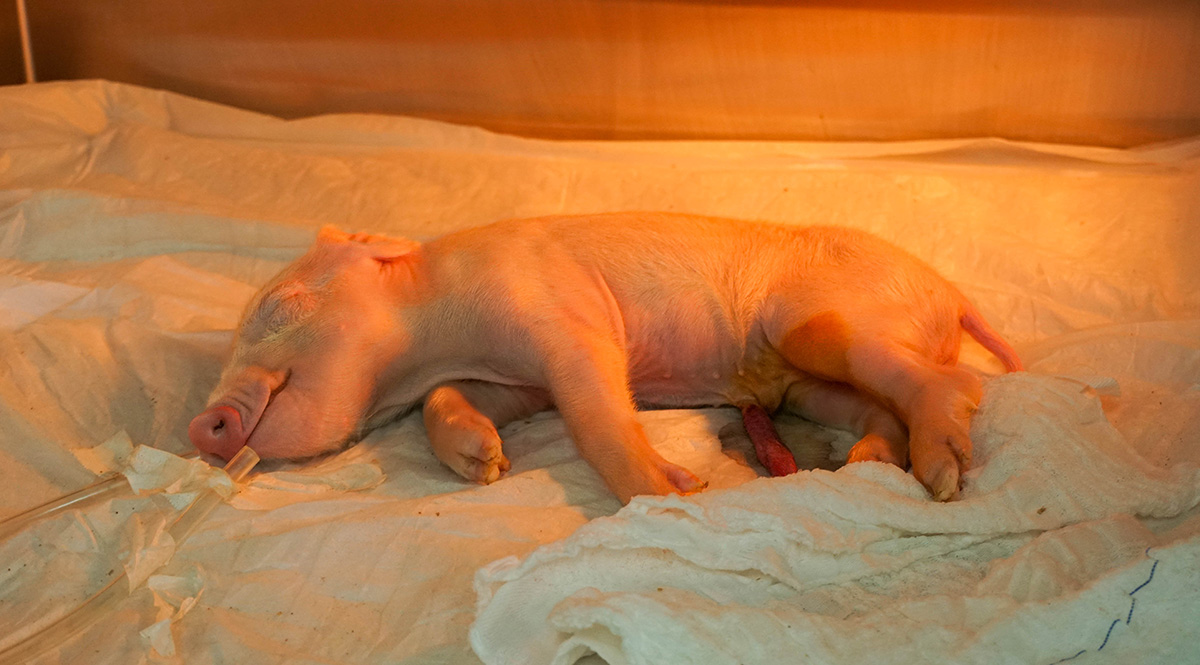
One advantage of the pig breed chosen to obtain the organs is rapid growth. At approximately seven months of age, the animals reach the weight required for transplantation into an 80-kilogram adult human (photo: Docme Comunicação for Genoma USP)
By Elton Alisson | Agência FAPESP – In late March, researchers affiliated with the Science Center for Development in Xenotransplantation (XenoBR) at the University of São Paulo (USP) celebrated a result they had been awaiting for nearly six years. After several attempts, the group produced the first cloned pig in Brazil and Latin America.
The animal was born in a laboratory at the Animal Sciences Institute of the São Paulo Agency for Agribusiness Technology (IZ-APTA) in Piracicaba, in the interior of São Paulo state. This birth is a crucial milestone for an ambitious project in Brazil: generating genetically modified pigs capable of providing organs for human transplants without causing immune rejection (read more at agencia.fapesp.br/29771/).
The initiative is led by Silvano Raia, a surgeon and professor at the USP Medical School (FM), Mayana Zatz, a geneticist and professor at USP’s Institute of Biosciences (IB) and coordinator of the Human Genome and Stem Cell Research Center (HUG-CELL), a Research, Innovation, and Dissemination Center (RIDC) supported by FAPESP, and Jorge Kalil, an immunologist and professor at FM-USP.
The project began in 2019 through a partnership with the pharmaceutical company EMS under FAPESP’s Research Partnership for Technological Innovation Program (PITE). Starting in 2022, the project gained scale with the creation of XenoBR, one of the Science Centers for Development (SCDs) funded by the Foundation.
“The step we’ve taken now is crucial because pig cloning is one of the most difficult techniques to master to make xenotransplantation [the transfer of organs between different species] viable,” Ernesto Goulart, a professor at IB-USP and principal investigator at the SCD, told Agência FAPESP.
“We knew this stage would represent one of the biggest challenges in the project, not least because, although Brazil has extensive experience in cloning cattle and horses, it doesn’t yet have such experience with pigs, which are considered the most challenging animals for this technique for biological reasons that aren’t yet fully understood,” says Goulart.
Mastery of technologies
Despite the challenge of cloning them, pigs have been chosen as potential donors for xenotransplantation due to the similarity of their organ size and function to that of humans. They are also domesticated, reproduce well in captivity, and produce large litters in just a few months.
However, if the organs of these animals were transplanted directly into humans, they would be rejected by the human immune system. For this reason, the animal’s genome must be edited.
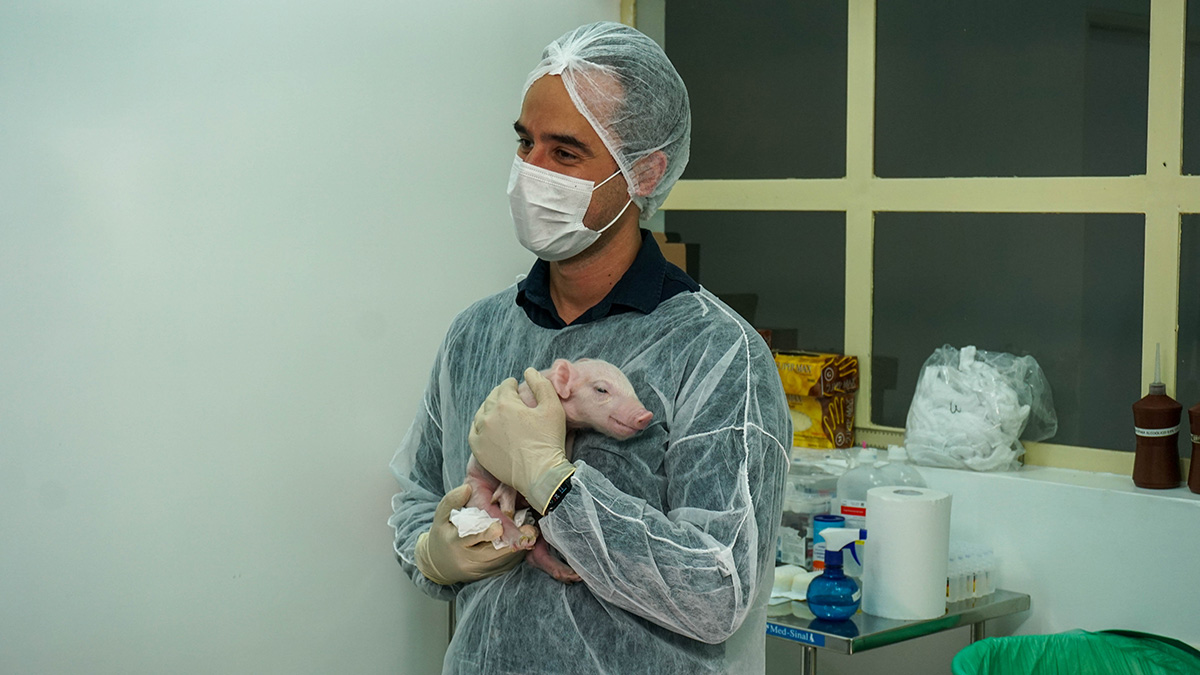
After a gestation period of nearly four months, the first pig clone was born healthy, weighing 1.7 kg. “The fact that the animal is in excellent health shows that our technique works,” celebrates Ernesto Goulart, a professor at IB-USP and the principal investigator at the SCD (photo: Docme Comunicação for Genoma USP)
“Xenotransplantation involves a chain of complex technologies, such as genetic modification using the CRISPR/Cas9 tool,” explains Goulart. This tool allows for the insertion or deletion of nucleotides (the building blocks of genetic material) and even entire genes in the genome. Using it, the researchers inactivated three pig genes that induce rejection. Additionally, they introduced seven human genes into the pig cells to make them more compatible with the recipient’s body using precision gene insertion techniques, which employ an enzyme capable of cutting the double helix of cellular genetic material at a specific point and inserting new segments.
“These genes need to be inserted in specific locations and in the correct manner to ensure their proper function and successful cloning,” Goulart explains.
The resulting embryos were transferred to hybrid females (Landrace and Large White lines). After a gestation period of nearly four months, the first healthy pig clone was born, weighing 1.7 kg. “The fact that the animal is in excellent health shows that our technique works. We already have other pregnancies underway, which reinforces that we’ve mastered the process,” says the researcher.
Strict control and clinical-grade standards
The cloned pigs and their offspring will be housed in two pioneering, clinical-grade pig production laboratories in Latin America. These laboratories were also built with support from FAPESP.
The first, which can accommodate up to ten animals, opened in 2024 on the USP campus in São Paulo city. The second opened in late 2025 at the Center for Advanced Technologies for Well-Being and Health Applied to Life Sciences (NUTABES) at the Institute for Technological Research (IPT).
The latter features a biosafety level 2 (BSL-2) pig facility for breeding and managing genetically modified, pathogen-free pigs.
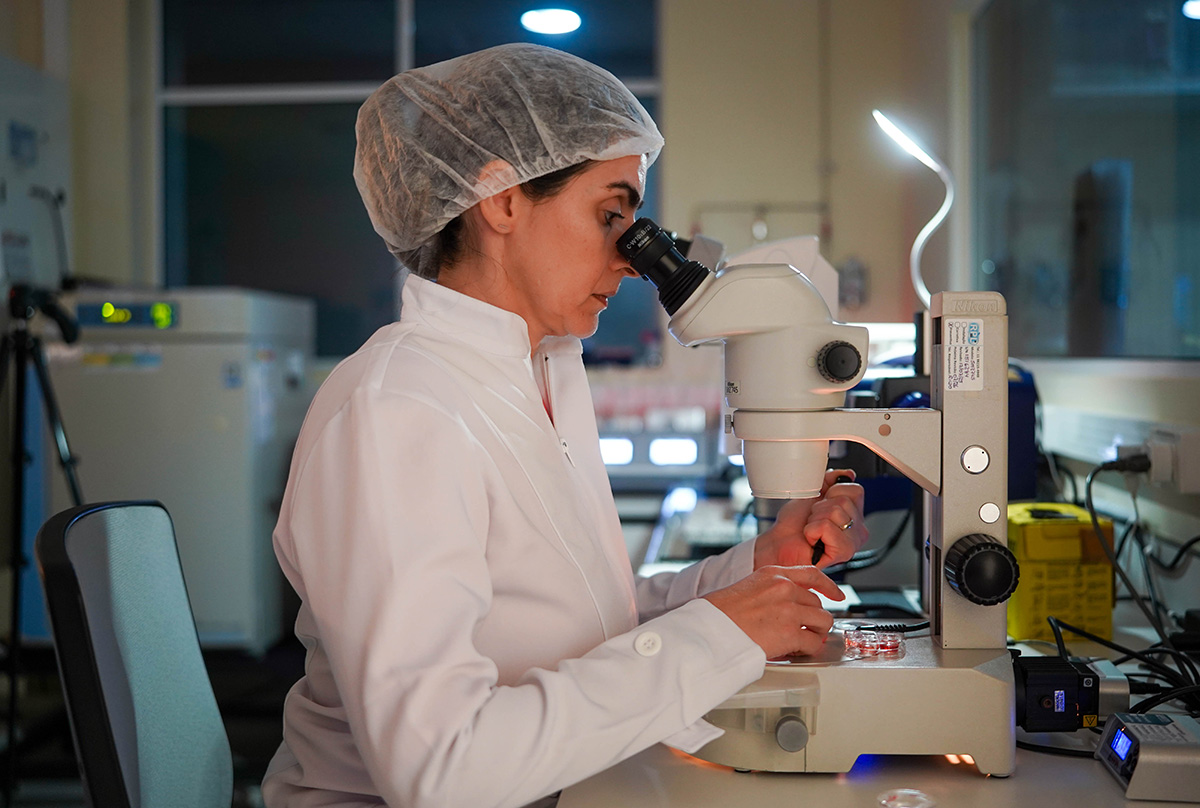
The researchers’ initial goal is to produce a herd of cloned pigs consisting of a few pairs. They hope to maintain and expand the herd through natural reproduction, without the need for indefinite cloning (photo: Daniel Antônio/Agência FAPESP)
“Both facilities have extremely strict sanitary controls because ultimately, the organs obtained from these animals will be a medical product. Therefore, there can be no risk of transmitting viruses, bacteria, or swine pathogens to human recipients,” Goulart explains.
The researchers’ initial plan is to produce a herd of cloned pigs consisting of a few pairs. They hope to maintain and expand the herd through natural reproduction, without the need for indefinite cloning, starting with this small group of animals.
“We’ll assess the need for new cloning as the animals are born. If we discover, for example, that a new gene also needs to be inactivated to prevent rejection, we’ll restart the cloning process,” says Goulart.
One advantage of the pig breed chosen by the researchers for xenotransplantation is its rapid growth. At approximately seven months of age, the pigs reach the weight required for transplantation into an 80-kilogram adult human.
“There are other breeds for xenotransplantation as well, such as miniature pigs, which are smaller and grow more slowly,” the researcher adds.
Strategic technology
According to Goulart, it is theoretically possible to use any tissue or organ from cloned pigs for xenotransplantation. Initially, however, they chose kidneys, corneas, hearts, and skin because, collectively, they account for 94% of the demand of the Unified Health System (SUS), Brazil’s national public health network. The SUS is responsible for funding and performing 90% to 96% of organ transplants in Brazil.
“Our goal is precisely to supply these organs to the SUS, which operates the world’s largest public organ transplant system,” says Goulart.
For this reason, mastering xenotransplantation technology is crucial for Brazil, emphasizes the researcher. “If xenotransplantation becomes a reality in the United States or China and we don’t have that technology, our national transplant system would become vulnerable and dependent on imports. It would be unsustainable for the SUS,” he says.
The goal is for São Paulo, the city with the highest number of kidney transplants in the world, to become the xenotransplantation hub of Latin America, providing benefits to neighboring countries without the technology. “We want to spread the technology to neighboring countries,” Goulart says.
According to him, no country has yet obtained approval to perform xenotransplantation. Clinical studies are being conducted in the United States to make the technology viable, and another study is about to begin in China. Based on the results of these studies, it will be possible to determine if the solution works and what the average survival rate of the transplanted organ is, among other aspects.
“Even if the survival of a transplanted organ is short, it can still save lives. A patient with fulminant hepatitis must undergo a transplant within a week at most. Using pig organs as a bridge transplant until a compatible human transplant becomes available can be a good strategy. That’s what the Chinese are doing,” says Goulart.
Along with the United States, China has been a pioneer in researching the genetic modification of animals for xenotransplantation in humans. They have also conducted the first attempts to use this technology in a model known as “compassionate use,” a stage preceding clinical trials. This model is carried out on patients whose treatment options have been exhausted, for whom xenotransplantation is evaluated as an alternative.
“The first two cases were heart transplants, and the patients survived for about 60 days. There was also a kidney transplant in which the patient survived for months but later died of a heart attack unrelated to the transplant, as well as another patient whose kidney functioned for over 270 days before he returned to dialysis,” notes Goulart.
The researchers’ goal is for organs from pigs cloned in Brazil through the project to cost a small fraction of what they will cost in the United States and China.
The Agency FAPESP licenses news via Creative Commons (CC-BY-NC-ND) so that they can be republished free of charge and in a simple way by other digital or printed vehicles. Agência FAPESP must be credited as the source of the content being republished and the name of the reporter (if any) must be attributed. Using the HMTL button below allows compliance with these rules, detailed in Digital Republishing Policy FAPESP.
